
E-commerce Affiliate Marketing Guide: Setup, Ideas, and More
See how LeadDyno can take your affiliate marketing strategy to the next level. Let’s set up a 1:1 demo to get your questions answered.
It's a common misconception that having a great D2C product is enough to guarantee sales. The reality is that’s only half the battle. The other half is getting your product in front of the right people at the right time.
With e-commerce growth in the U.S. projected to increase by 8.8% in 2026, your brand needs a clear plan that can capitalize on this. That’s where affiliate marketing comes in.
This guide is your roadmap to implementing a powerful e-commerce affiliate marketing strategy. We'll cover everything from the fundamentals to important considerations, like using affiliate tracking software, so you can build a program that not only drives sales but also builds amazing affiliate partnerships. Let’s dive in.
What is e-commerce affiliate marketing?
In short, e-commerce affiliate marketing is a performance-based marketing strategy where your D2C brand partners work with individuals or companies, the "affiliates", to promote your products. These affiliates can be influencers, bloggers, content creators, or even loyal customers, who then share trackable links with their audiences.
From there, when a potential buyer clicks on an affiliate's link and then makes a purchase on your site, the affiliate earns a commission.
It's a total win-win. Affiliates get to monetize their influence and content, and your brand gains exposure and sales while paying only for confirmed results.
The best part is this marketing strategy is incredibly effective for D2C brands looking to scale their marketing efforts in a cost-effective way.
Example: A beauty business with over $1.6M in affiliate sales
Take Shine Cosmetics, for example, a beauty brand founded on empowering women to feel confident rather than sexualized. When CEO Darcey Wilde and her partners decided to launch an affiliate program, they weren't just looking for a sales channel—they wanted to create genuine partnerships with women earning income from home.
The challenge? They needed a platform that could handle a custom commission structure, provide complete transparency to affiliates, and integrate seamlessly with their Shopify store.
The results speak volumes:
- $1.6M+ in annual affiliate sales.
- 30,000+ affiliate-driven transactions from top performers.
As Darcey explains: "We wanted our affiliates to partner with us and share in our success. Our compensation model is built to empower them to share our products and vision of beauty."
Why affiliate marketing works for e-comm companies
For D2C e-commerce brands, affiliate marketing isn't just another channel—it's a powerhouse for growth. In fact, over 80% of brands leverage affiliate programs, and for good reason.
This strategy directly addresses some of the biggest challenges D2C companies face, from building trust to acquiring new customers efficiently. Here's why it's so effective.
Builds trust and social proof
When an influencer or a trusted blogger recommends your product, it acts as a powerful endorsement. This third-party validation is often more persuasive than traditional advertising, helping you build credibility and overcome customer skepticism.
Cost-effective customer acquisition
Affiliate marketing operates on a performance basis, so you typically only pay a commission when a sale is made. This means your customer acquisition cost (CAC) is directly tied to revenue, making it a low-risk, high-return investment compared to paid ads, where you pay for clicks or impressions regardless of the outcome.
Expands your reach to niche audiences
Affiliates have already built dedicated followings within specific niches. By partnering with the right people, you can tap into highly targeted and engaged audiences that might be difficult or expensive to reach through other channels.
Drives high-quality traffic
The traffic coming from an affiliate's recommendation is typically warm. These visitors are already interested in what you have to offer because they trust the affiliate's judgment. This leads to higher conversion rates compared to cold traffic. Not only can it help generate sales, it can also help build brand awareness for your business, too.
Recommended Reading: Building an Affiliate Funnel That Drives Revenue for Your Company
The economics of e-commerce affiliates
Understanding the financial side of your affiliate program is essential for long-term success. It’s not just about setting a commission rate; it's about building a sustainable model that motivates affiliates, while maintaining healthy profit margins for your brand. Here’s how to do that.
Commission structure models
Choosing the right commission structure is fundamental. The model you select will directly impact affiliate motivation and your program's profitability.
Percentage of Sale
This is the most common model. You pay the affiliate a percentage of the total sale amount. It’s straightforward and ensures that commissions scale with the order value.
Flat Rate
You pay a fixed amount for every sale, regardless of the order value. This works well for products with a uniform price or when you want to simplify commission calculations.
Tiered Systems
This model rewards high-performing affiliates with higher commission rates as they drive more sales. For example, an affiliate might earn 10% on their first 20 sales, 15% on sales 21-50, and 20% on all sales thereafter. This is a fantastic incentive for your best partners to keep promoting your brand.
Example: One company’s tiered commission structure finds major success
Beddy's, a unique and innovative zipper bedding company, transformed their affiliate program by implementing a weekly payout structure that sets them apart.
Aimee Petty, Affiliate Marketing Specialist for Beddy's, explains their strategy; "Paying affiliates weekly is a significant selling point for our program, as many other programs only pay out monthly, meaning that affiliates have to wait 30 days after the purchase to receive their payment. Paying them weekly allows our affiliates who shared more during a particular week to earn extra commission on their payout." Their weekly commission model keeps affiliates motivated for an on-going relationship.
With that, they've been able to generate an impressive business impact of $20M+ in total affiliate sales to date, with affiliates driving over 10% of the company's total annual sales in 2022 alone. Their network of 600+ active affiliates is all managed with LeadDyno.
Lifetime Value (LTV) considerations
A common mistake when analyzing the economics of affiliate marketing is focusing only on the commission for the first sale. This short-sighted view overlooks the real value an affiliate brings with a long-term relationship. Often, a customer referred by an affiliate might make multiple purchases over their lifetime. So a detailed affiliate strategy should account for customer LTV.
Cookie duration strategy
Cookie duration is the period during which an affiliate can earn a commission after a user clicks their link. If a customer clicks an affiliate link, leaves, and then comes back to purchase within that window, the affiliate gets credit. While it sounds technical, to affiliates, it's extremely important.
It’s important to take some time to consider your typical buyer’s journey and time-to-sale before setting this. Industry benchmarks vary, but 30 days is a common standard. Cookie durations as short as 24 hours can easily demotivate affiliates from signing up to your program to begin with.
If you want to further incentivize affiliates, you can also offer a longer duration, like 60 or 90 days, to really boost affiliate sign-ups.
Competitive benchmarking
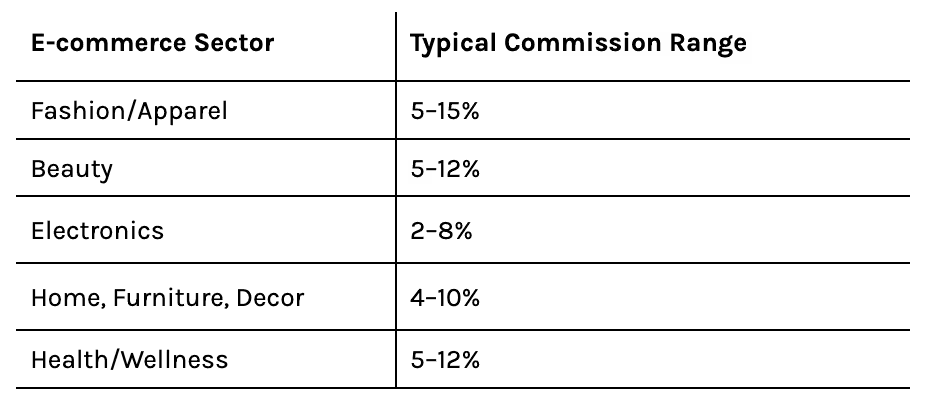
Before setting your rates, first research what your competitors are offering. While there is some general benchmarking for industries, it will generally come down to competitor rates. For example, if their affiliate programs pay a 15% commission and you’re offering 5%, you’ll struggle to attract the best partners.
Here’s some basic benchmarking as an estimate.
Recommended Resource: [Guide] Affiliate Fraud Protection to Protect Your Brand and Payouts
Strategies for success with e-commerce affiliate marketing
Now that you’re ready, you’ll need to use strategies and tactics to help you make your affiliate marketing channel a thriving success. Here’s a strategic roadmap to help your D2C brand build, manage, and scale a winning program.
Infrastructure and program setup for success
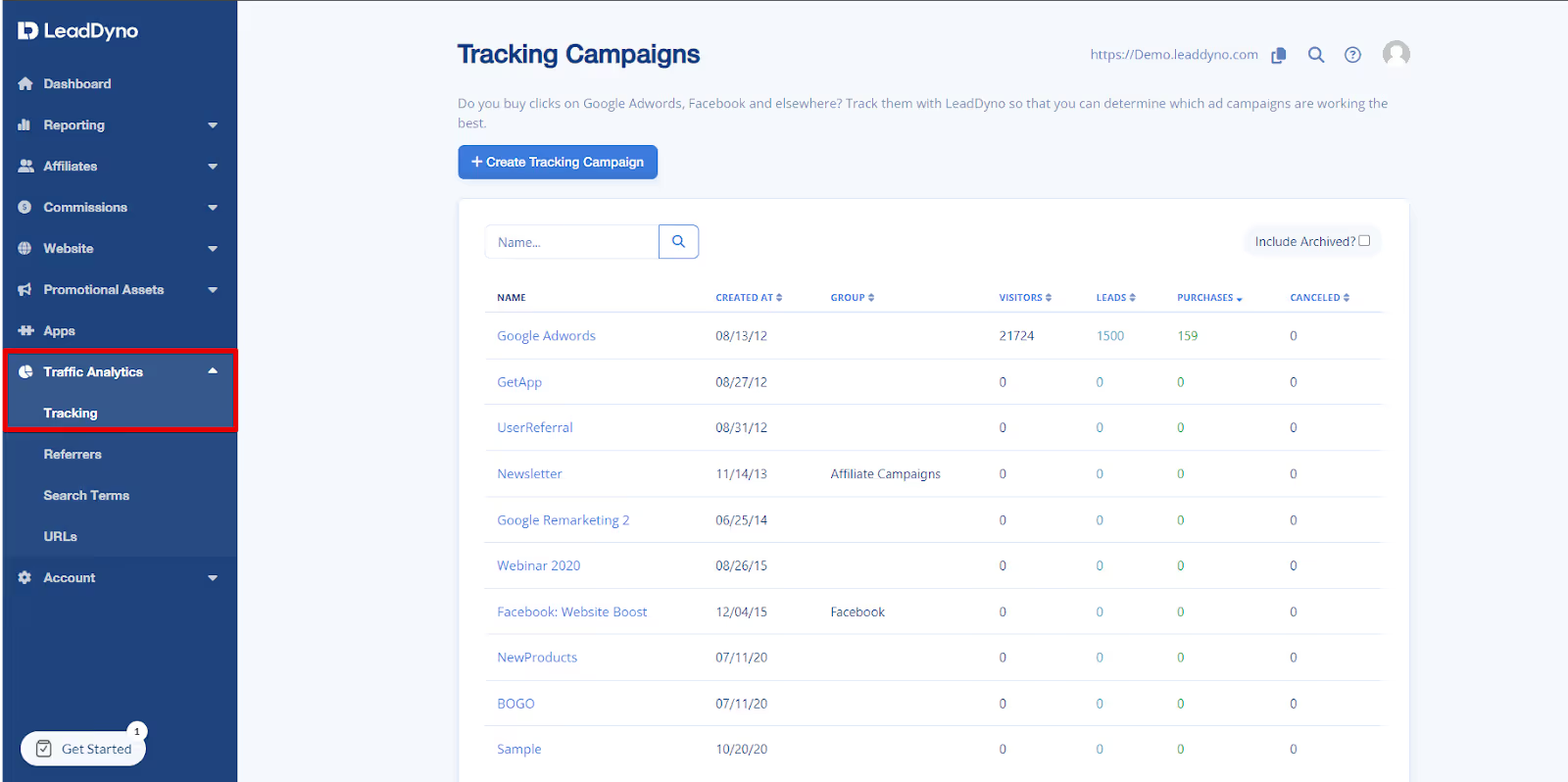
It’s of utmost importance to have the proper infrastructure in place for your e-commerce affiliate program to be successful. There are many small details that need to be accounted for, and you don’t want to have to build them from scratch.
Standalone software gives you more control and is often more cost-effective, as it can integrate directly with e-commerce platforms like Shopify or BigCommerce.
The importance of a strong platform
When it comes to platform selection, Synergy Science, a company that specializes in Echo Antioxidant water™ and EMF protection products, initially attempted to manage their affiliate program through a CRM platform. The results were disastrous.
"We could only attribute about 30% of the sales in a month," says Senior Operations Coordinator Anthony Raitani. "We knew a lot more was happening, but our affiliate links just didn't work, and it was frustrating for everyone. Trust was being lost with our affiliates."
With 800 affiliates (later growing to 1,500+) and a complex two-tier recruitment structure, they needed tracking that could handle lifetime customer attribution and seamless PayPal integration.
After implementing a dedicated affiliate management platform, the transformation was immediate, with $7.7M in affiliate sales over 22 months.
Recruit the right affiliate partners
With the right tools in place, you’re ready to set your affiliates up for success. With that, here’s how you can begin recruiting the kind of partners that will generate sales.
Step 1: Define Affiliate Personas
Begin by defining your ideal affiliate personas. Are you looking for micro-influencers with highly engaged but smaller followings? Content publishers who write in-depth reviews? Or loyalty and coupon partners to capture bottom-of-funnel customers? Each type brings a different value.
Step 2: Outreach
Actively recruit partners. Find influencers and bloggers in your niche and reach out with a personalized message. Explain why your brand is a great fit for their audience. And don't forget your existing customers; they may end up being some of your strongest performers among other affiliate groups.
For example, if you sell fitness equipment, search for hashtags like #FitnessJourney, #HomeWorkout, or #FitLife to find relevant and potential affiliates.
Step 3: Vet Applications Properly
Even with qualified outreach, not every applicant will be a good fit. We recommend putting a vetting criteria in place that aligns with your brand’s standards.
Red flags include sites with thin content, a history of spammy promotions, or unethical practices.
Once affiliates are vetted, have them onboarded.
Recommended Resource: Free Affiliate Agreement + Terms & Conditions
Support affiliates and influencers
Now that your new affiliates are on board and ready to promote, you’ll want to continue to empower their success with all the tools and support they need!
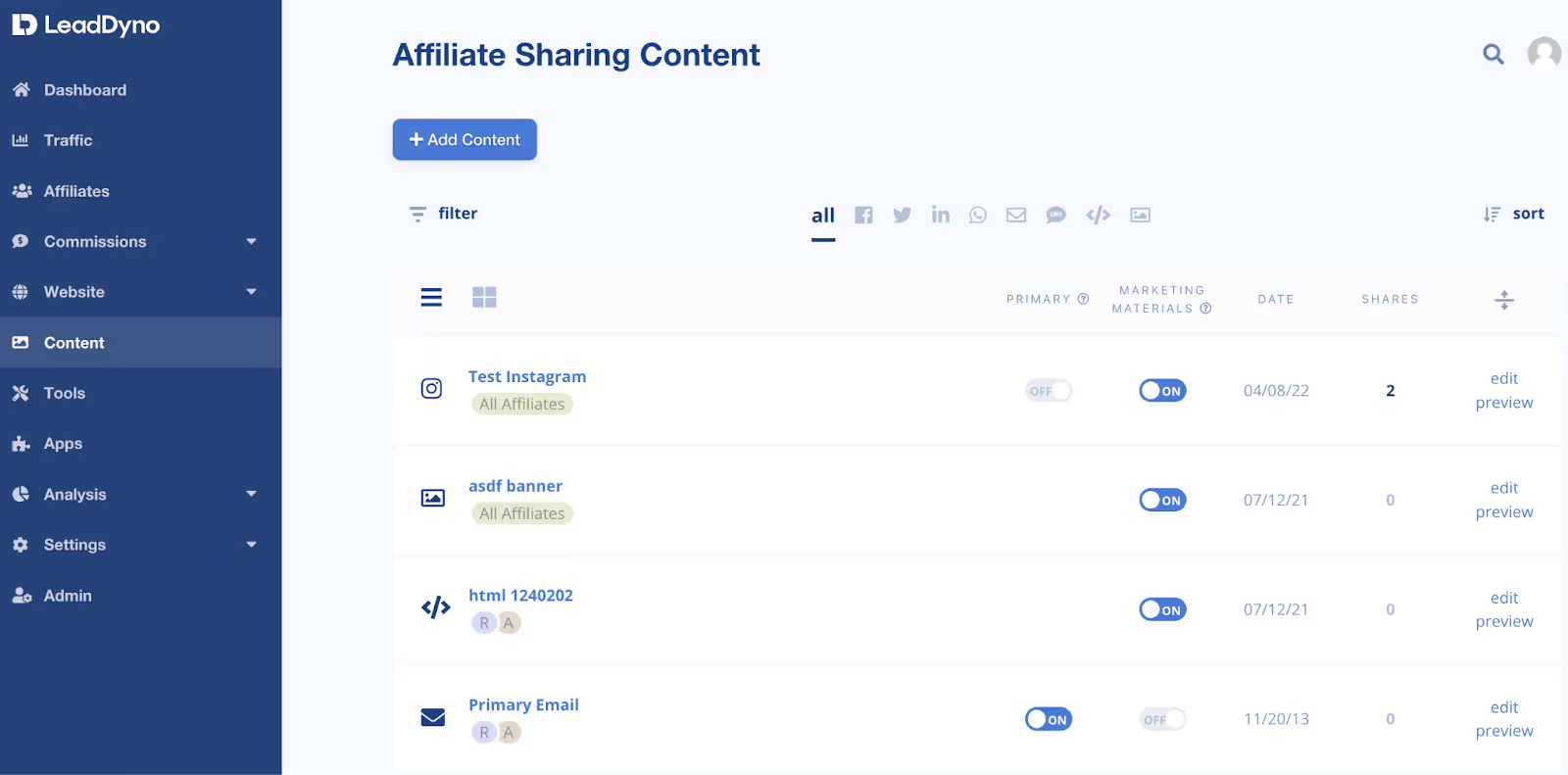
One of the best ways to support affiliates is through building a comprehensive library of high-converting and eye-catching creative assets. This can include logos, professional product images, dynamic lifestyle photos, and even pre-written copy they can adapt.
The goal is to make it super easy for them to create content that’s on-brand and effective.
Advanced attribution for complex customer journeys
Modern customer journeys are complex. A customer might see an Instagram ad, read a blog review, and then click a search ad before buying.
Modern affiliate tracking platforms like LeadDyno use this server-side and first-party data approach to ensure more accurate and reliable attribution, in addition to other methods like our REST API and Zapier integration.
Deep influencer collaborations
Go beyond simple affiliate links with your top influencer partners. Some of the best marketing campaigns for D2C brands include co-created content, exclusive giveaways, or even a collaborative product.
These deeper partnerships can generate amazing buzz and drive significant sales by encouraging a more authentic connection with their followers.
{{blog-cta}}
Other considerations for e-commerce affiliate success
To truly maximize the impact of your affiliate program, you need to think beyond the basics. Here are some advanced ideas and considerations that have helped other D2C brands thrive with affiliate marketing.
Use tools to scale B2C affiliate marketing efforts
Managing a growing affiliate program manually is next to impossible. You need the right technology to automate tracking, reporting, and payments.
An affiliate management platform like LeadDyno is designed specifically for this. It handles everything, from tracking clicks and conversions to managing commission payouts, freeing you up to focus on strategy and relationship-building.
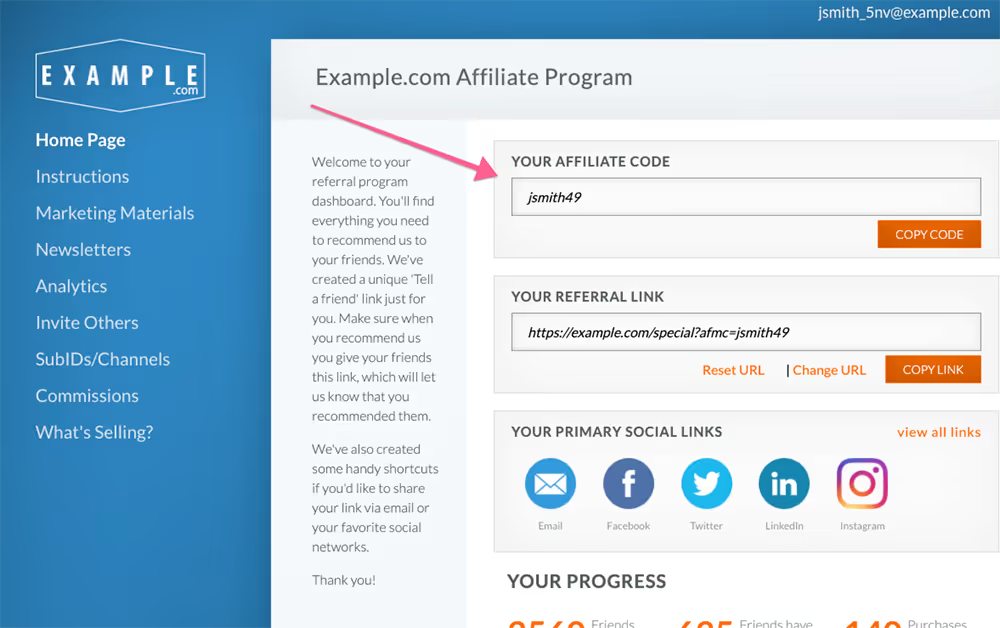
With LeadDyno, you can easily launch your program, onboard affiliates, and get a clear view of your performance, making scaling effortless.
How Revelation Health scaled affiliate marketing in Shopify
Revelation Health, a health store brand selling vitamins, supplements, and natural health foods, exemplifies how the right tools enable operational excellence at scale.
Their primary need was a platform that integrated seamlessly with Shopify and provided transparency for both the company and its affiliates. Controller Debbie Sutton explains, "LeadDyno was the ideal choice for managing our affiliate program, as it seamlessly integrates with Shopify. This was an essential factor for us."
Current performance:
- $1M+ in annual affiliate sales.
- Complete visibility into top-performing affiliates.
- Built-in reporting for program optimization.
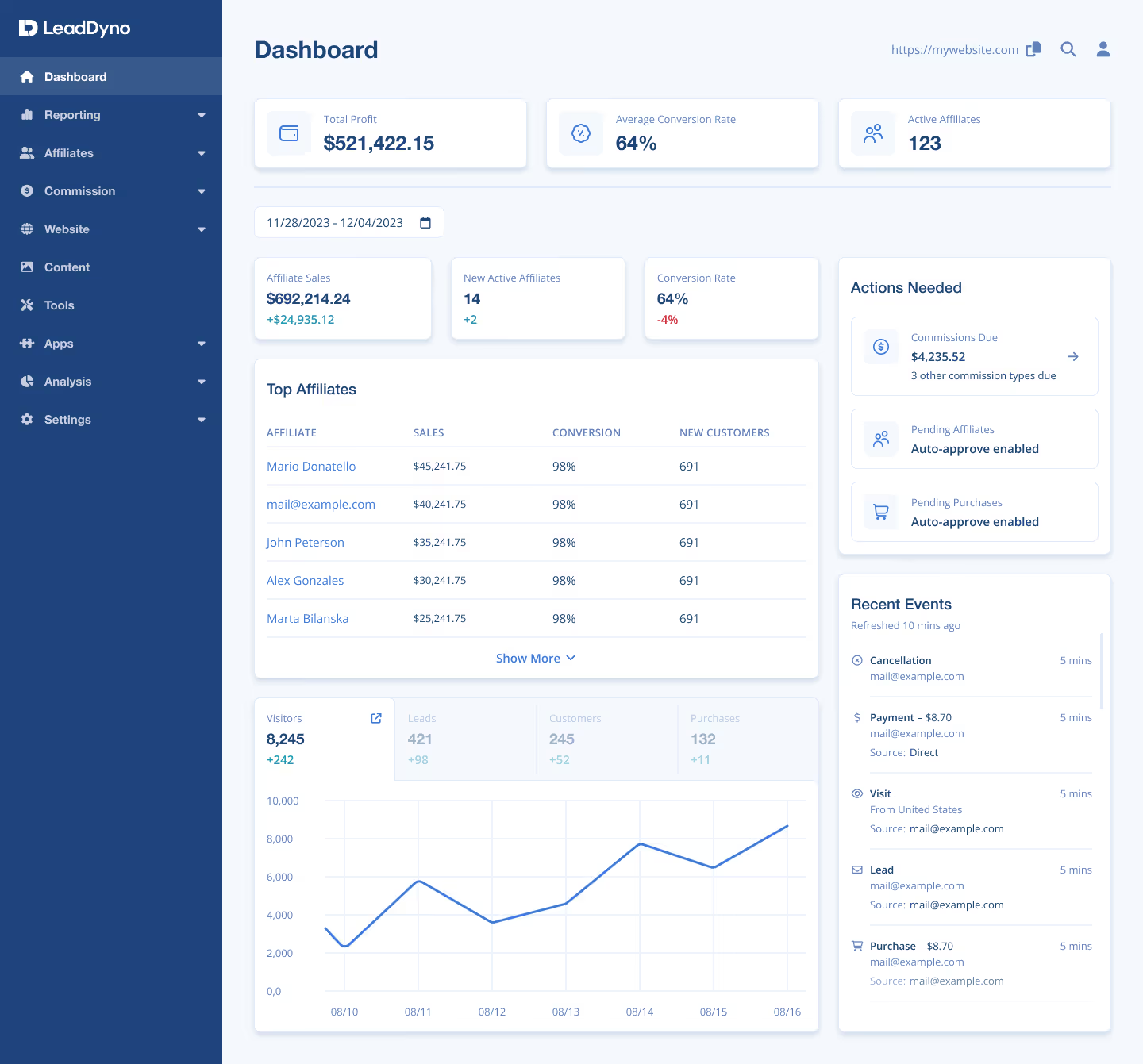
"We use LeadDyno built-in reporting to keep track of our affiliate performance and see what's working and what's not," says Debbie.
User-generated content (UGC) engines
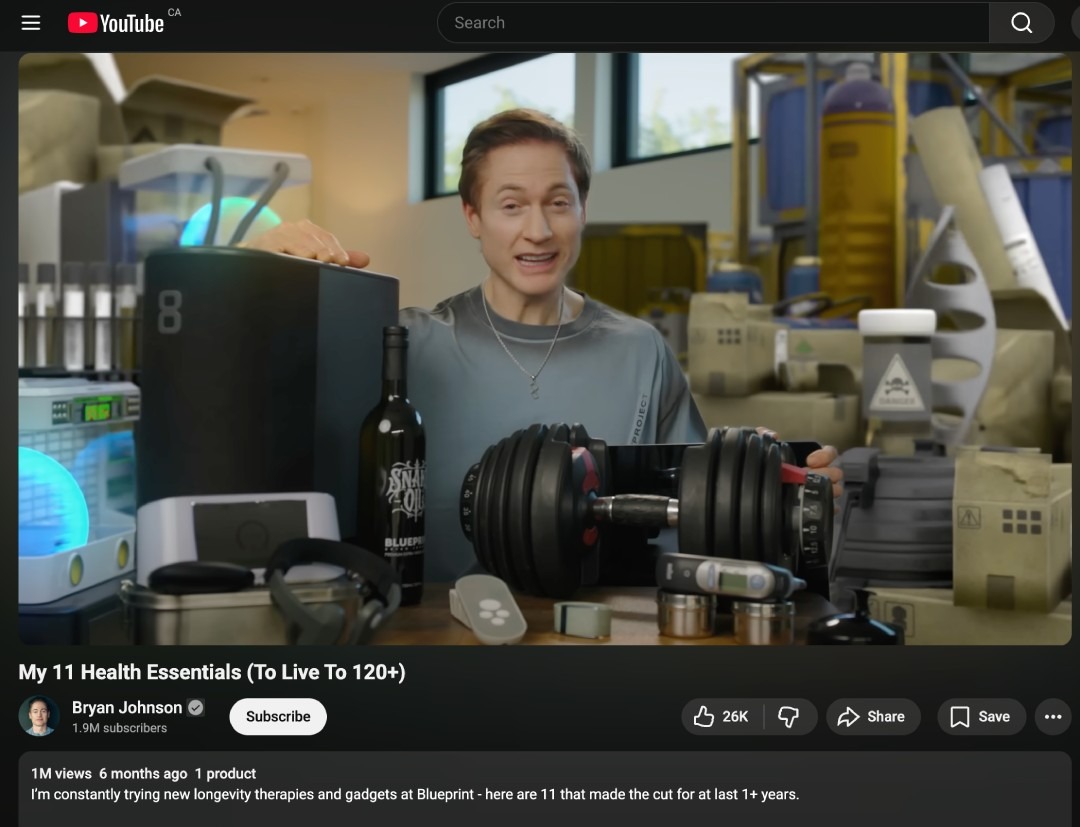
UGC is a game-changer for D2C brands. It’s authentic and relatable marketing material that can be a powerful engine for consistently generating high-quality content. Here’s how you can make the most of it.
Rights management
It’s very important to establish clear guidelines on how you’ll use content created by your affiliates. Whether it’s for your website, social media, email campaigns, or paid ads, your policy should outline the permissions required and ensure transparency.
This helps build trust with affiliates right from the start of your relationship, while also protecting your brand legally.
Affiliate-generated content programs
Next, you’ll want to help your affiliates create that authentic and engaging content by providing them with the right products, messaging copy, videos/photos, and content formats, to help assist in their content generation. Popular formats include unboxing videos, tutorials, product reviews, and lifestyle shots featuring your products.
Then, highlight this content on your product pages, social media (like TikTok), email newsletters, and even digital ads. When you feature real affiliates using your products, it adds a layer of credibility that polished, brand-created content can’t always achieve.

The Goal: In the end, it’s about going the extra mile by creating a framework or toolkit that helps affiliates produce content more effectively. The easier you make it for affiliates to create content, the more likely they’ll consistently contribute.
Final thoughts
Building a successful e-commerce affiliate marketing program is a journey that requires a strategic approach, the right tools, and a genuine commitment to building strong partnerships.
By focusing on creating a fair program with the right partners, you can transform affiliate marketing into one of your most powerful channels for growth.
Ready to take your D2C brand to the next level? See how LeadDyno’s powerful affiliate marketing software can help you build, manage, and scale your program with ease.
Start your free trial of LeadDyno today.
.webp)

.svg)
Start a Free Trial
30 days free · Full Access
Cancel anytime
You might also be interested in...

Get Started Today
Launch your affiliate program with confidence thanks to our 30-day free trial. Begin building a program that delivers results.

