
[Guide] Affiliate Marketing for Subscription-Based Businesses
See how LeadDyno can take your affiliate marketing strategy to the next level. Let’s set up a 1:1 demo to get your questions answered.
When done right, affiliate marketing allows you to build credibility and trust with your affiliate partners. For subscription businesses, this trust is uniquely powerful because the incentives align perfectly with long-term customer sales and affiliate success.
In this guide, we'll go over actionable tips and strategies that subscription businesses (D2C, SaaS, etc.) can leverage using affiliate marketing to drive more long-term sales. Let’s get started!
The impact of affiliates for subscription services
Affiliate marketing is a great fit for subscription models, and it all comes down to the economics of recurring revenue. This recurring revenue model provides more flexibility for different commission structures.
It also supports lasting affiliate relationships, as affiliates are more motivated to promote when given stronger incentives.
Lowering CAC while boosting LTV
With affiliate marketing, you aren't paying for impressions or clicks that might convert; you’re paying for actual signups. When you run a subscription business, cash flow is king, which means that having a consistent Customer Acquisition Cost (CAC) makes your marketing planning that much easier. When you pair a fixed CAC with a high Lifetime Value (LTV), your profitability metrics soar.
For example, if you run a SaaS tool that costs $50/month and your average customer stays for 12 months, that customer is worth $600. Paying an affiliate $50 or even $100 for that signup is easy math with a clear ROI (learn more on the top affiliate marketing KPIs to track).
Trust at scale
When selling subscriptions, you need a higher level of commitment to keep customers for months or years. Strong customer retention requires deep trust.
The beautiful thing about affiliate marketing is that it bridges this trust gap. For example, when a YouTuber creates a comprehensive review of your D2C meal kit service for their audience, or a tech blogger writes a "How-To" guide for using your SaaS platform, they’re vetting your product for their audience. This third-party validation significantly reduces sign-up friction.
Boosting SEO and organic branded search
On top of driving a consistent CAC and building trust, your affiliate partners can also play a role in your brand’s SEO and organic search efforts.
How? Well, when affiliates create content promoting your products or services, they often link back to your website. These backlinks not only drive referral traffic but also strengthen your site's authority in the eyes of a search engine. These new links ultimately help to improve your overall rankings.
Recommended resource: How to Scale Your Affiliate Marketing Program - 3 Epic Strategies
{{blog-cta}}
10 tips for optimizing sales with affiliate marketing for subscriptions
Now that you know why it works, here are 10 tips to turn your affiliate program into a revenue-generating machine for a subscription business model.
1. Set up different tiers to incentivize affiliates to sell more
Instead of offering one pricing tier, use a structured approach. A tiered structure tailored to subscription-based services can reward affiliates based on their performance and motivate top performers to hit higher targets. For example, the top 10% may receive 4.5% more commission for every sale.
Map out the main structure
To make this work, begin by mapping out the structure for each tier. We recommend structuring your tiers around a performance metric like revenue, active subscriptions, or new subscribers.
A straightforward three-tier model might look like this: Starter (0–4 active referrals), Growth (5–14 active referrals), and Elite (15+ active referrals).
The key point is that each tier must be meaningful enough to create an incentive to sell more.
Define your starting tier
Begin with a standard commission for new affiliates, such as 10-15% of a referred customer's first month of subscription. From there, you’ll be able to map out how much of an increase in sales is required to justify increasing affiliate payouts.
The goal is to incentivize affiliates throughout all tiers, with enough of an increase for the top tier without sacrificing your margin.

2. Design commission for LTV
If you pay affiliates a flat, one-time fee for each new subscriber, you’re optimizing for the wrong thing. You're incentivizing volume, not quality. We recommend using a recurring commission model to maximize incentives.
Why recurring works the best
Rather than paying a lump sum at sign-up, pay affiliates a percentage of each monthly or annual subscription payment for the first 3, 6, or 12 months, or even for as long as the subscriber remains active. Over time, your affiliates will acquire enough data to focus on sending only high-quality subscribers who provide greater value to both of you.
LTV structure considerations
To begin, you’ll need to know your average customer LTV, which may require financial analysis. From there, you can model what percentage of recurring revenue you can sustainably share while maintaining profitability at scale.
SaaS/information subscription: It’s common for SaaS affiliate programs to offer a 20–30% revenue share on a subscriber's first 12 months of payments.
E-Commerce: For D2C subscription boxes, like Taster’s Club, the math may look different, but the principle is the same (typically smaller margins for e-commerce). Reward your large partners with a commission structure that further incentivizes them to send long-term referrals.
3. Revisit valuable partnerships monthly or quarterly
While affiliate marketing has many benefits, it’s not a “set-it and forget-it” marketing channel. It’s important to revisit your relationships and offer continued support as needed.
Build a cadence for top partners
In the spirit of setting up additional tiers to support top affiliates, we also recommend building a structured cadence for your affiliate relationships. These partners can be the top 10-20% in terms of revenue contribution.
Don’t just show up to chat, though. Come to those meetings with performance data, new promotional opportunities, and a genuine interest in how you can support their content business. You can also use this time to ask what's working, what isn't, and which resources would help them promote more effectively.
Use monthly reviews to identify certain affiliate groups
At the broader portfolio level, maintain a monthly performance cadence. This can help you uncover affiliates that are growing and those going dormant, as well as any outliers worth investigating.
4. Use high-value affiliates as case studies for success
When you have an affiliate that’s crushing it, use their success to recruit others. Start by creating a "Partner Success Story" page on your affiliate portal. With their permission, share the numbers behind the impact they've generated and the tools they used to get there. Some affiliates may be reluctant to share their ‘secret sauce’, but others may be more than happy to share.
These stories do two things: for prospective affiliates, they serve as both a credibility tool and a playbook; for current affiliates, especially newer ones, they provide a model they can build from.
5. Run competitions to encourage affiliates to drive MRR
Contests are a great way to boost promotional efforts during seasonal periods, such as Black Friday and other key product launch events. It’s similar to running your current program, but requires some structure. Here’s what to consider:
- Set the stage: Define a 30–90 day competition window with clear rules. The goal? Affiliates compete to generate the most Monthly Recurring Revenue (MRR) from new referrals.
- Keep everyone in the loop: Create a live leaderboard that updates in real time. This visibility is key because it keeps affiliates engaged and motivates them to climb the ranks.
- Offer awesome prizes: Award prizes in tiers to keep everyone in the game. Choose a grand prize for the winner, secondary rewards for the top five, and even a small reward for anyone who hits a minimum goal.
- Communicate consistently: Send out weekly updates. The goal is to keep momentum by showing affiliates how close they are to the next prize tier.
- Choose prizes they'll love: Make the rewards truly special. Cash bonuses, high-value experiences, or significant credits for your product work much better than generic gift cards.
6. Target up-and-coming micro-affiliates
Micro-affiliates are in high demand for subscription businesses because they have deeply loyal followers. These deeper relationships tend to build greater trust, which translates into higher LTV for your business, because their recommendations carry weight.
To find these types of affiliates, you’ll most likely have to search manually. Here are a few ways you can find them :
- Search relevant hashtags: On Instagram, look up hashtags related to your niche (e.g., #subscriptionbox, #monthlyfavorites, #yourniche). Browse the "Top" and "Recent" posts to discover creators who are already talking about products like yours.
- Check your "tagged in" photos: Who is already using and loving your product? Your tagged photos on Instagram are a goldmine for finding authentic creators who are already fans.
- Analyze YouTube search results: Search for keywords like "[Your Product] alternative," "best [Your Niche] subscriptions," or "unboxing [Competitor Product]." Look for videos from smaller channels with great engagement in the comments section.
- Reach out personally: Once you find a promising creator, send them a personalized message! Offer them a free subscription so they can genuinely experience your product. By betting on them early, you build powerful loyalty that pays off as they grow.
Recommended resource: The Essential Guide to Working with Micro-Influencers
7. Focus on one specific marketing medium: Video, text, or voice
While it’s good to be everywhere, it’s more effective to master one channel first. Think of it this way: if you’re running marketing on Instagram and your affiliates are also promoting you, that layered approach will have compounding effects. Depending on your subscription model, here are some channel considerations.
Is your product visual?
If your product is visual and physical, your best bet is to focus on recruiting YouTubers, TikTokers, and Instagrammers. Video is perfect for unboxing experiences or demonstrating a physical product in action.

Is your product technical or complex?
This is where B2B SaaS products like social software (MeetEdgar) or financial tech (ChargeStripe) shine. Your ideal partners are authoritative bloggers and industry writers who can create in-depth text reviews, data-driven case studies, and detailed comparison guides.
8. Use software for fraud detection and sophisticated tracking
Fraud can kill your margins, especially for a subscription business. You don't want to pay high commissions for signups that are actually bots or stolen credit cards. On top of that, chargebacks can further hurt the business. That’s why it’s critical to invest in robust affiliate tracking software like LeadDyno. Look for the following features:
IP address monitoring
A competitive affiliate software, like LeadDyno, will continuously track IP addresses to identify and flag suspicious actors that might indicate fraudulent activity.
Cookie duration control
Cookie duration matters both for setting r affiliate expectations and for preventing affiliate fraud. LeadDyno lets you customize cookie duration, ensuring affiliates are fairly credited for their efforts.
Subscription tracking
Sophisticated tracking prevents fraud while also helping you understand which affiliates are driving high-LTV customers versus those driving high-churn customers.
9. Build affiliate marketing into your SEO and other marketing programs
Your affiliate marketing should complement your SEO strategy. Here’s how to do exactly that.
Begin with keywords
Start with keyword alignment. If you can, share a keyword list with your affiliates that outlines the complementary terms you don’t want to compete on, while defining the terms open to affiliates to target.
Consider a dually supported approach
If you're targeting high-volume terms, see if your affiliates can compete on the long-tail and alternative search queries that capture lower-funnel intent.
Build backlinks
When a blogger writes a review of your product and links to your site, that’s a signal to Google that you are authoritative. We recommend encouraging your affiliates to use specific keywords in their anchor text (without being spammy) that align with your SEO goals. This SEO benefit can tie back to the high-volume keywords you target.
10. Automate all the administrative work for subscription affiliate marketing
Affiliate software can do so much more than help prevent affiliate fraud. It can save you and your team countless hours in admin work, especially when you run a subscription business. Here’s how.
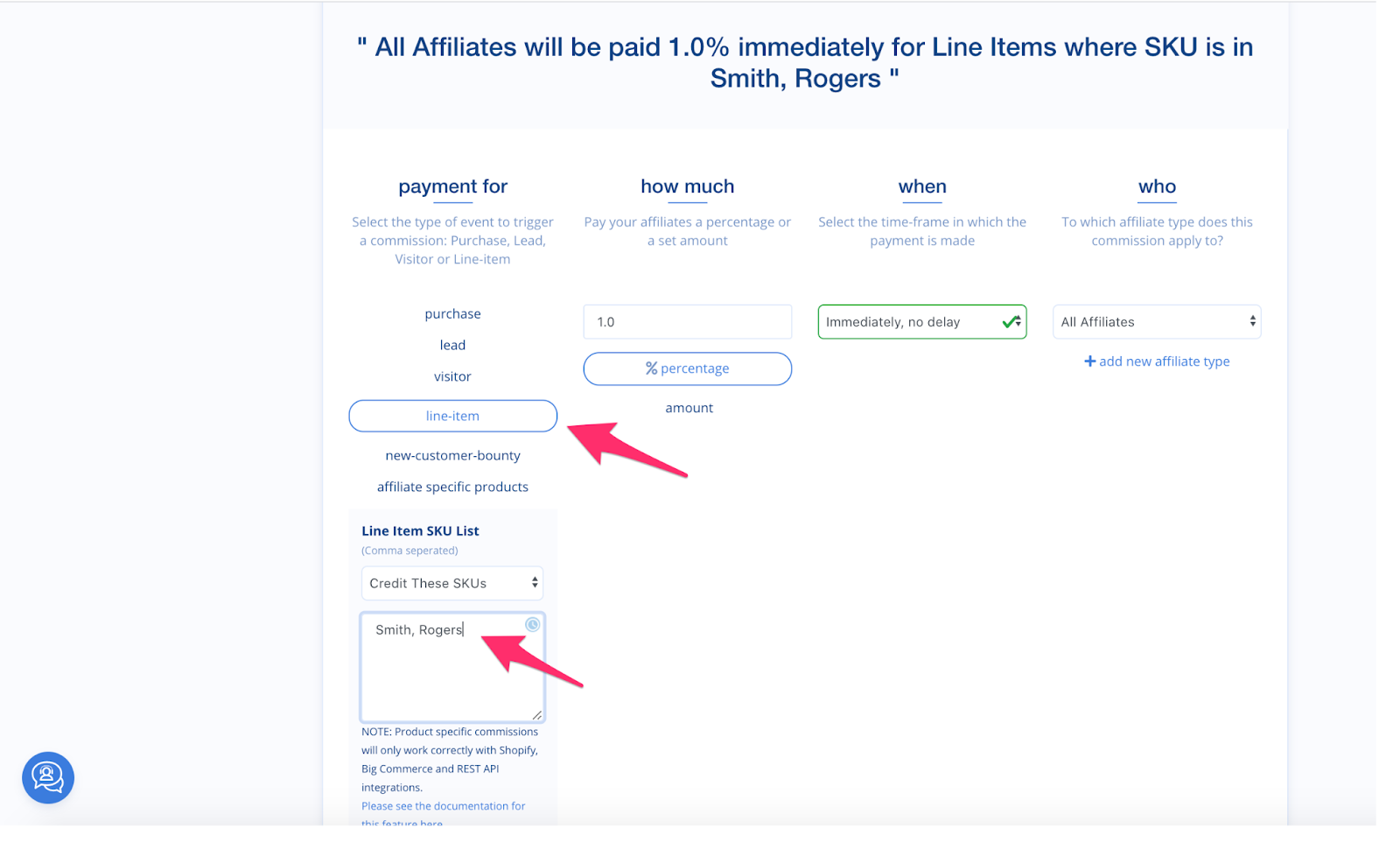
Automate commission calculations
If you choose to incentivize your affiliates with tiered rewards, you’ll want to automate the tiers and levels of your affiliate program. On top of that, subscription programs can become complex with monthly billing cycles, partial payouts, and the potential for tier upgrades.
Luckily, LeadDyno automates commission tracking and supports bulk affiliate payouts. Forget calculating commissions manually. Outsourcing this admin work to a software is essential when you scale from 20 affiliates to 200 or more.
Simplify onboarding
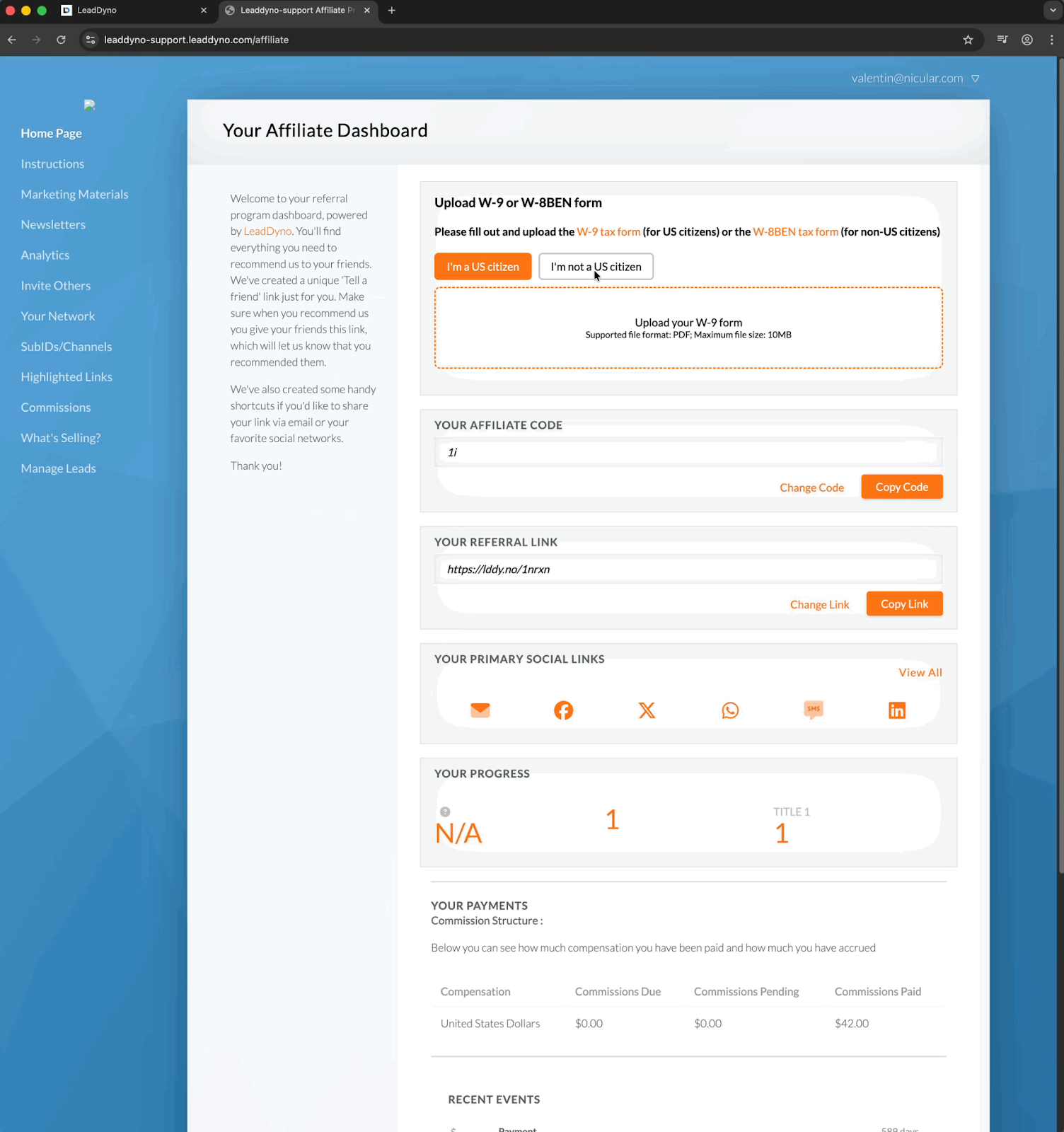
With affiliate software, you can easily support every new affiliate with an automated onboarding process. By providing access to a personalized portal, detailed brand guidelines, and essential tax documents, you set affiliates up for success from day one.
Grow without the administrative overhead
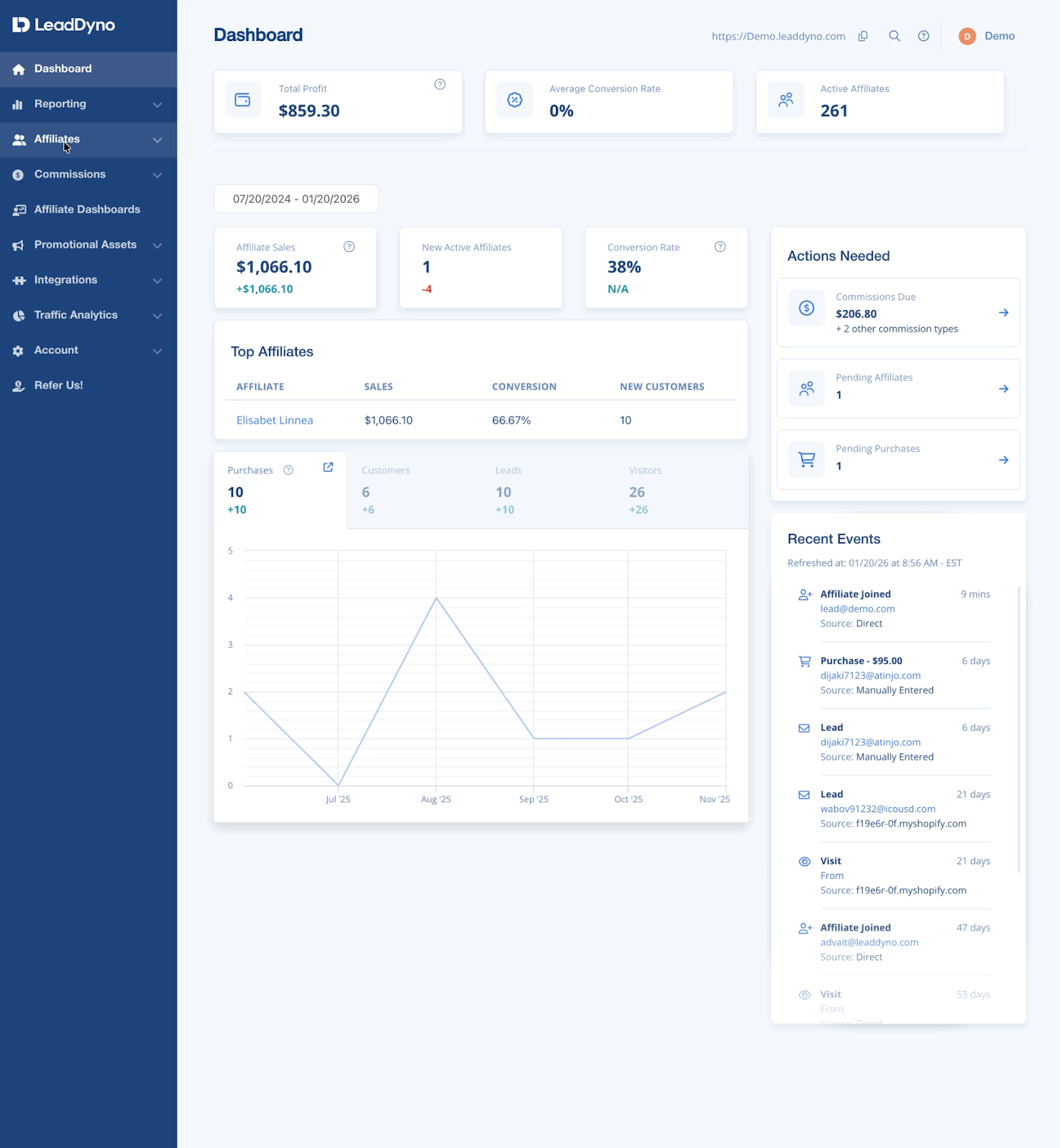
LeadDyno gives you back time and power to scale your subscription affiliate program efficiently. By automating operational tasks that bog down growth, you can focus on empowering affiliates and nurturing growth in other marketing channels.
Final thoughts
Your affiliates are an extension of your sales and marketing team, so set them up for success as you would an internal resource, and you’ll see strong results.
If you’re ready to take your affiliate marketing program to the next level for your subscription business, start your free trial of LeadDyno today.
.webp)

.svg)
Start a Free Trial
30 days free · Full Access
Cancel anytime
You might also be interested in...
Get Started Today
Launch your affiliate program with confidence thanks to our 30-day free trial. Begin building a program that delivers results.

