
Managing Affiliate Payments for Your Brand [Guide]
![Managing affiliate payments for your brand [Complete Guide] - LeadDyno](https://cdn.prod.website-files.com/648c18ae3d72ea34bd9ce6f4/696677e30ee2acf4254bb44f_Manage%20Affiliate%20Payments%20and%20Payouts.jpg)
See how LeadDyno can take your affiliate marketing strategy to the next level. Let’s set up a 1:1 demo to get your questions answered.
Billions of dollars in affiliate marketing payouts occur every year, making payments one of the most operationally essential parts of running an affiliate program. And with the affiliate marketing industry expected to grow by approximately 8% annually, processing affiliate payouts efficiently will only become increasingly important.
If you think about your own affiliate program tracking and management, you know that handling payments can quickly become a full day of administrative work. A disorganized payment process can also lead to mispayments, delays, and frustrated affiliates.
To avoid all those headaches, this guide will help you understand everything you need to know about how to pay affiliates effectively. By the end, you'll learn how to create a scalable, automated system that facilitates affiliate payments easily. Let’s dive in.
The basics of affiliate payments and payouts
Before diving into automation strategies, let's establish a clear understanding of the fundamental concepts of an affiliate payment system.
In short, affiliate payments compensate your affiliate or referral partners for the results (clicks, leads, sales) they generate for your organization. Typically, this is in the form of a commission.
The affiliate payout is the actual process of transferring those earned commissions from your business to your affiliate. This payout typically occurs on a specific date or time after the referral.
It may sound obvious, but because your affiliate marketing payouts are the lifeblood of your program, understanding these details will help you put the right processes in place to ensure smooth affiliate payments and payouts.
Common payment methods and types
With these foundational concepts in place, let's now review the specific payment models and methods that can shape your program's structure.
Your affiliate payment method, also typically known as a commission model, will dictate how and when your affiliates get paid. Here are some typical payment and commission models.
Performance-based models: CPA, CPS, and CPL explained
Most affiliate programs use performance-based models, in which affiliates are compensated only for specific outcomes. Here are the three most popular types.
Cost Per Action (CPA)
With the CPA model, you pay affiliates only for a specific predefined action the potential customer takes. This action could be anything from signing up for a newsletter to filling out a contact form for a life insurance policy.
Why companies use it: CPA is effective when your goal is lead generation or another non-sale conversion.
Cash flow considerations: CPA is great because you only pay when a valuable action occurs, so your marketing spend on your affiliate program becomes highly predictable. However, this model requires confidence that these actions will reliably convert to paying customers over time.
Cost Per Sale (CPS)
This payment model is the most common type in affiliate marketing. Affiliates earn a commission for every sale generated through their unique referral link or code. The commission is typically a percentage of the sale amount, but can also be a flat fee.
Why companies use it: CPS directly ties affiliate earnings to revenue, making it a low-risk option for brands.
Cash flow considerations: For cash flow, this model is fantastic because you only pay affiliates after a sale, ensuring your marketing expenses are always covered by incoming revenue! However, consider factors such as refund policies and churn to ensure payments align with revenue.
Cost Per Lead (CPL)
Similar to CPA, the CPL model compensates affiliates for every qualified lead they generate. A “lead” usually means a user has submitted their contact information, showing interest in your product or service.
Why companies use it: This model is ideal for businesses with longer or more complex sales cycles, such as SaaS, financial services, or high-ticket B2B solutions.
Cash flow considerations: From a cash flow standpoint, CPL is ideal when each lead has high potential value and close rates are well known, justifying the upfront cost before a sale.
Choosing payment models by commission tier and industry vertical
Cash flow considerations can be a major driver for payment model decisions; however, here are some other tips for choosing the right commission payout model.
Commission tiers
Consider creating a tiered commission structure to reward your best performers. For example, new affiliates might start at a standard CPS rate, while high-performing affiliates that generate big numbers can move up in tiers to earn a higher percentage. Using tiers incentivizes all affiliates to improve their performance to increase their earnings.
Industry vertical
E-commerce brands that use affiliate marketing typically employ a CPS model because commissions are tied directly to purchases. When sales occur within a single digital flow, this becomes easier to track and reliably recognize sales driven through affiliate efforts.
For businesses with longer sales cycles, such as B2B SaaS companies, CPL or CPA models often work best. The primary goal is to generate qualified leads for their sales teams to convert into customers.
Recommended Resource: B2B Affiliate Marketing Guide: Setup, Ideas, and More
Typical payment frequencies
Once you’ve selected the payment model that will fit your company’s needs, the next important decision is determining how often affiliates will receive commissions.
The frequency of your affiliate payouts can affect affiliate satisfaction and your own business's cash flow. Here are some of the standard options that many B2B and B2C businesses implement.
Standard payment cycles (monthly, bi-weekly, and net 30/60/90)
Monthly
Monthly payouts are the most common payment frequency, not only because they’re easy for the accounts payable team to approve, but also because they increase payment predictability for your affiliates.
Bi-weekly
If you want to improve your affiliate relationships, paying every two weeks can be very attractive for your partners. It gives them faster access to their earnings, which can be a significant motivator for putting in additional effort during high-volume or seasonal periods.
Net 30/60/90
Net terms refer to the period after a sale is complete, during which the commission is paid. For example, Net 30 means the affiliate will receive a payout within 30 days once the desired action occurs. For example, Fiverr uses a net-30-day payment term for its affiliates.
Balancing payment speed with fraud prevention windows
We highly recommend implementing a payment window to help prevent fraud. This period will help you verify that sales are legitimate and account for any customer returns or chargebacks, if included in your affiliate terms and conditions.
Recommended Resource: [Guide] Affiliate Fraud Protection to Protect Your Brand and Payouts
Challenges with manual affiliate payouts
When you understand these payment timing options and how they can impact your overall manual administrative efforts, it’s easy to see the complexities that grow as your program develops.
As your affiliate program grows, manual affiliate payouts become unmanageable. While they might seem manageable at first, manual processes can quickly become a significant bottleneck, taking up 1-2 days per month or even per week.
The hidden cost of manual payment processing
Manually calculating commissions, cross-referencing sales data, and processing individual payments for each affiliate is incredibly time-consuming. This effort is time you or your team could be spending on more strategic activities, such as recruiting new affiliates, providing supporting marketing materials, or focusing on a different channel altogether.
Error rates and their impact on affiliate relationships
A simple miscalculation or missed payment can easily lead to underpaying or overpaying an affiliate. These errors can damage your relationship with your partners, erode trust, and even push them to leave the affiliate program.
Scalability limitations
Imagine trying to process payments for hundreds or even thousands of affiliates each month using spreadsheets and individual bank transfers. It's a recipe for chaos. As your program grows, a manual payment process will inevitably break down, leading to delays, errors, and overwhelmed staff.
Recommended Resource: The Ultimate Guide to Affiliate Commission Rates
How to facilitate and automate affiliate payments
Now that you’ve determined your payment models and learned the common challenges, it’s time to learn how to properly facilitate and automate your affiliate payments.
We’re going to show you how to do so using an affiliate management software (LeadDyno) that allows you to facilitate payments through PayPal. This way, you can cut out the manual spreadsheet tracking that causes so many problems.
Step 1: Setting up automated commission calculation rules
Step one is all about setting up the right systems and rules, so your affiliate payouts can be processed seamlessly. First, head over and start your free trial.
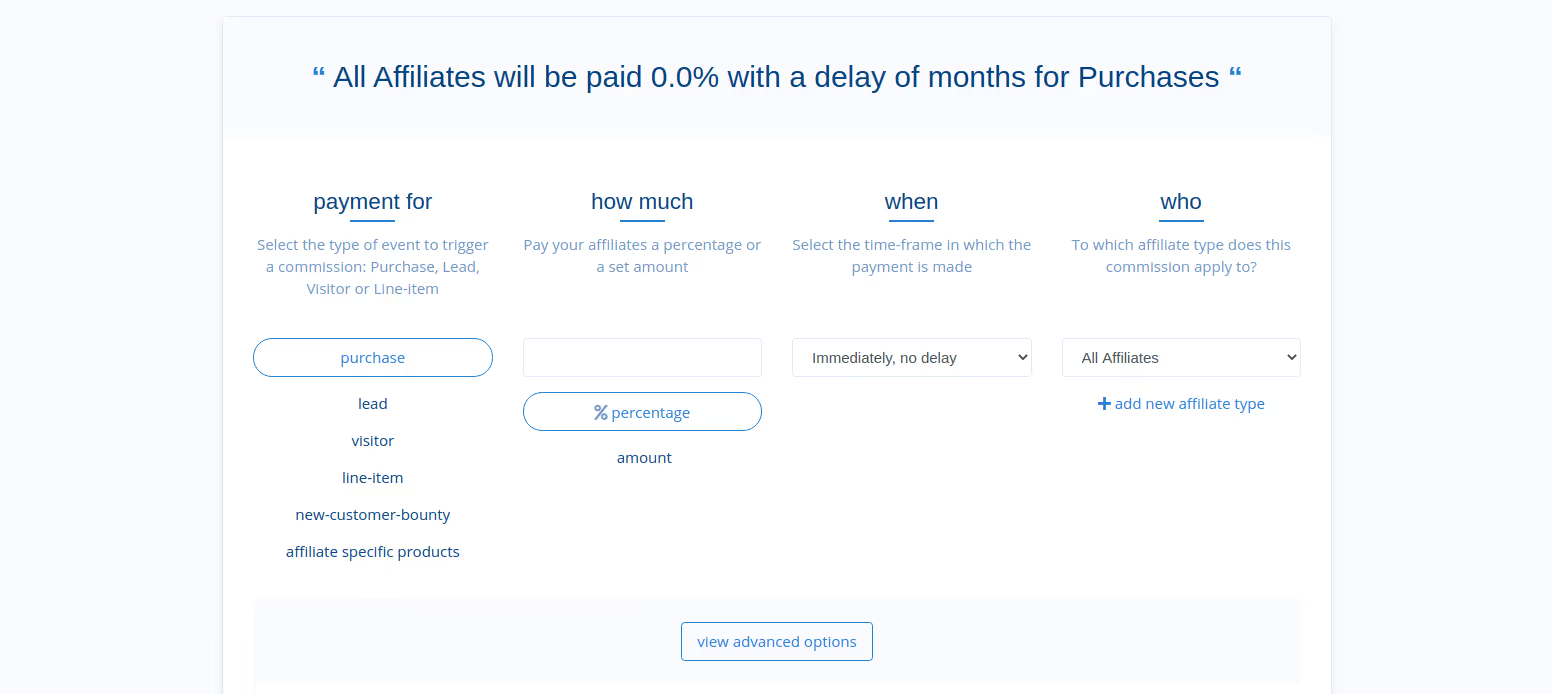
Once signed in, you can begin defining your commission rules. The best part is that you only need to do this once. Begin by specifying:
- What will generate the affiliate's commission? This decision ties back directly to the commission models we discussed in the beginning.
- Next, specify how much. This amount is the commission that will be paid to the affiliate when the commission is triggered.
- The third step is to set the commission due date. This date should tie back to your cash flow and payment model. Keep in mind, faster payments equal happier affiliates.
- Finally, with LeadDyno, you can specify who the commission payments and plan will be sent to. You can easily set up affiliate groups for certain payments to segment by products, reach, negotiated rates, etc.
Step 2: Configuring advanced payment schedules and setups
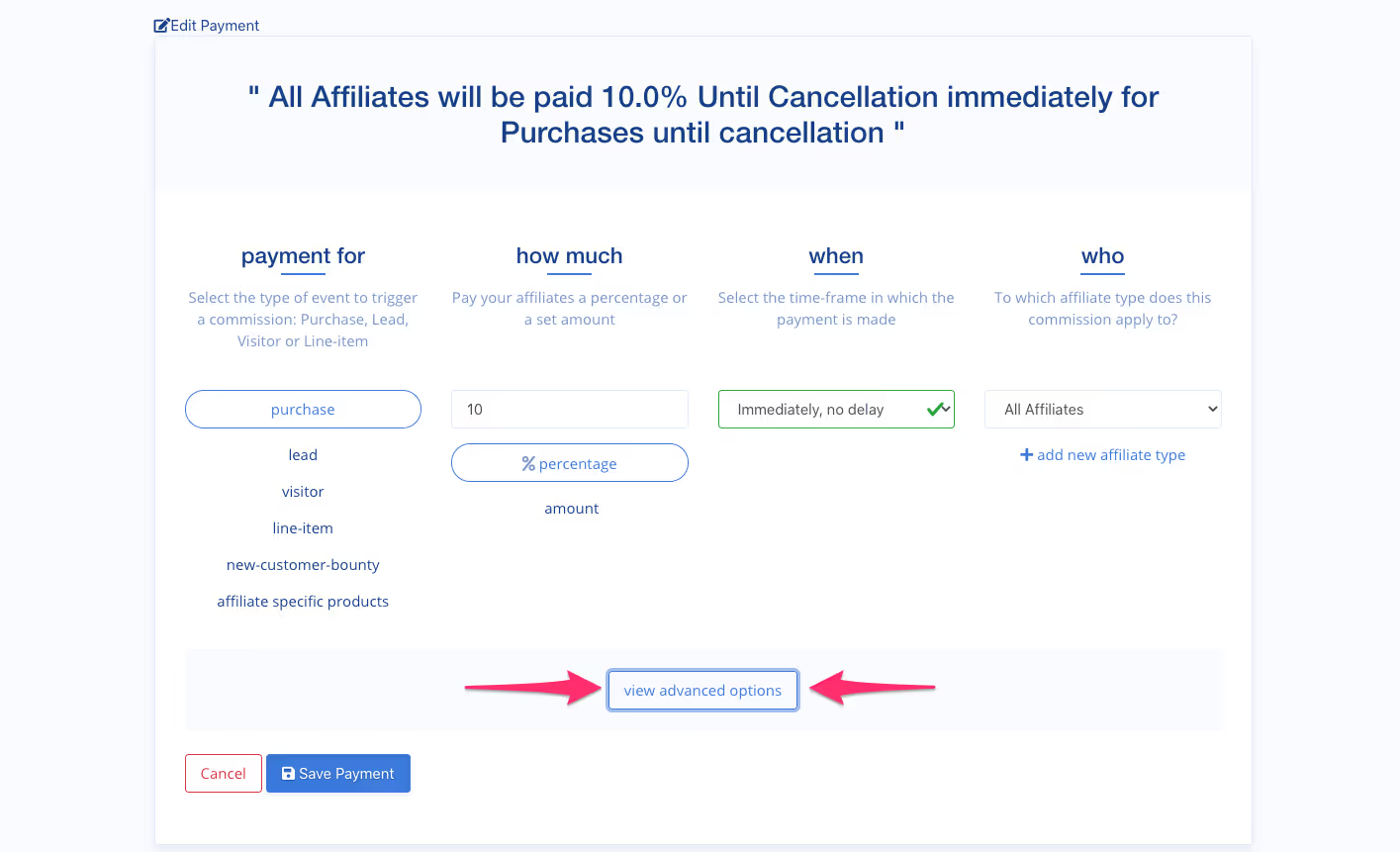
With commission rules configured, you’re ready to leverage advanced setup options. When setting up an affiliate commission plan, the advanced payment features will help provide the flexibility and scalability needed to meet your specific business goals.
Set up recurring commissions
If you’re running referral programs for B2B customers or offering a recurring commissions component, you can use your affiliate software to set this up as part of your payment options.
Recalculate commissions
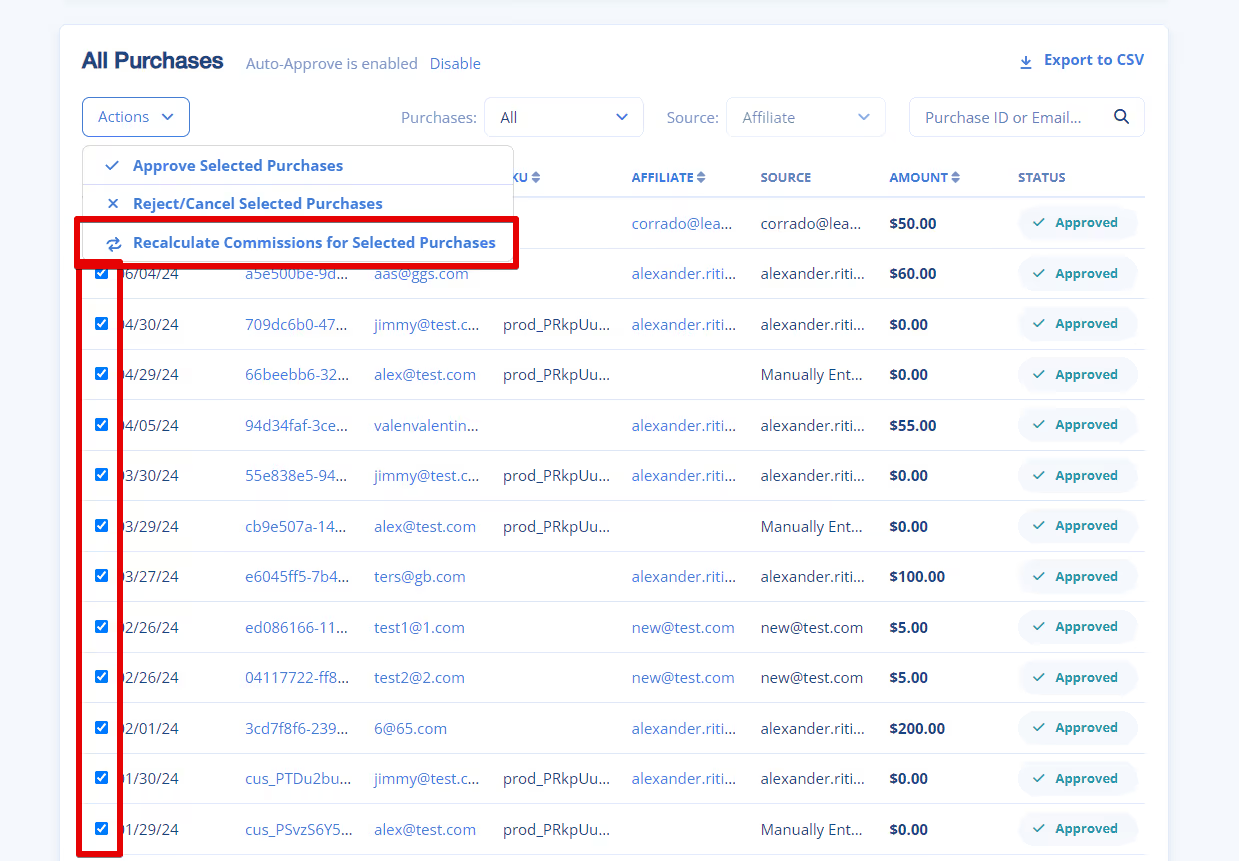
If you make changes to your commission plans, you can easily recalculate commissions for selected partners.
MLM tiered payments
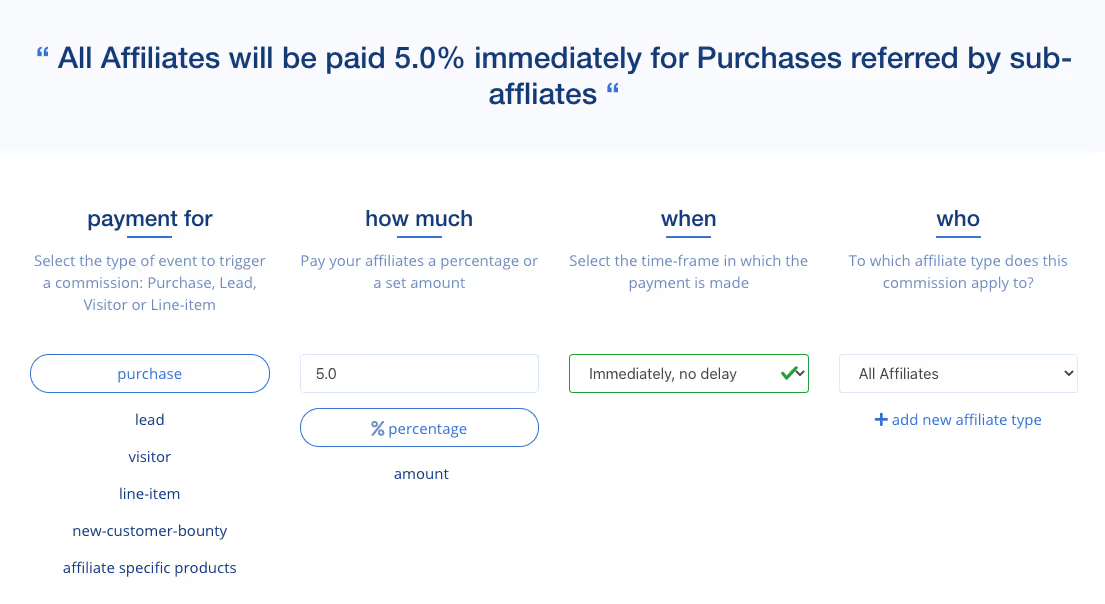
If you’re running an MLM, you can set up tiers for your affiliate commission plans, and your corresponding payouts will follow.
Payout based on price ranges
If you want to get sophisticated, you can use the “Price Range” feature to pay out only at certain thresholds. If you plan on prioritizing high-value transactions or want to deter high-churn affiliates who don’t drive many sales, this can help.
Payout based on customer lifecycle
If you’re looking to increase lifetime value using affiliate marketing, customer lifecycle commissions are a game-changer. Reward affiliates for purchases made during a defined timeframe after a customer’s first transaction. This strategy boosts retention while maintaining affiliate motivation.
Affiliate bonuses
Affiliate bonuses serve as an extra motivator, rewarding performance over time or specific achievements. Use Commission Tiers together with Time-Boxed Commissions to define qualification criteria for these bonuses.
Step 3: Integrating payment processors (PayPal or Webhook)
Now that the configurations are complete, it’s time to set up your PayPal connections.
Connecting your account
Now connect your PayPal account to automate the payment facilitation process.
- Head over to payment settings by going to the “Settings” or “Payments” section in the dashboard.
- Then, select PayPal as a payment option for affiliate payouts.
- Finally, follow the prompts to link your PayPal account. You may need to log in to PayPal and authorize LeadDyno to access your account for payments.
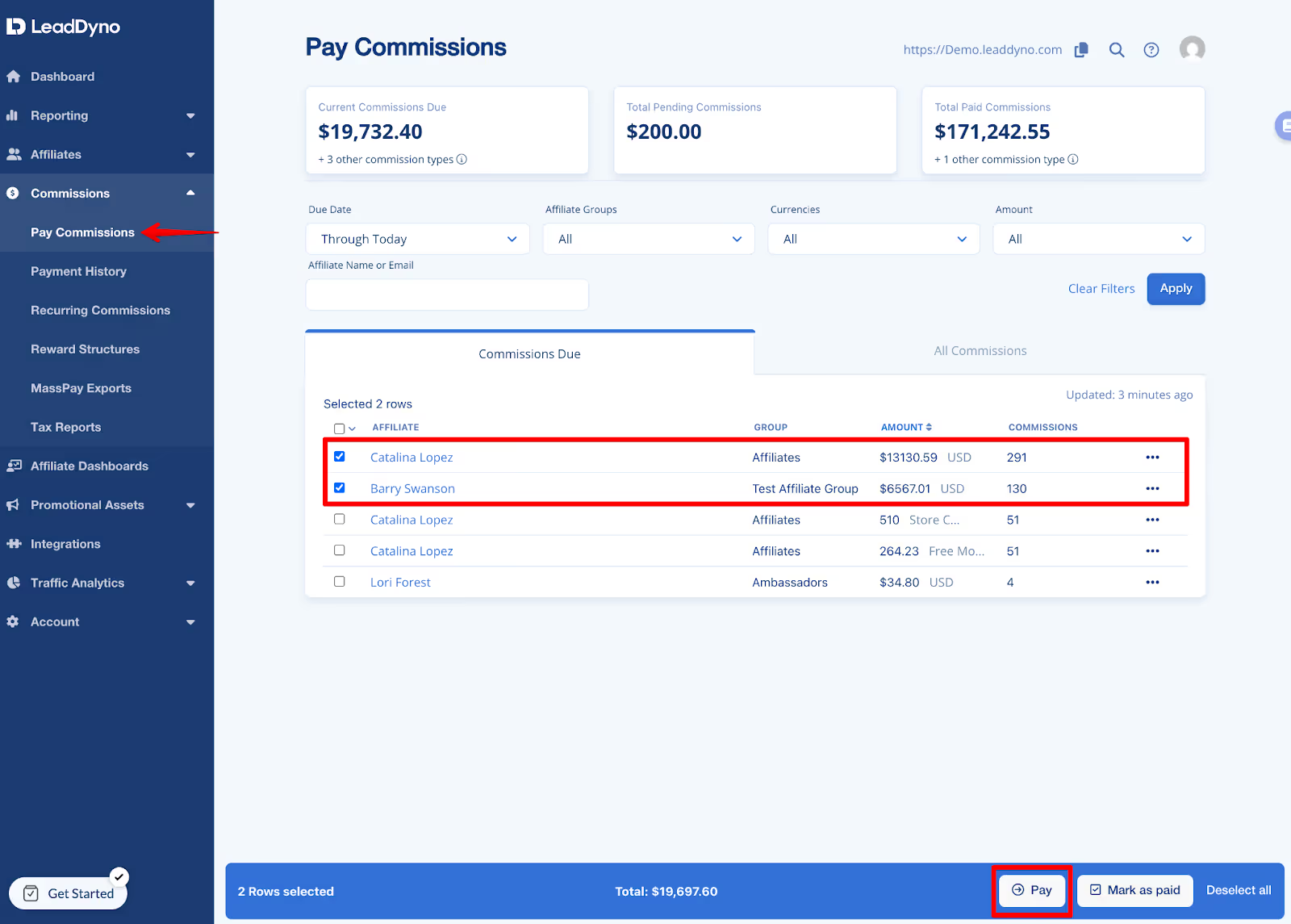
Paying affiliates via PayPal
Once your account is connected, you can easily pay affiliates. Here’s how.
- Select the affiliates you want to pay by selecting specific groups or individuals.
- Next, prepare the payment. Click on the “Pay” button.
You can connect your PayPal account and pay your affiliates instantly or in bulk using PayPal Mass Payments.
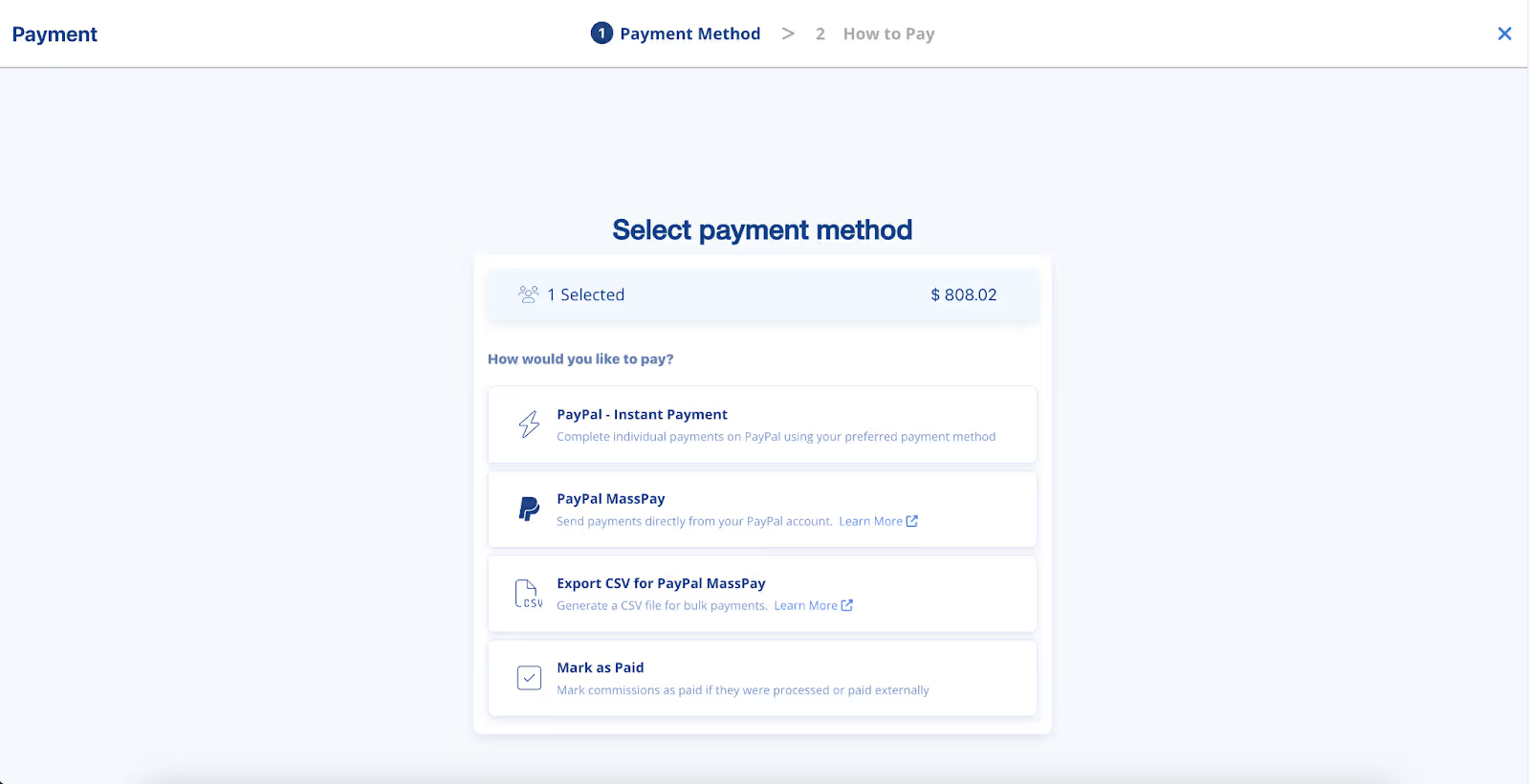
Instead of manually sending money to each affiliate, you can pay multiple affiliates directly from your LeadDyno dashboard with just a few clicks.
Paying affiliates via a webhook payment
With proper software, you can easily set up affiliate payments using a Webhook Payment. This feature allows you to use LeadDyno's payment webhook to send an HTTP post to any URL you choose, opening up more payment options and giving you complete control over the payout process.
Step 4: Implementing approval workflows and controls
Before going live with your automated system, validation testing can help prevent costly mistakes. Automation doesn't mean giving up control. We highly recommend setting up an approval workflow that requires a manager or an accounts payable clerk to review and approve payouts before being sent.
While these systems work well when set up, it’s essential to ensure proper oversight is maintained, especially if you implement advanced payment controls, have multiple affiliate groups, or are growing product or service lines.
Step 5: Testing and validation before go-live
Before you fully launch your new automated system, run a few test payments. Here’s how to do that in a few steps.
- Create a test affiliate account using your own email or a team member's. This test lets you see the process from both sides.
- Make a few test purchases using your test affiliate links to generate commissions in LeadDyno. You can void these later.
- Go to the Pay Your Affiliates section, select your test affiliates, and process the payout using your chosen payment method.
Automating affiliate payouts is easy when you use software like LeadDyno.
Software eliminates the frustrations that spreadsheets, complicated payroll setups, and manual administration bring when done outside an affiliate management platform.
{{blog-cta}}
Payment dispute resolution & affiliate communication protocols
Unfortunately, payment disputes can occasionally arise. Having a transparent process for resolving these issues is a must for maintaining good affiliate relationships.
Set clear payment terms
Start by establishing clear payment terms in your affiliate agreement. This document should detail your commission structure, payment schedule, return policy, and dispute-handling process.
Create a structured framework
To do this, don’t overcomplicate things. Make it easy for affiliates to raise concerns by creating a straightforward step-by-step process for dispute resolution. We recommended including clear steps for an affiliate to submit a claim, the required documentation (such as order IDs or customer details), and a timeline for when they can expect a response.
A well-documented and fair process shows your affiliates that you take their concerns seriously.
Recommended Resource: 14 Affiliate Marketing Tips for Startups to Grow Revenue
Why integrating affiliate management software is the best route
As you can see, when you’re starting up an affiliate program, ensuring payments and payouts are done seamlessly with software is key to successful ongoing management. There are also a myriad of other benefits that affiliate management software can bring to your brand.
Growing without growing your team
With an automated system in place, you can easily grow your affiliate program without needing to hire more staff to manage it. The software handles the heavy lifting of tracking, calculating, and paying, so you can focus on strategy and growth of the affiliate program.
Enhanced reporting and financial visibility
Affiliate management software lets you easily track key metrics such as clicks, conversions, and commission payouts. Using software gives you complete financial visibility and allows you to analyze your program's performance in real-time with data you can trust.
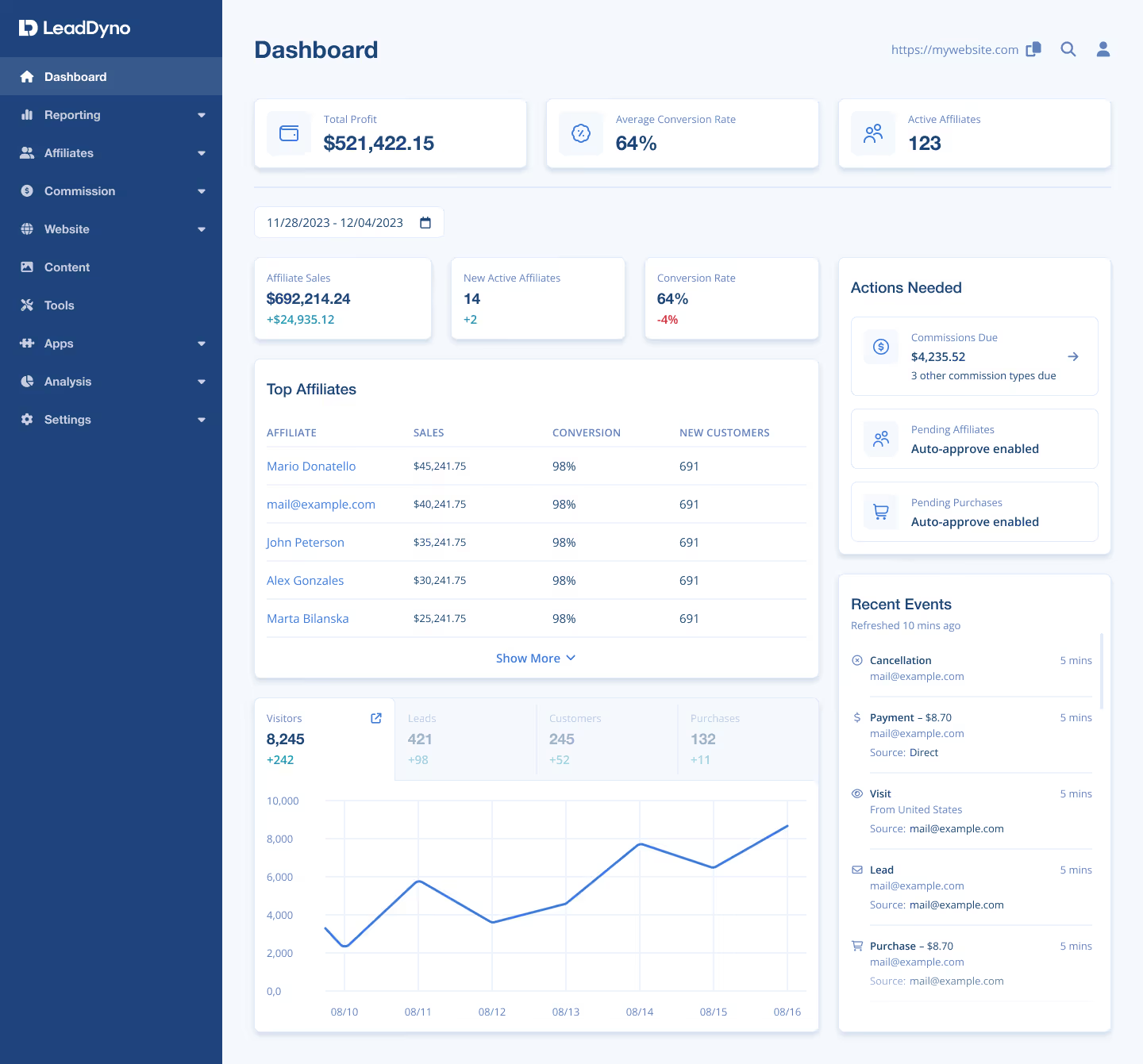
Integration capabilities
When you use a platform like LeadDyno, you can easily integrate with the tools you already use. From e-commerce platforms like Shopify and BigCommerce to payment gateways like PayPal and Stripe (for recurring subscriptions), these integrations can automate your workflow, saving you hours every week.
Final thoughts
When your affiliates are confident in your payment process, they are more motivated, more engaged, and more effective at driving revenue for your brand.
Ready to take control of your affiliate payouts? Start your free trial and see how a solution like LeadDyno can transform your affiliate payment process today.
.webp)

.svg)
Start a Free Trial
30 days free · Full Access
Cancel anytime
You might also be interested in...



Get Started Today
Launch your affiliate program with confidence thanks to our 30-day free trial. Begin building a program that delivers results.

