
The Affiliate Program Audit Checklist: 11 Areas Every Manager Should Review
See how LeadDyno can take your affiliate marketing strategy to the next level. Let’s set up a 1:1 demo to get your questions answered.
Download the free PDF version of this checklist to work through it offline or share with your team.
Affiliate programs don't run on autopilot. Even a well-structured program can quietly develop problems — broken tracking, inactive affiliates, miscalculated commissions, or compliance issues that go unnoticed for months.
A regular affiliate program audit keeps your program healthy, your data accurate, and your affiliates paid correctly. It also helps you spot growth opportunities you might otherwise miss.
This guide walks you through 16 areas to review in your affiliate program review checklist, with a recommended frequency for each and specific steps for auditing inside LeadDyno.
1. Conversion Tracking
Review frequency: Monthly, and after every website or checkout change
Tracking is the backbone of your entire affiliate program. If it breaks, everything downstream breaks with it (attribution, commissions, affiliate trust).
What to audit:
- Whether clicks are being recorded correctly
- Whether leads and signups are attributed to the right affiliates
- Whether purchases are being captured
- Whether repeat purchases are handled per your commission rules
- Whether discount codes are tied to the correct affiliates
- Whether recent site, app, or checkout changes affected tracking
Why it matters: Tracking you affiliates sales properly avoids errors and headaches. Even a small tracking gap can cause significant underpayment or overpayment. Affiliates who feel they're being shorted will leave.
2. Affiliate Activity
Review frequency: Monthly
Before analyzing anything else, you need to know who is actually participating in your program.
What to audit:
- Which affiliates are driving clicks
- Which affiliates are generating leads or customers
- Which affiliates have sent no traffic recently
- Which affiliates signed up but never promoted
- Which top affiliates are growing or declining in activity
- Which affiliates may need outreach, support, or removal
Why it matters: Inactive affiliates make your program look larger than it really is. They can also distort aggregate metrics. Your attention should go to the affiliates producing real results.
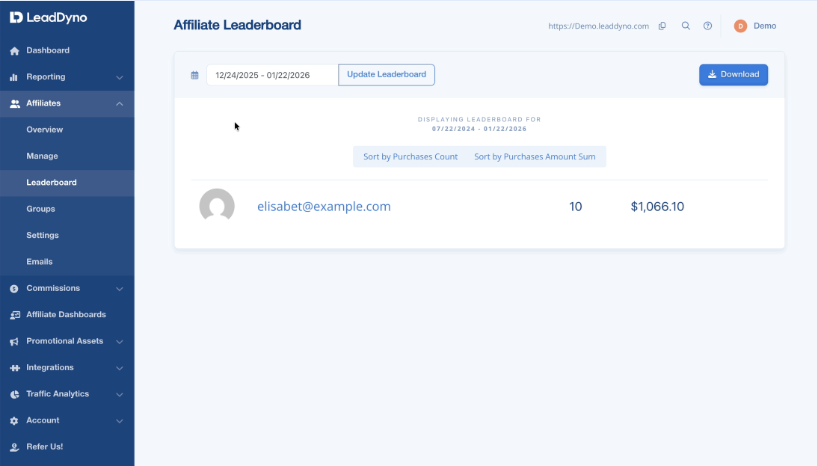
In LeadDyno: go to your affiliate leaderboard and select a time range to track top-performing affiliates. It’s an easy way to see which affiliates are generating the most sales (by count or revenue) within a selected period.
3. Traffic & Customer Quality
Review frequency: Monthly (weekly for larger programs)
Volume is not the same as value. An affiliate sending 10,000 clicks with zero purchases is not an asset.
What to audit:
- Affiliates with unusually high clicks and very low conversions
- Sudden traffic spikes from unknown or unverifiable sources
- Affiliates sending unqualified leads
- Conversion rates significantly above or below your program average
- Referrals coming from channels that violate your terms
- Cancellation rates for subscription-driven programs
- Whether affiliate-driven customers match your ideal customer profile
Why it matters: Poor-quality traffic wastes your sales team's time, distorts reporting, and increases fraud risk. Catching it early protects your budget and your data. Plus an affiliate who drives 10 high-LTV customers is more valuable than one who drives 100 who all churn within 30 days.
4. Affiliate Applications and Approvals
Review frequency: Weekly
If your program uses an application process, that process is only as good as how consistently you apply it.
What to audit:
- New applications waiting for review
- Affiliate websites, blogs, and social profiles
- Stated promotional methods
- Audience fit and geographic alignment
- Type of affiliate: content creator, coupon site, agency, influencer
- Applications with missing or suspicious information
- Duplicate accounts
Why it matters: Who you let into your program shapes your program's reputation. Approving the wrong partners creates compliance and brand problems later.
5. Pending Commissions and Payouts
Review frequency: Every payout cycle
Every payout cycle is a financial checkpoint. Treat it like one.
What to audit:
- All pending commissions awaiting approval
- Approved commissions ready for payment
- Any rejected or reversed commissions
- Whether affiliates have met minimum payout thresholds
- Whether payment details on file are current and correct
- Any duplicate or suspicious commission entries
- Commissions tied to refunded, canceled, or flagged orders
Why it matters: This is your last chance to catch errors or abuse before money leaves the business.
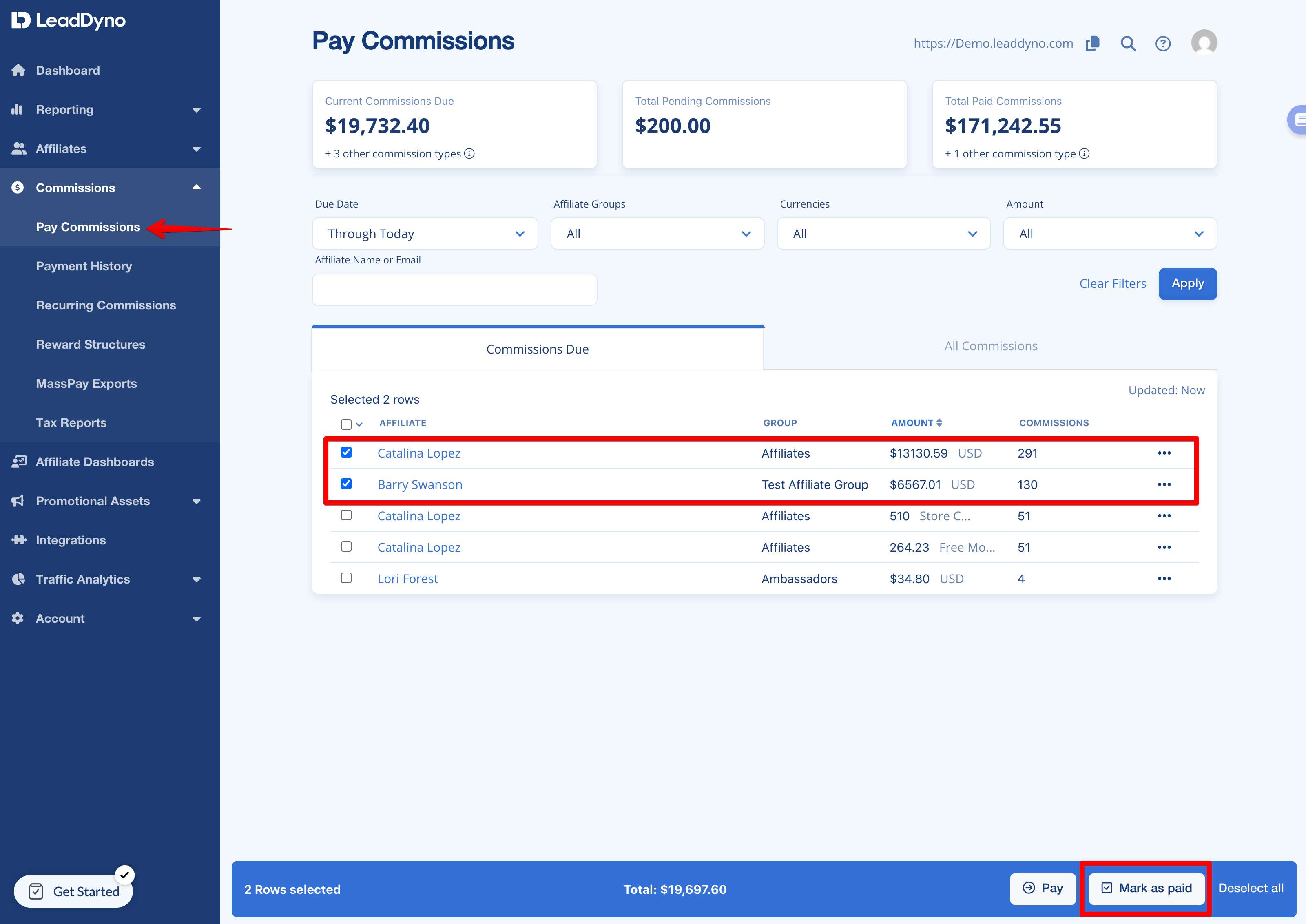
In LeadDyno: Before approving any payout, filter commissions by date range and review the full list. Spot-check large commissions individually. Confirm how refunds and cancellations are being handled. Document any adjustments or rejections with a note so you have a record if questions arise later.
6. Fraud and Abuse Signals
Review frequency: Monthly, and before every payout
Affiliate fraud is rarely obvious. It shows up in patterns — and only if you look.
What to audit:
- Self-referrals (affiliates buying through their own link)
- Multiple affiliates with shared customer details (email, address, payment method)
- Repeated purchases from similar IP addresses or names
- High commission amounts tied to low-quality or short-lived customers
- Unexplained traffic spikes from a single source
- Coupon code abuse (codes used in ways that violate terms)
- Suspiciously high conversion rates relative to program average\
- Customers who request refunds immediately after commission approval
Why it matters: Fraudulent commissions drain your budget and can compromise your ability to trust your own data.
7. Commission Structure
Review frequency: Anually, before each payout cycle
Commission rates that made sense when you launched may no longer reflect your margins or your business model today. After some point, is important to reasses your commission structure to make sure this still make sense.
What to audit:
- Commission rates by affiliate and by group
- Recurring vs. one-time commission rules
- Product-specific or plan-specific commission settings
- Custom overrides for individual partners
- Existing coupons or capaigns
- Check if current commissions are sustainable
Why it matters: Overpaying eats margin. Underpaying damages relationships. Both happen more than most managers realize. Is important to find a balance with a structure that is sustainable for your business.
8. Affiliate Links and Promo Codes
Review frequency: Quartely, and before major campaigns
A broken link or an expired promo code is silent revenue loss. The affiliate sends the traffic; the conversion never happens.
What to audit:
- Referral links for active affiliates
- Landing pages the links point to
- Active promo codes and their discount values
- Expired or discontinued offers still in circulation
- Incorrect discount amounts
- Links pointing to outdated or removed pages
- Campaign-specific links
- UTM parameters if you use them
- Code-to-affiliate assignment accuracy
Why it matters: Affiliates may be sending motivated buyers who can't convert because the destination is broken or the code doesn't work.
9. Affiliate Compliance
Review frequency: Monthly, with a deeper quarterly review
In a typical affiliate program, there is an affiliate marketing agreement that affiliates accept when they join your program. Not all of them follow those terms.
What to audit:
- Prohibited keyword use in paid search
- Unauthorized promotion on coupon or deal sites
- Misleading claims about your product
- Brand bidding (affiliates bidding on your brand name in paid ads)
- Spammy email campaigns sent on your behalf
- Incorrect use of your logos or messaging
- Promotion on channels you've restricted
- Affiliates representing themselves as your company
- Self-referrals or account manipulation
Why it matters: Compliance violations can inflate your customer acquisition cost, damage your brand, and create legal exposure.
10. Affiliate Communications
Review frequency: Quarterly
What affiliates know about your program — how to promote, what to earn, when to expect payment — directly affects how actively they promote.
What to audit:
- Welcome email content and accuracy
- Onboarding instructions and getting started guides
- Written program terms
- Commission explanation (what they earn and when)
- Availability of promotional assets
- Accuracy of product messaging
- Payout schedule and minimum threshold instructions
- Contact information and support process
Why it matters: Many affiliates underperform not because they lack motivation but because they lack clear direction. Better communications produce more active affiliates.
11. Creative Assets and Marketing Materials
Review frequency: Quarterly, or before campaigns
Outdated or missing assets are a friction point for affiliates who want to promote.
What to audit:
- Banner ads and display images
- Logos and brand marks
- Product screenshots or demo visuals
- Ready-to-use email copy
- Social media captions and templates
- Landing page URLs for active campaigns
- Seasonal or promotional campaign materials
- Brand guidelines document
- Consistency of messaging and visual identity
- Any offers referenced in assets that have since changed
Why it matters: Affiliates without good assets often default to improvising — which leads to inconsistent, off-brand promotion.
Download the Checklist
Want a version of this affiliate program review checklist you can print, fill in, and share with your team? Click to download the Affiliate Program Audit Checklist PDF
{{blog-custom-cta}}
Use it to run your next audit from start to finish or hand it off to the person who manages your program day-to-day.
Run This Checklist Inside LeadDyno
LeadDyno gives affiliate program managers the reporting, filtering, and commission controls needed to work through this entire affiliate program review checklist without switching between tools — from affiliate activity reports to commission approval workflows to promo code management.
Start your free trial of LeadDyno →
Frequently Asked Questions
How often should I audit my affiliate program?
The core areas, affiliate activity, traffic quality, commissions, and fraud signals, should be reviewed monthly. Structural items like program terms, creative assets, and communications work well on a quarterly cycle. Commission structure is worth a full review at least once a year or whenever your pricing changes.
What's the difference between an affiliate program audit and a regular performance review?
A performance review focuses on results: who's selling, what's converting. An affiliate program audit goes deeper — it checks whether the underlying infrastructure (tracking, links, commissions, compliance) is actually working correctly. You need both.
What should I check before every payout?
Before any payout, review all pending commissions for duplicates, refunded orders, and fraud signals. Spot-check large commissions manually. Confirm payment details are current. This step is your last line of defense before money leaves the business.
Find your next affiliate program
.webp)

.svg)
Start a Free Trial
30 days free · Full Access
Cancel anytime
You might also be interested in...


Get Started Today
Launch your affiliate program with confidence thanks to our 30-day free trial. Begin building a program that delivers results.

