
Affiliate Policy Compliance & Rules Monitoring Guide for Brands

See how LeadDyno can take your affiliate marketing strategy to the next level. Let’s set up a 1:1 demo to get your questions answered.
Affiliate policy and regulatory compliance are significant issues for many brand affiliate campaigns. A recent review found that nearly 80% of influencers promoting a brand failed to properly disclose paid promotions. This failure can directly impact your affiliate marketing efforts when working with referral partners and influencers.
But what happens if they’re non-compliant? Is your brand now at risk? Staying compliant doesn't have to be confusing. In this guide, we’ll walk you through everything you need to know about affiliate policy compliance, from important regulatory frameworks to setting up a proper system to stay compliant. Let’s dive in.
The legal frameworks that apply to affiliate marketing
The goal of these regulations isn't to stop you from selling; it's to keep your organization and affiliates honest and transparent to consumers, which begins with the regulatory frameworks that define compliance requirements.
United States - FTC guidelines
In the U.S., the Federal Trade Commission (FTC) sets the standard. The most important document you’ll need to know is 16 CFR Part 255. It’s called the Guides Concerning the Use of Endorsements and Testimonials in Advertising, and at its core, it’s about honesty and truthful disclosure.
If there is a "material connection" between your affiliate and your brand, you’ll have to disclose this — plain and simple.
Potential disclosure requirements
The FTC mandates that disclosures must be "clear and conspicuous," meaning they must be:
- Unavoidable: Consumers shouldn't be able to miss them.
- Understandable: No legal jargon.
- Proximate: Placed right next to the affiliate link or recommendation.
Recent enforcement actions from 2022 to 2025 have shown that the FTC is serious about holding brands responsible for their affiliates' actions. They are cracking down on "fake reviews" and misleading endorsements.
Compliance tips for consideration in the USA
To stay compliant with FTC regulations, use precise terms like "Ad" or "Sponsored."
For placements, make sure affiliates add disclosures before affiliate links or "read more" buttons, so it’s easily visible without scrolling. These regulations also aim to ensure you avoid deceptive tactics, such as making the text the same color as the background.
European Union - Consumer Rights Directive & GDPR considerations
If you’re operating in the EU, or have affiliates or customers in the EU, there are two layers of compliance you’ll need to know and follow.
Consumer rights
First, the EU has specific regulations around consumer rights. These laws require that commercial intent be made apparent. For example, an affiliate blog post cannot look like an impartial news article if it’s actually an ad.
GDPR (General Data Protection Regulation)
Second is data compliance with GDPR, the better-known online regulatory framework in the EU that mandates how tracking cookies are used and stored.
Since affiliate links often use cookies to track user behavior and attribute sales, you must obtain explicit consent to use these non-essential cookies. You cannot drop a tracking cookie before the user says "Yes."
Compliance tips for consideration in the EU
Use a cookie banner that’s configured correctly with your website analytics, affiliate tracking software, and domains to explicitly ask for consent to track for marketing/affiliate purposes.
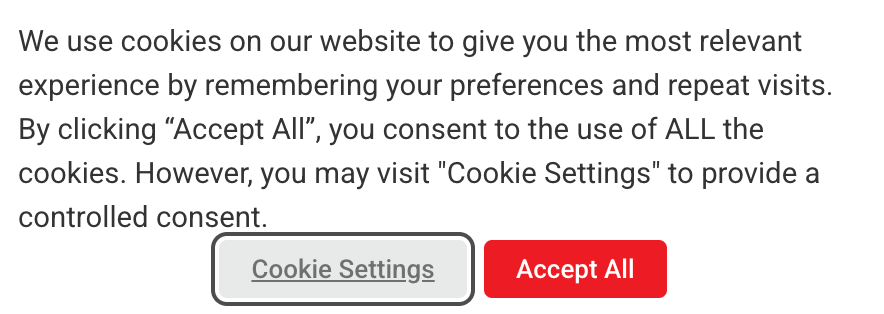
Cookie Notice Example
Also, be prepared to delete user data if requested (Right to Erasure).
United Kingdom - ASA guidelines
Following Brexit, the UK follows rules that are set by the Advertising Standards Authority (ASA) and the Competition and Markets Authority (CMA).
The important aspect of the UK rules is the requirement for strict unavoidable disclosures. The CMA emphasizes that disclosures must be understandable and unambiguous. For example, using vague terms like “sp” to represent “sponsored” would be considered misleading. To remain compliant in that example, use clear labels such as #Ad or #Advert.
Canada - Competition Act & CASL
In Canada, the Competition Act prevents misleading advertising and deceptive marketing practices. For example, if an affiliate makes a claim that is misleading or false, your brand can be found liable.
Additionally, CASL (Canada’s Anti-Spam Legislation) is important if your affiliates use email marketing. To comply with relevant regulations governing email marketing, your affiliates must have express consent to send commercial emails and include a working unsubscribe mechanism.
Compliance tips for consideration in Canada
We recommend providing detailed, thorough information about your products or services to affiliates to help them stay compliant with any relevant claims. Proper contracts that ensure affiliates have full consent for email marketing can also be incorporated.
Australia - ACCC guidelines
The Australian Competition and Consumer Commission (ACCC) manages the Australian Consumer Law (ACL). They have specific guidelines for influencer marketing that apply directly to affiliates, similar to regulations in the UK and Canada. Misleading conduct is a major violation.
We highly recommend consulting with legal counsel when developing strategies or drafting legal agreements that involve compliance with one or more of the above frameworks.
Recommended Resource: [Guide] Affiliate Fraud Protection to Protect Your Brand and Payouts
The dangers of non-compliance and poor rules monitoring
As you’re about to learn, there are considerable legal implications for ignoring or going against regulations and compliance frameworks.
Dire financial consequences
The most immediate impact for non-compliance is fines. The FTC and other regulatory bodies have the authority to pursue significant financial penalties. As an example, a recent FTC decision required an affiliate network to pay nearly $12 million in fines.
But it’s not just fines. The cost of legal fees to defend the brand, program audits, and other resources can also take a serious financial toll on your organization.
Brand reputation damages
Your brand reputation is the most valuable asset among your current and potential customers. If you or your affiliates get caught spamming customers or making false claims, that can have serious consequences.
As another example clearly represents, this weight-loss brand ruined its reputation by using massive spam campaigns for its affiliate marketing operations. They have done irreversible damage to their brand image.
Company operational disruptions
Finally, non-compliance can lead to major company disruptions that are easily avoidable. Social platforms like TikTok, Meta, and Snapchat have strict advertising policies. If your affiliates violate these terms through shady practices such as "cookie stuffing" or running misleading ads, your brand could run into compliance trouble with these social platforms.
How to develop a compliant affiliate program
Since the risks of non-compliance can be severe, it’s essential to properly build out procedures that protect your brand and affiliates.
Step 1: Develop comprehensive affiliate terms & conditions
Your Terms & Conditions are essentially the contract that outlines exactly what is and isn’t allowed when working with your brand. While you can begin with a template, it’s best to tailor your terms document to your specific business needs and legal requirements. For example, include a clause on FTC Compliance requiring affiliates to comply with 16 CFR Part 255, which governs proper disclosure and the prohibition of misleading statements.
It’s also essential to include a Termination Clause that gives you the right to stop working with affiliates immediately for fraudulent activity or violations of your terms. For example, you can include something like:
"We reserve the right to terminate any affiliate account without prior notice if fraudulent activity is detected."
Managing liability for misleading claims
You should also consider transferring any liability to the affiliate in cases where they make misleading claims that result in fines or other penalties. For example, you can include a clause like:
“Affiliates are responsible for ensuring that their content complies with all applicable laws and regulations. If an affiliate makes an unsupported or misleading claim that results in a regulatory fine, lawsuit, or penalty, they will bear full responsibility for the consequences, including any financial repercussions. The company reserves the right to terminate the affiliate agreement immediately if such violations occur.”
Other clauses to consider
- Ethics Clause: "Affiliate generally agrees to conduct themselves in a manner that reflects positively on the Brand."
- Modification Clause: "Brand reserves the right to update these terms with notice."
Step 2: Create clear promotional guidelines
Staying in line with regulatory frameworks and rules starts with empowering your affiliates for success by providing clear guidance.
A great way to do this is to create a one-page document outlining your promotional guidelines. For example, include your approved logos, required hashtags, and mention key points on the importance of using specific messaging at specific times.
Finally, clearly list what to avoid, like staying clear of medical claims, competitor trademarks, and spamming email lists.
Step 3: Implement affiliate screening & onboarding
A proactive approach is always best, so let's make sure you have strong protocols in place for screening and onboarding affiliates.
Easily screen affiliates
When you're screening potential affiliates, it’s a great idea to run through a quick checklist. Take a look at their website and social media profiles and answer the question: Do they look professional and align with your brand's image?
If they pass the quick review and their application looks solid, they could be a great affiliate partner for your program.
Making onboarding reinforce compliance
Once you’ve approved an affiliate, the onboarding process is your next opportunity to reinforce compliance. Provide a checklist or document they must review, in addition to the previously signed terms, that confirms they’ve read and understand the requirements for staying compliant.
Pro Tip: Use email to educate affiliates on compliance and guidelines
To build on your onboarding, start with an email series that includes a dedicated email that explains proper disclosure and provides clear examples of compliant language, such as adding in examples of how other affiliates have done this. An affiliate management software like LeadDyno can automate this for you.
Step 4: Establish monitoring protocols
While it would be nice if you could set affiliates up during onboarding and forget about the rest, staying compliant requires building consistent monitoring protocols. Manual monitoring is nearly impossible after a few affiliates join your program, so we recommend using software if you’re serious about affiliate policy compliance.
Step 5: Maintain documentation & records
Now, make sure you’re keeping track of all your documentation. If a regulator ever comes knocking, having proper documentation is your best defense, because it’s not just about following the rules; it’s about being able to prove that you made a genuine effort to stay compliant.
Record-keeping considerations
Keep a log of all accepted terms and conditions, including timestamps, and save copies of any compliance warnings sent to affiliates. Make sure to retain records of your audits for future reference.
Pro Tip: Organize everything digitally by year and affiliate ID to keep things clear and accessible.
Recommended Resource: 17 Essential Affiliate Marketing KPIs and Metrics
{{blog-cta}}
Using affiliate management & tracking software for maximum compliance
By leveraging powerful affiliate management tools, you can automate and save hours each month on compliance-related tasks.
Centralized terms & conditions management
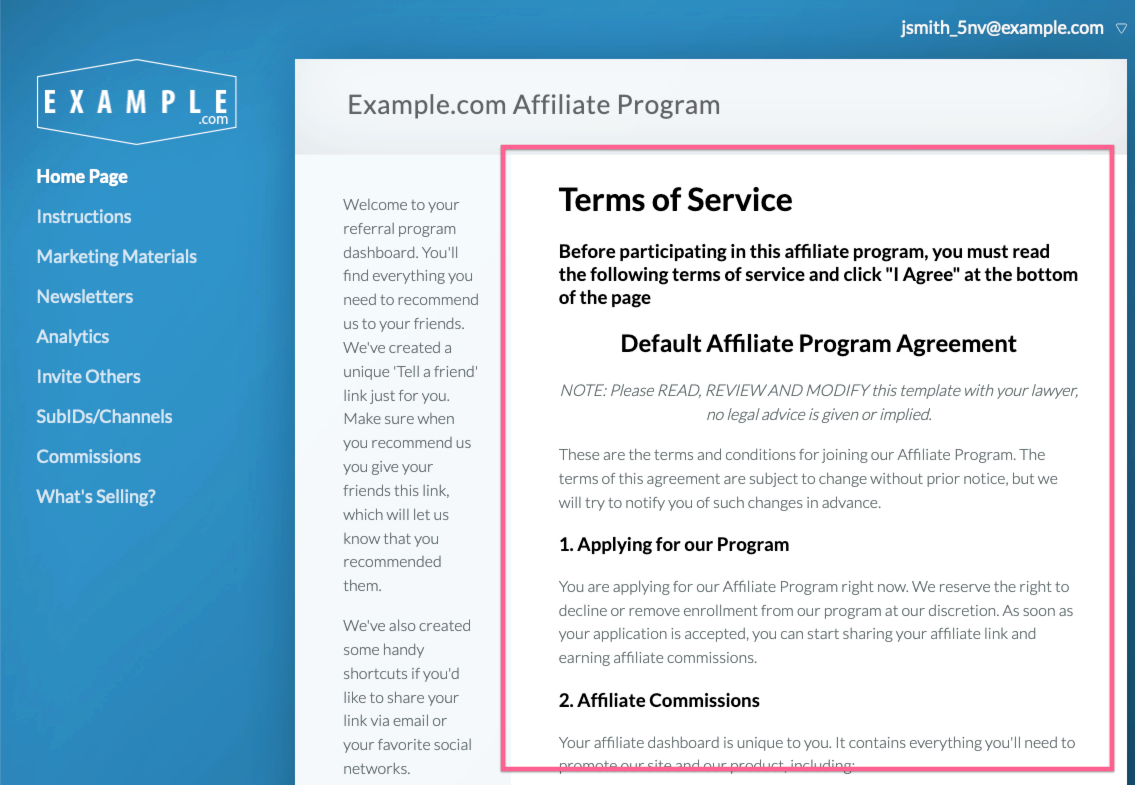
One of the biggest challenges is making your legal documents easily accessible and included in important sign-up forms. LeadDyno solves this by allowing you to integrate your customized Terms & Conditions directly into the sign-up process and require affiliates to accept them before participating.
Automate brand communications and education
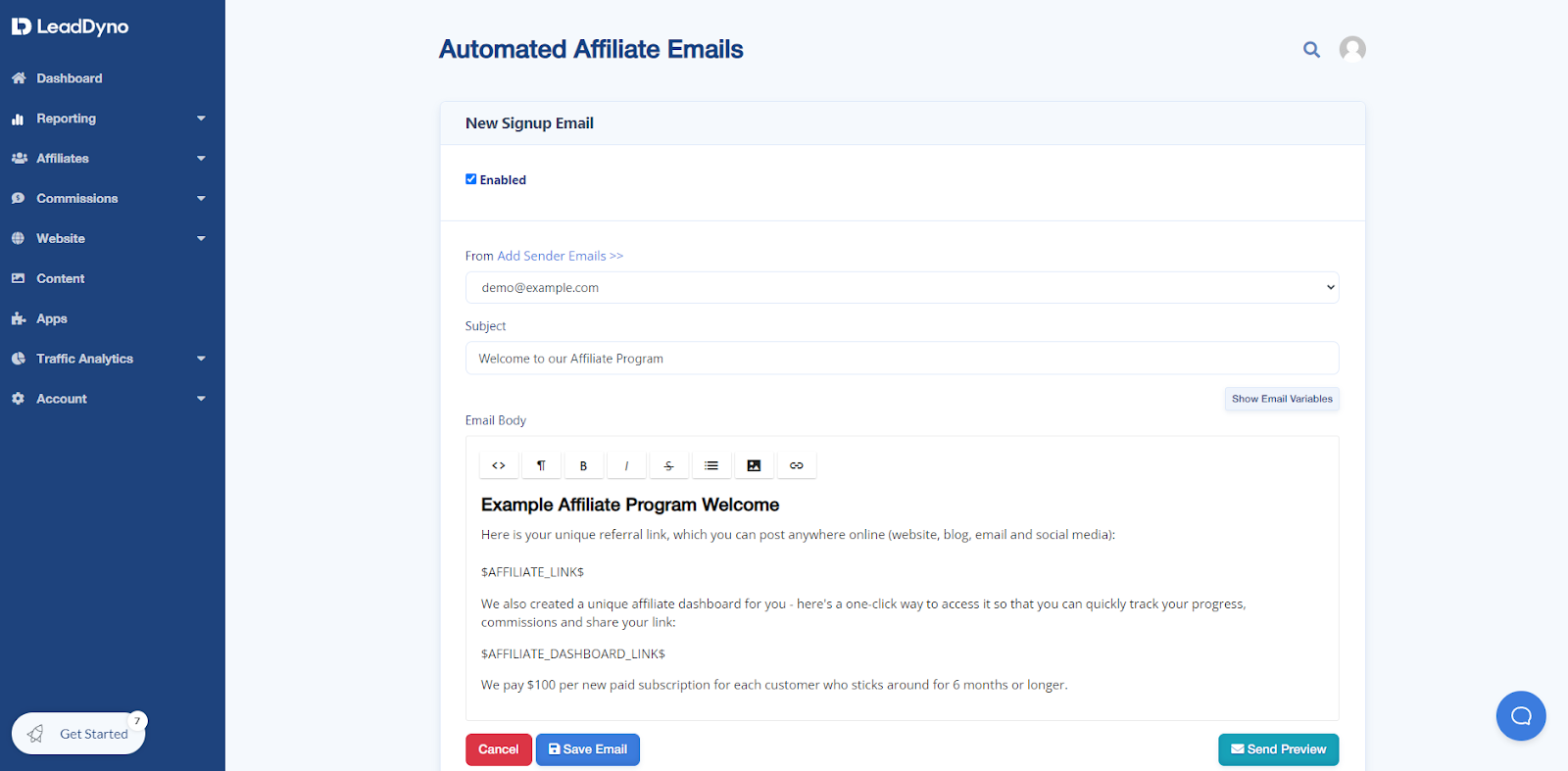
In minutes, you can set up automated welcome emails that include things like new regulatory updates or references. You can also send bulk newsletters to your entire network whenever regulations change.
Scalability with peace of mind
As your program grows from 50 to 500 affiliates, manually providing the right marketing materials to different affiliate types can become tedious and annoying. That’s where LeadDyno is ready to scale with you.
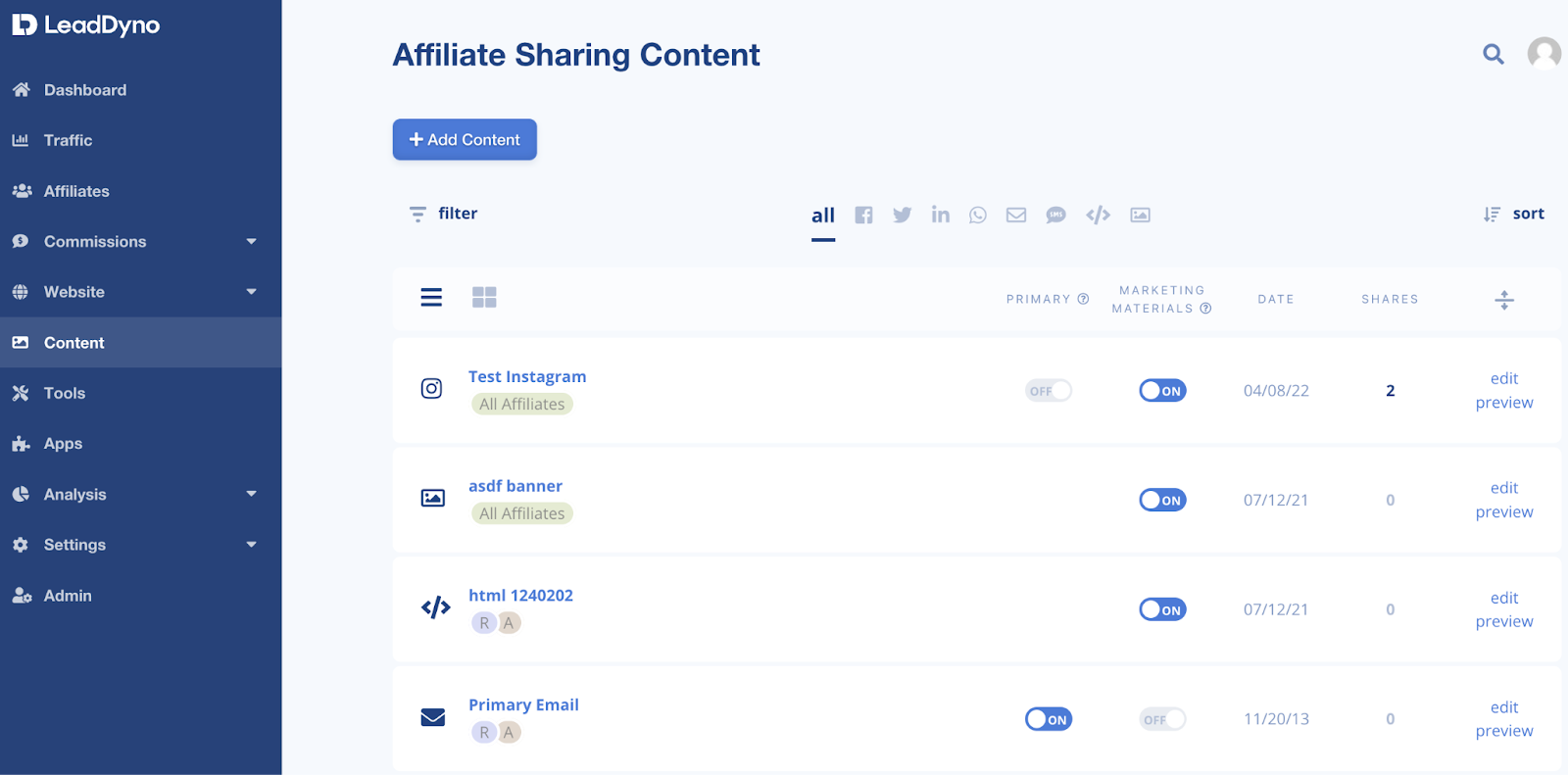
You can easily centralize your creative assets (banners, swipe copy) within LeadDyno. Then, affiliates simply log into their dashboard and grab your compliant materials directly for their marketing.
Final thoughts
By understanding the legal landscape, assessing the risks, implementing a proper plan, and using software, you can easily navigate these legal complexities and stay compliant.
With the right strategies and powerful tools, you’ll be well on your way to avoiding any legal complications, so you can focus on scaling your affiliate program.
Sign up for a 30-day free trial to see how LeadDyno can help you maintain affiliate compliance while you launch, manage, and grow your affiliate program.
.webp)

.svg)
Start a Free Trial
30 days free · Full Access
Cancel anytime
You might also be interested in...


Get Started Today
Launch your affiliate program with confidence thanks to our 30-day free trial. Begin building a program that delivers results.

