
A Brand's Guide to Tracking Affiliate Sales
See how LeadDyno can take your affiliate marketing strategy to the next level. Let’s set up a 1:1 demo to get your questions answered.
See how LeadDyno makes it easy to track clicks, sales, commissions, and payouts in one place.
Running an affiliate program without proper tracking is like paying a sales team without knowing which representative closed each deal. Brands lose money to untracked sales, misattributed commissions, and fraud when they rely on guesswork. To operate a successful program, you need to track affiliate sales accurately from the first click to the final payout.
This guide explains why tracking matters, the methods available, and how to do it efficiently with automation. You will learn the exact steps required to move away from manual spreadsheets and adopt a sophisticated tracking system. Let’s get started.
Why you need to track affiliate sales properly
Misaligned tracking and errors in your affiliate sales tracking can create endless headaches for your affiliate program and brand if not addressed. Here’s why you need to track affiliate sales properly.
1. Return on investment (ROI) and performance measurement
Without accurate tracking, your brand has no way to determine what’s performing and what isn’t. With proper tracking, you'll see which affiliates are driving revenue, when they are making sales, and their conversion rates. From there, you can take it a step further with a deeper analysis to determine if your commissions or incentives are set properly for your sales goals.
Measuring the ROI of any marketing and sales channel is essential for getting executive buy-in and securing more budget for expansion. Moreover, it’s crucial for determining that you’re making the right decisions as your affiliate program is unfolding.
Affiliate sales tracking data provides clear evidence to measure ROI.
2. Facilitate long-term affiliate relationships
The key to building a high-impact affiliate program is all about keeping current affiliates loyal. This starts by paying them accurately and on time. Good tracking builds trust, full stop.
Your affiliates will feel confident about receiving the correct payment for their efforts when they can see their performance data and understand how commissions are calculated.
3. Proper affiliate payouts
If you’re still using a spreadsheet to track affiliate UTM links and other manual tracking methods, it’s nearly impossible to pay affiliates correctly at scale. As we mentioned earlier, underpaying your affiliates is a sure-fire way to damage your relationships.
4. Prevent fraud and scams
The last thing you want to happen is for payouts from fraudulently created affiliate sales to eat away at your profit margins and your overall program. Affiliate fraud is a real and growing problem, leading to billions of dollars in losses every year.
Scammers will take advantage of your program when they find out you don’t have sophisticated tracking in place. Unfortunately, they will defraud your program until you realize it and put proper firewalls in place. Sophisticated tracking tools, like LeadDyno, flag anomalies in real time, protecting your brand from paying out commissions on fraudulent activity.
5. Future business insights
Over time, affiliate tracking data becomes a strategic first-party data source that is worth its weight in gold. Your brand can use this data to identify which product categories affiliates promote best, which types of affiliates drive the highest-value customers, and which channels convert most efficiently. All without hiring analysts to sift through manual spreadsheets and affiliate sales data.
Common affiliate sales tracking methods
Now that you understand the importance of proper tracking, here are some of the most common tracking methods so you can understand your options.
Manual UTM tracking with spreadsheets
This method attaches UTM parameters (utm_source, utm_medium, utm_campaign) to affiliate links. To do this, you may be using a tool like a UTM campaign generator, which allows you to track activity in Google Analytics and export the data to a spreadsheet.
UTM parameters are a low-cost entry method that works for very small programs (no more than 1 to 2 affiliates).
The downside is that this method presents massive limitations that can expose your brand to affiliate fraud. For instance, UTM parameters require consistent URL formatting by every affiliate. On top of that, your brand loses tracking if a user clears cookies or switches devices. This method also doesn’t handle multi-touch attribution, yikes!
Although manual UTM tracking is a common method for tracking affiliate sales, we highly recommend against it, given the liabilities and problems it can present.
Promo code tracking
Promo code tracking is another common tracking method, and the next step up from manual UTM tracking. This is where each affiliate receives a unique promo or discount code that customers apply at checkout. Sales are attributed to the affiliate whose code was used.
This method is somewhat more reliable than manual UTM tracking, and works well for influencer partnerships and podcast promotions where link clicks are hard to capture.
However, once these codes get out into the world, it’s easy for other customers, friends, and even coupon sites to begin picking them up and sharing them. This puts you at risk of attributing sales to affiliates who aren’t driving sales. Paying out affiliates who aren’t putting in the necessary effort to drive sales can lead to problems down the road.
Cookie & pixel tracking
First-party cookies are set when a user clicks an affiliate link. A conversion pixel fires when a sale is completed, crediting the affiliate. This is one of the most widely used methods and works well for most e-commerce use cases.
One of the main limitations is that cookies can be blocked by browsers or ad blockers. Similarly, iOS privacy changes have also made cookies harder to track consistently (not to mention the difficulties of tracking cookies across devices).
JavaScript
Next, we have JavaScript-based tracking. This type of tracking involves embedding a tracking snippet on the brand’s site that captures referral data when a visitor arrives through an affiliate link. The snippet captures more detail than cookies alone, including page behavior and session data.
Similar to cookies and tracking pixels, the main limitation of JavaScript is relying on the script loading successfully. It’s also easy for ad blockers and browser settings (like Safari) to interfere with it.
Server-side tracking
Then there is server-side tracking. This type sends conversion data directly from the brand’s server to the tracking platform, bypassing the browser entirely. This capability makes it the most reliable and privacy-compliant method. Also, it’s not affected by ad blockers or browser restrictions.
That being said, there are some limitations you need to account for, including the need for developer resources to implement. Server-side tracking is more complex to set up than client-side methods and may not be feasible for brands without engineering support.
Sophisticated software (multi-method)
Last but definitely not least is multi-method tracking, which is only available through affiliate tracking platforms like LeadDyno. This software combines multiple methods simultaneously —such as unique tracking links, cookies, pixels, and server-side tracking — to maximize coverage and attribution accuracy.
Affiliate tracking software layers multiple methods together so that you’re not forced to choose one imperfect method and accept its limitations. Nearly every sale is captured regardless of how the customer browsed or bought.
How to track affiliate sales (the manual method)
Okay, so you’re convinced you need to properly track affiliate sales. Next, we cover the manual method for setting up your affiliate sales tracking system.
We’ve outlined these steps so you understand how to manually track affiliate sales, but we strongly recommend skipping ahead to the automated method, especially if you plan to partner with more than one affiliate.
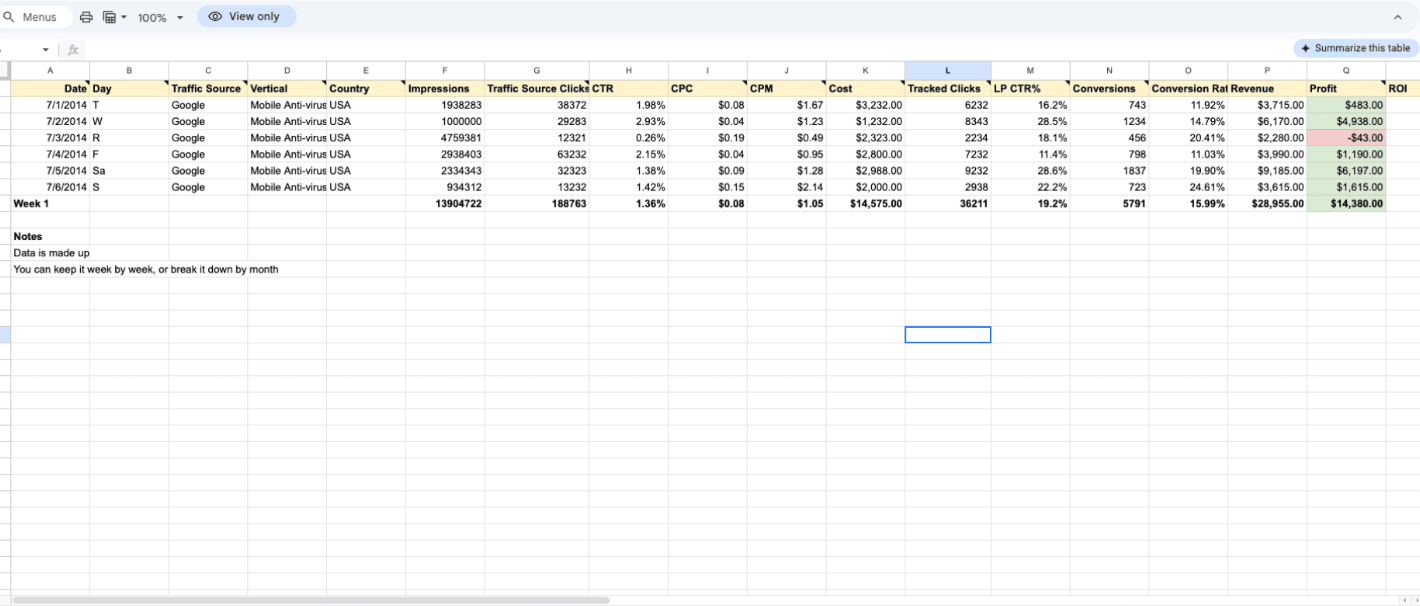
1. Create unique UTM-tagged links
To begin, generate your unique UTM-tagged links for your new affiliate that’s ready to begin making sales. You’ll want to set up a master spreadsheet to keep everything organized.
2. Share links with affiliates
Next, you need to set up an email or direct message and coordinate the links with each of your affiliates. You need to communicate to affiliates that they cannot alter their links, which could break your tracking. This could cost you valuable data and also lead to misattributed affiliate sales.
3. Export Google Analytics data
Once you have completed Step 1 and Step 2, your affiliate can manually attribute sales from their link. Therefore, you’ll need to set up a weekly or monthly cadence to dive into Google Analytics and export all the relevant data. You’ll need to see how active the link is, who's coming in from the link (think demographics), and if it’s the traffic you want to be getting.
4. Cross-reference your data
Next up, you’ll need to manually cross-reference your Google Analytics data with your store's order records or for the desired action you set up (e.g., demo booking, form fill, etc.)The goal is to figure out which sales came from which affiliate.
5. Manually calculate commissions
After you’re confident you’ve identified each sale related to each UTM link, it’s time to calculate commissions one by one. Don't forget to account for any returns and refunds, which adds another layer of complexity to this already tedious process.
6. Send payouts individually
With the calculations finally done, you’re ready to send out payments. Whether you're using PayPal, bank transfers, or checks, you'll have to process each payout individually. If your Accounts Payable team isn’t handling this, we recommend setting aside a few hours to ensure all affiliates are paid properly.
7. Repeat until the end of time
And the best worst part? You get to do this all over again every single pay cycle, or every time you need to attribute sales to affiliate efforts!
As you can see, this process is extremely time-consuming, introduces the possibility of human error, and breaks down quickly when you manage more than a handful of affiliates.
The automated method (with affordable software)
Okay, now for the good part. All of this tracking can be automated with software like LeadDyno, which completely transforms (and speeds up) the process. Here’s how.
Step 1: Set up tracking properly, with multi-attribution methods
Software like LeadDyno takes care of tracking so you don’t have to deal with time-consuming manual methods. Affiliate tracking links can be automatically generated, so you don't have to build a single URL.
On top of this, powerful multi-method attribution uses links, cookies, and promo codes together to ensure no sale slips through the cracks. In turn, this builds much stronger affiliate relationships as they are confident in your ability to pay them properly.
Step 2: Use live dashboards for real-time visibility
Forget endless emails from affiliates asking for their stats. By using real-time dashboards, you can give both your team and affiliates the visibility they need to see clicks, conversions, and earnings.
Plus, commission calculations are completely automated, so whether you use flat-rate, percentage, or tiered structures, the platform handles it all with ease.
Step 3: Manage sales tracking and pay affiliates in minutes
Finally, say goodbye to manual spreadsheet calculations and individual payments. You can streamline all your payouts by using software that facilitates mass payouts with just a few clicks (compared to hours of reconciliation work). With integrations like PayPal and Stripe, paying your team is faster and smoother than ever.
Benefits of using proper affiliate sales tracking software
Beyond the obvious time savings, investing in a proper tracking platform gives you the infrastructure needed to scale your program with confidence.
1. Unique tracking link generation
When you automate how you track affiliate sales with software, you can automatically create distinct and reliable tracking links for every affiliate from the moment they join your program.
Don’t let manual affiliate link tracking become part of your brand’s process. Let software do the heavy lifting.
2. Multi-method attribution
By utilizing links, cookies, and promo codes in tandem, LeadDyno ensures no sale slips through the cracks. If a browser blocks a cookie but the customer uses a promo code, the software still correctly attributes the sale to the affiliate.
3. Real-time dashboard
Both your brand and your affiliates receive access to a live dashboard. You can track clicks, conversions, and earnings in real time. This level of transparency eliminates disputes and keeps your affiliates motivated.
4. Automated commission calculation
Calculating payouts manually is tedious. LeadDyno handles flat-rate, percentage-based, or tiered commission structures automatically. So if a customer returns an item, the software automatically adjusts the affiliate's commission balance, saving you from overpaying.
5. Fraud detection
LeadDyno continuously monitors your program for suspicious activity. It flags unusual click patterns, duplicate conversions, and self-referrals. This proactive monitoring protects your budget from bad actors.
6. Automated payouts
When it’s time to pay your partners, you don’t need to log into PayPal and send payments one by one. LeadDyno enables one-click or scheduled bulk payouts via integrations with PayPal, Stripe, and other processors.
Final thoughts
Affiliate sales tracking isn’t optional for any brand serious about growing a program. While starting with manual tracking methods is understandable, doing so should only be temporary.
Moving to an automated system protects your margins, saves hours of administrative work, and keeps your affiliates motivated. A well-tracked affiliate program allows you to focus on strategy and growth instead of data entry.
{{blog-custom-cta}}
.webp)

.svg)
Start a Free Trial
30 days free · Full Access
Cancel anytime
You might also be interested in...


Get Started Today
Launch your affiliate program with confidence thanks to our 30-day free trial. Begin building a program that delivers results.

