
How to Start an Affiliate Program: A COMPLETE Guide

See how LeadDyno can take your affiliate marketing strategy to the next level. Let’s set up a 1:1 demo to get your questions answered.
Grow your brand with a lucrative new marketing channel. Explore the platform for yourself with our free 30-day trial!
When you compare traditional online marketing to affiliate marketing, it quickly becomes clear why so many brands invest time and energy into building a thriving affiliate program. After all, businesses see an average return of $6.50 for every dollar spent on affiliate marketing, in comparison to the meager return of up to $2 from a Google Ad campaign. And with affiliate marketing spending projected to only increase as time goes on, it’s never been a better time to learn how to start an affiliate program for your business.
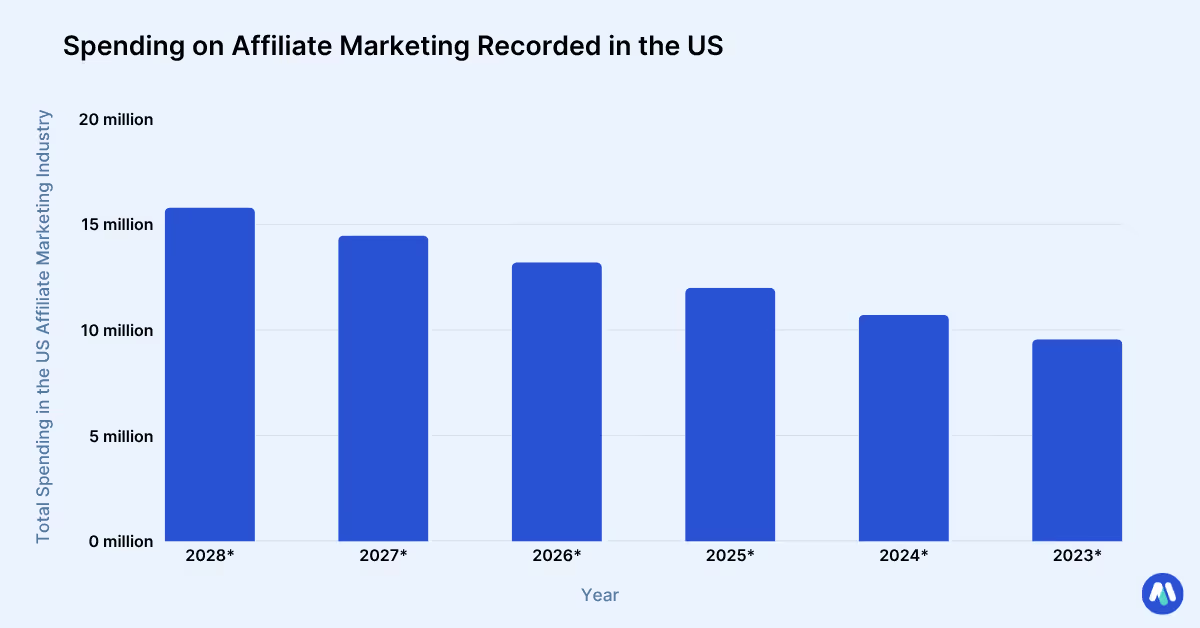
Affiliate marketing, also called influencer marketing or performance marketing, is when an affiliate or influencer promotes a company’s product or services on their marketing channels in exchange for compensation. This payment may take the form of sales commissions, product discounts, free items, or other rewards.
For brands looking to majorly boost their reach without maxing out their marketing budget, a referral program can be a great way to generate passive income (and to put those passionate current customers to work for you). In this article, we’ll teach you how to get started with affiliate marketing using the 4 phases of building a successful affiliate program:
- Phase 1: Preparing for Your Program – What to do before starting an affiliate program
- Phase 2: Finding the Right Affiliate Software – How to find the best affiliate management platform for your business
- Phase 3: Launching Your Program – How to get your affiliate program up and running
- Phase 4: Maintaining Your Program – Tips for managing and growing your affiliate program over time
Ready? Let’s jump in!
Phase 1: Preparing for Your Program
So, you want to start an affiliate program? Here are five things you’ll need first to have a smooth and successful program launch:
- An established brand and website where you sell your products
- Shareable marketing resources (like social media)
- Research on competitors and their affiliate strategies
- A well-defined compensation structure
- A plan to identify and recruit the right affiliates
Let’s review why these five prerequisites are important and what to do if you’re missing any of them.

1. An established brand and website where you sell your products
If you're at the very start of building your brand and haven’t yet launched its website, then it’s better to wait before starting an affiliate program. On the most basic level, affiliate partners and influencers need access to product links in order to promote you, and for that, you’ll need to provide them with an online store where they can direct their followers. Once your site is up and running smoothly, then you can consider launching an affiliate program.
2. Shareable marketing resources (social media presence)
The fastest way for influencers and other affiliates to promote your product is by sharing online marketing materials—like social media posts—with their networks. Your affiliates will have an easier time promoting your products if they can point their followers to some high-quality visual content and social proof. That’s why we recommend social media as the marketing channel to prioritize if you’re starting an affiliate program. Aim to post consistently on at least a weekly basis, with photo and video content that educates potential customers on the value of your offerings.
3. Competitor research
Studying your competitors will help you get ahead faster when it comes to developing your program. Not only will you be able to learn what your competition is doing right to attract affiliates, but you may also be able to avoid any mistakes they’re making as well. Make the effort to regularly monitor their performance as part of your competitive analysis. Here are a few ways to do this:
- Examine how they handle commissions. Here are some questions to ask:
- What’s their commission structure?
- What’s the value of their commissions, and do those feel fair to you?
- Is their ask clear?
- Do they have a compelling affiliate website?
- How often do they pay out their affiliates?
- Do they offer bonuses?
Your affiliate commission rate needs to reflect a competitive advantage. Why would new affiliates flock to your program if there’s another one around the corner that pays better? Your affiliates may be loyal to your brand, but if your competitor’s program offers a higher commission, that loyalty may only go so far. Still, you should treat affiliate commissions as a worthwhile investment. If raising commissions means breaking even for your program, then you’ll need to rethink your strategy. Commissions should always be competitive but attainable.
- Check their referral links. Referral links are the bread of the affiliate marketing sandwich. They allow your affiliates to link to your website while simultaneously tracking their conversion success. Find out how your competition handles referral links by using a tool like Ahrefs to track their backlinks and uncover which ones they use most. Ahrefs can also show you which of your competitors’ links generate the most interest. Keep in mind, however, that some affiliates utilize link cloaking, so the data may not show the full picture.
- Research their influencers. Are your competitors using influencer affiliate marketing and if so, to what degree?
- Study their promotions. What kind of promos do your competitors offer, and how frequently? Do they have a loyalty program?
Take advantage of your competitors’ marketing strategies to build your own. Once you understand how they handle their affiliate programs, you’ll be better equipped for your own launch.
4. Compensation planning
Your affiliate compensation plan is the foundation of a successful program. It sets expectations for partners, helps you maintain your budget, and rewards the behavior you want to encourage. Before making any decisions, take a step back and think through how your program will create value and how you’ll share that value with your affiliates.
Start with these three baseline questions:
- What level of affiliate-driven revenue growth do you need in the first year, and how will your commission plan support reaching that target at a sustainable pace?
- How much of each sale are you willing to share with affiliates while still keeping your margins healthy?
- What’s your average conversion rate from traffic to sale, and what would you like it to be?
Answering these will give you a clearer picture of how generous your program can be while still protecting your margins.
Commission structure options
There are a few ways to set up your commission payouts, depending on your product and sales model:
- Percentage of sale: Common for ecommerce and SaaS. Affiliates earn a cut based on the final sale price.
- Flat fee per conversion: Great for lead generation or subscription signups. Affiliates earn a fixed amount for each qualified customer.
- Recurring commission: Useful for subscription-based products. Affiliates earn a percentage each time the customer renews.
If you’re not sure where to start, look at your average order value (AOV) and profit margin. For example, if your AOV is $80 and your profit margin is 35%, you’re making $28 per sale. In that case, offering a 10% to 15% commission keeps you competitive without cutting too deeply into your profits.
You can also experiment with:
- Tiered commission levels for high-performing affiliates
- Limited-time bonuses during product launches and promotions
- Increased rates for new affiliates to incentivize early engagement
Tracking and attribution
Your program’s success depends on accurate tracking. Most affiliate platforms support:
- Last-click attribution, which credits the affiliate who referred the final visit
- First-click attribution, better for long sales cycles
- Multi-touch models, where credit is shared across multiple affiliates
Decide whether you’ll track by sales, clicks, or impressions. Most programs use cookie-based tracking with custom referral links, so be clear about cookie duration (e.g. 30 days).
By working out these details ahead of time, you’ll be able to launch with a plan that’s easy to adapt as your program develops. Once your program is up and running, you can then evaluate its performance and refine the structure to suit your needs.
5. Recruiting your affiliate network
So you’ve made it this far: you’ve nailed down your plan, and now you’re ready to recruit your affiliate network. Here are some tips on how to get started building your list of affiliate marketers.
Reach out to your loyal customers
Your customers make up some of your most powerful brand advocates. One of the quickest ways to build up your affiliate network is by reaching out to them to see if they’re interested in making commissions by recommending your brand. They may already be talking about your company with friends and family, so it’s an easier sell than reaching out to people who are new to your brand.
Reach out to influencers
Another method for finding quality affiliates is by sourcing influencers in your niche. The influencer doesn’t need to have hundreds of thousands of followers, as long as they have an active and engaged audience within your field. Even micro-influencers can make a major impact on the number of future customers you have, thanks to the credibility they’ve built up with their audience.
Reach out to social media followers
Don’t forget to start advertising your affiliate program on social media, in both your story and your feed. If you’ve already built up an audience for your business, you’re likely to have followers invested in your brand who will be interested in joining right away. Don’t be afraid to post about your program regularly on your social media. Remember the rule of 7 in marketing: Your customer is likely to encounter your marketing messaging at least 7 times before taking action. The same goes for your affiliate program. It may take some time for them to decide to join, so don’t be afraid to remind them about it!
After you’ve set your program’s foundation, you’re ready to build your program.
Phase 2: Finding the Right Affiliate Software for the Job
If you’re looking for a shortcut to getting up and running that helps streamline setup and gives you a more efficient way to run things, then it’s time to discuss finding the right affiliate software.
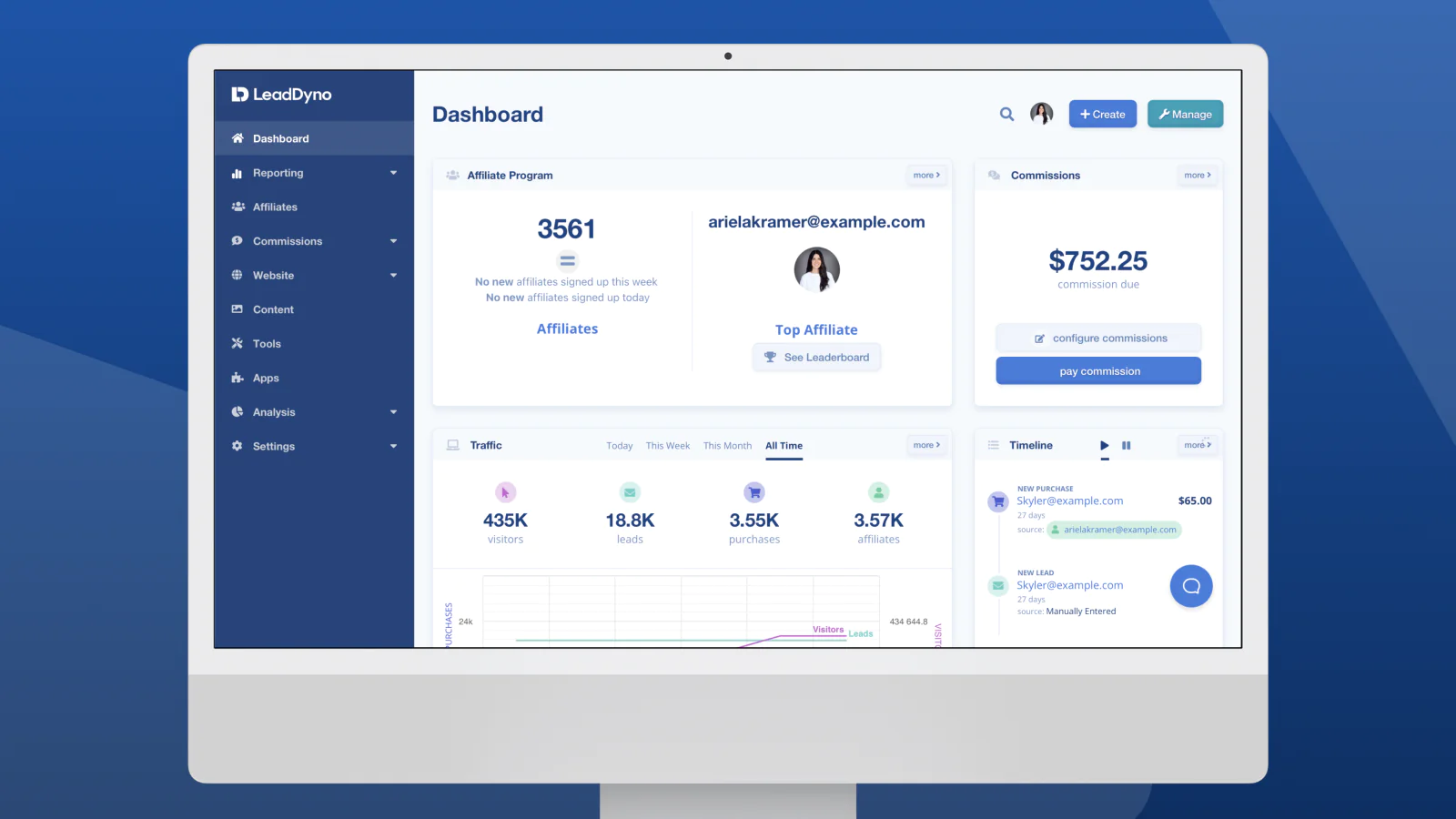
The right platform should provide you with a professional affiliate signup page, dependable tracking that runs automatically, tools to guide new affiliates through onboarding, and simplified commission and payout management.
Since there are many affiliate management platforms on the market, the decision can feel overwhelming at first. The easiest way to narrow the field is to focus on choosing features that influence your likelihood of long-term success. If you run an ecommerce store, start by looking for software that integrates easily, so you can connect sales data, traffic information, and referrals without wrangling complicated setups. Here are some other features to look for:
- Automated management tools, to help keep your program running smoothly while you’re focused on the other parts of your business
- A convenient payment system, because prompt and accurate payouts play a big role in keeping affiliates engaged
- Branding customization tools, to help match your program’s look to your business through white labeling, a custom domain, and matching colors and fonts
- Flexible reward structures, so you can design detailed commission plans, including tiered, recurring, or even MLM configurations if your model calls for them.
LeadDyno offers all of this and more to help you get up and running quickly. Build a customizable affiliate website and choose either a free LeadDyno URL or your own domain. Once your program is live, LeadDyno’s advanced tracking starts logging your clicks, leads, and sales right away, so you can start using your data to refine your program strategy.
Plus, LeadDyno makes affiliate onboarding easy by sending new partners automated welcome emails that guide them through their first steps. And with unlimited commission plans, you can structure payouts exactly as your program requires. LeadDyno’s affiliate management tools are designed to simplify your daily workload, so you can safely scale without having to add hours of management tasks to your to-do list.
{{blog-custom-cta}}
Once you’ve found your affiliate software, you’re ready to move on to the more detailed parts of getting started in affiliate marketing, like tracking KPIs, legal considerations, budgeting, and providing creatives for your affiliates.
Phase 3: Launching your affiliate program
Before you focus on promotion or recruiting affiliates, you need a solid logistical foundation that keeps your affiliate program running smoothly. This phase creates the structure that supports your program foundation and helps you set up new affiliates for success. We’ll also help you boost your long-term marketing strategy by helping your affiliates understand how to work well within your program.
In this article, we include a high-level overview of each topic below. But we’re also including links to more in-depth guides to each topic mentioned as well. Let’s get into the details of your operations.
Determine your program KPIs and finances
Set up your goals early so you can start working toward achieving them right away. Figure out which program metrics matter most for your growth. Will you be aiming for more affiliate sales, stronger conversion rates, or perhaps greater reach? Whichever you choose, you’ll want to track these metrics through your affiliate dashboard, so you can refine your strategy and make a pivot if needed. By reviewing the real data, you can help your affiliate partners to make strategic marketing choices based on what the numbers say rather than just by guessing.
Your logistics plan also needs a realistic financial structure. Review the costs associated with affiliate marketing software, creative production, customer support, and payouts tied to performance. Evaluate how affiliate revenue compares to your expenses, so you can adjust commission tiers as your program grows. As your numbers change, use insights from your affiliate platform to refine targets and increase the long-term value of every affiliate sale.
Learn more about which affiliate program metrics to track.
Define terms, policies, and legal compliance
While your compensation plan explains how affiliates are paid, your terms and policies explain how affiliates will be expected to promote your brand. Establishing these clear rules from the start will help protect you and everyone in your program. Outline how payouts work, when affiliate commission becomes eligible, and how affiliates should represent your brand online.
Include disclosure requirements to maintain regulatory compliance and specify boundaries for paid ads or restricted traffic types that could affect program quality. The more guidance you can provide affiliates in using their unique affiliate link properly, the better equipped they’ll be to bring in sales.
Learn more about creating an affiliate agreement (free template included).
Create affiliate approval guidelines
Part of setting up your referral program is determining who qualifies. To make sure each affiliate is the right fit, include clear questions in your application. These will help you evaluate whether an applicant both fits your brand and can genuinely bring in new customers. Here are a few to consider:
- Audience relevance
Who is your primary audience, and does it match our ideal customer? - Content quality
What type of content do you create, and can you share recent examples? - Posting frequency
How often do you publish new content on your main channels? - Connection to your brand values
Why do you want to join our affiliate program, and how does our brand match your values?
Using clear questions like these helps you avoid mismatched partnerships and build an affiliate network filled with affiliates who are well equipped to bring in the right customers.
Learn more about which questions to ask potential affiliates.
Make affiliate onboarding easy
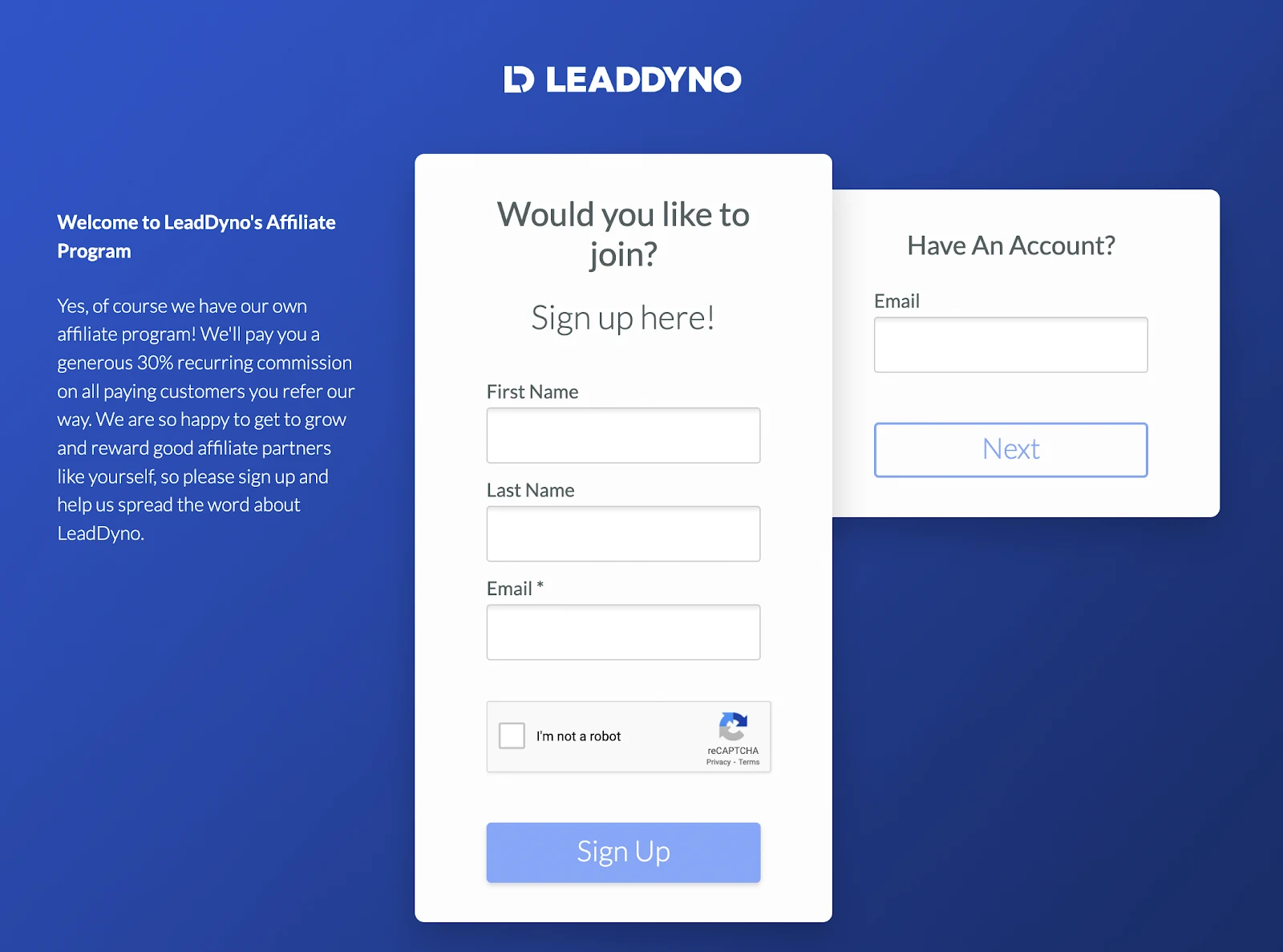
Your affiliate program needs a dedicated landing page where potential affiliates can learn how the program works and apply to join. Keep the page simple and helpful with details about commission rates, payment timing, promotional rules, and what new affiliates can expect after onboarding. This page becomes your central hub for recruiting quality partners and should make it easy for someone to decide if they’re a good fit.
Once someone joins, help them get started quickly. Share a welcome email, their unique affiliate link, and direct them to your creative library. Give them a brief overview of how to check stats inside your affiliate dashboard and what to expect during their first few weeks. A smooth onboarding experience helps new partners feel confident, supported, and ready to begin promoting your brand as part of your affiliate network.
Learn more about simplifying onboarding for your affiliates.
Provide creative assets for your affiliates
Your affiliates will be more successful when you provide them with high-quality tools for promoting your brand. Build a library of affiliate marketing material that includes branded graphics, approved copy, and ready-to-use content that can be easily shared to social media and on websites, blogs and newsletters. It will also be beneficial to create a help center with resources for your influencer marketing partners, giving them quick answers to common questions that come up throughout your program. And make sure you provide them with contact info where they can reach a program associate quickly if they run into problems. When your affiliate support is strong, affiliate performance will also increase.
Learn more about creating high-quality affiliate banners for your program.
Phase 4: Maintaining Your Program
Your affiliate marketing program is live, but the work doesn’t stop there. This phase is about keeping your affiliate network healthy, finding ways to improve your affiliate marketing efforts, and making ongoing adjustments that help your program grow steadily over time. Think of it as the long-term care your program needs to stay strong and keep generating affiliate revenue month after month.
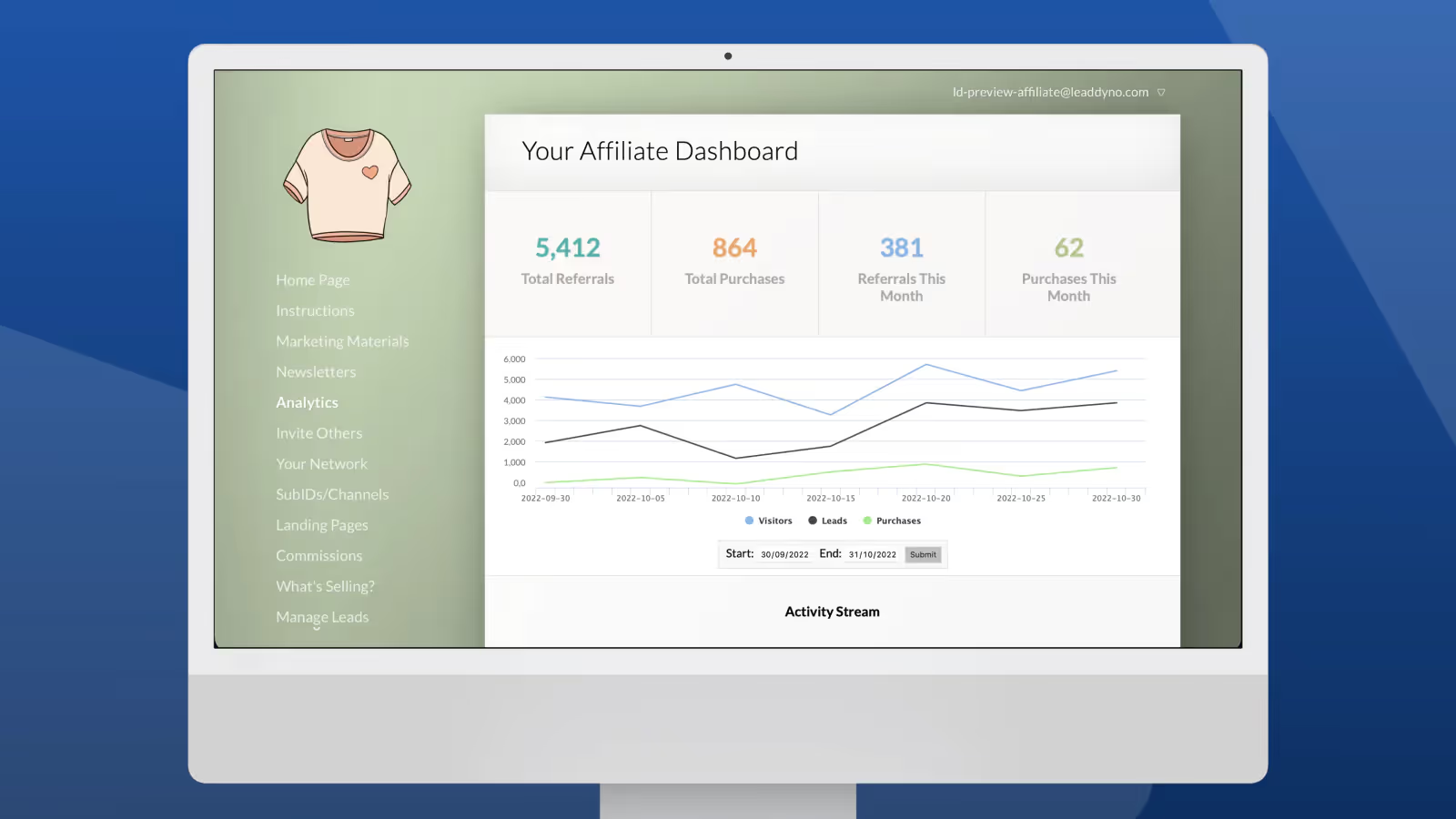
Start by checking in on performance regularly. Review the data inside your affiliate dashboard to see how each affiliate marketer is doing, which affiliate links are converting, and where your strongest traffic is coming from. These insights help you understand what’s working and what might need a boost. Your affiliates also need access to accurate stats so they can track their own unique affiliate link and stay motivated as they work toward new affiliate sales. When both sides have clear visibility, communication stays smoother and everyone can adjust their strategy with confidence.
You’ll also want to stay in touch with your affiliates consistently. Ask how things are going and find out whether they need new affiliate marketing material or updated support tools. A fresh graphic, a quick product demo, or a new piece of social content can help affiliates keep their messaging sharp. These simple updates often lead to higher affiliate performance and stronger trust between you and your partners.
At the same time, keep an eye on the overall health of your referral program. Look at how much affiliate revenue you’re generating, compare your results to the goals you set when learning how to start an affiliate program, and track how your conversion rates shift over time. If your program isn’t hitting the benchmarks you expected, make adjustments early. This might mean refining your commission structure, updating onboarding materials, improving your creative library, or running a limited-time bonus to help affiliates gain momentum. Small changes can spark big improvements when they’re based on real data.
Strong affiliate management also includes giving your partners the resources they need to succeed. Keep your help center up to date, continue adding new assets to your creative library, and stay active on your main social media platform so affiliates always have fresh content to share with potential customers. When you build a support system that grows along with your affiliate network, you create better outcomes for every affiliate partner involved.
And if you’re looking for more guidance, check out our affiliate management resources. You’ll find step-by-step tutorials on everything from testing features to scaling internationally, all designed to help you build a successful affiliate program with confidence.
Conclusion
If you’ve been working through these four phases of launching your affiliate program, then you’re off to a great start. Building a strong foundation, choosing the right affiliate software, supporting your affiliates, and tracking performance are the keys to running a successful affiliate program that keeps growing over time.
And whether you’re just beginning to explore affiliate marketing, shifting from a basic referral program, or expanding into influencer marketing for the first time, the right tools make a big difference. And you’re likely to find, like many of our customers have, that the effort put in on the front-end will make for a lucrative new revenue stream that lasts long after your initial launch.
If you’re ready to put these steps into action, you can try LeadDyno free for 30 days. It includes everything you need to launch your affiliate website, empower your affiliate marketers, and grow with ease!
.webp)

.svg)
Start a Free Trial
30 days free · Full Access
Cancel anytime
You might also be interested in...



Get Started Today
Launch your affiliate program with confidence thanks to our 30-day free trial. Begin building a program that delivers results.

