
ULTIMATE Guide to Affiliate Program Management

See how LeadDyno can take your affiliate marketing strategy to the next level. Let’s set up a 1:1 demo to get your questions answered.
So you’ve just built and launched an affiliate program to help boost brand awareness. The hard part’s over, right? Not exactly. Although you’ve cleared one major hurdle, there’s still a learning curve to mastering affiliate program management.
Now it’s time to focus on growing and managing your program. Effective affiliate program management involves a variety of important tasks, including recruiting affiliates, engaging them, enforcing program rules, keeping up-to-date marketing materials, and providing timely payouts.
That’s why we designed this straightforward affiliate management guide to detail all the important things you need to know to help you run your program smoothly. We’ll also estimate the time required for each area of focus: recruiting affiliates, activating them, promoting engagement, monitoring and policing activities, implementing rewarding mechanisms, and optimizing the program for maximum success.
Ready? Let’s get started.
Recruiting

Time Expenditure: Plan to spend 30% of your time on affiliate recruitment.
Recruiting is one of the most important activities for growing your affiliate program, which also means it’s going to be one of the most high-touch undertakings as well. After launching your program, this will require ongoing efforts until your program has reached a level of exposure that consistently brings in potential affiliates.
When it comes to affiliates, focus on quality over quantity. You want affiliates you can trust to represent your brand. Here are some common strategies that will help you recruit affiliates.
Create easy access to your program
The easiest way to get your first affiliates is to make your affiliate program signup page prominent on your website and social media. Your online followers can be your biggest fans, which often helps them become your most successful affiliates.
Cold outreach
There are plenty of bloggers and influencers who are always looking for great products or services to promote. Don’t be afraid to reach out to individuals or businesses directly to invite them to join your program. Be upfront about the highlights of your program, including commission rates and earning potential, to capture interest.
Optimize your affiliate landing page
Many affiliates search Google to find affiliate programs. Follow Search Engine Optimization (SEO) and Generative Engine Optimization (GEO) strategies to help your program signup page rank for various targeted keywords. Your affiliate landing page should have both specific and broad language about your affiliate program. To give a quick example, if your affiliate program sells t-shirts, make sure to include references to not just "t-shirt affiliate program" but also more general terms such as “clothing” or “apparel”.
Invite your customers
Inviting your customers is a free and easy way to acquire new affiliates. Your customers are already familiar with your products and may already be talking about it with their friends. Leverage the moment of excitement post-sale and offer customers a commission on referred sales. This may incentivize them to share your product or service with more people.
For more tips on building your affiliate network, read our Essential Guide to Recruiting Affiliates.
Activation

Time Expenditure: Expect to spend 20% of your time on activating and onboarding affiliates.
The activation process involves reviewing affiliate applications, welcoming them to your program, and helping approved affiliates get started promoting your brand. In some cases, this process might include incentivizing new or inactive affiliates to share links to your product or service to get their first sale.
These are some of the responsibilities you can expect to take on during the activation process:
Review affiliate applications
Not every content creator or influencer will be the right fit for your brand. One method to maintain quality and protect your brand reputation is to disable auto-approval for new affiliate applications. This gives you full control over who joins your program. Be sure to set up a recurring schedule to promptly review affiliate applications so quality affiliates aren’t left waiting.
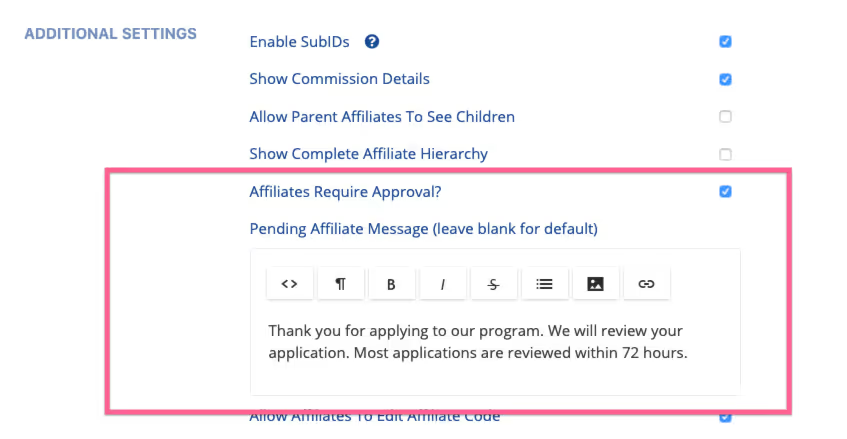
The amount of information you know about potential affiliates largely depends on the type of questions you ask during signup. Consider your key criteria and ask questions that will reveal if the applicant is a good fit, such as:
- Does the affiliate's website and social media look professional?
- Does the affiliate have a website with some domain authority?
- How much traffic does the website get?
- How much engagement does the affiliate receive on their social media?
- Does the affiliate rank highly for terms related to your products?
- Is the affiliate in the same vertical?
To get an idea of an affiliate's website traffic, keyword ranking or domain authority, use a tool like SEMRush or Ahrefs. These insights will help you evaluate how much attention they can bring to your brand. Keep in mind that some affiliates do not promote affiliate links through their website in favor of running promos through their social media or email newsletter. If it’s unclear how an affiliate might promote your business, consider including a question about their promotional methods in the signup form. And it’s never a bad idea to reach out to them directly by email.
Welcome new affiliates
Once an affiliate gets accepted into your program, you can set them up for success by sending them a welcome email that provides detailed information about the program, including their commission and payout information, how to access their affiliate dashboard, and how best to promote your products and services. You can also share general best practices, marketing assets, and any FAQs, so they have everything they need to start promoting successfully right away.
Monitor new affiliate activity
When an affiliate signs up for a referral program, there’s a chance they might feel hesitant about getting started promoting your brand. Achieving that first sale can be intimidating, so it’s a good time to be proactive about providing support.
Keep an eye on your affiliate dashboard to see if new affiliates are sending traffic your way. If someone hasn’t started generating visits yet, reach out to see if they need any help. They might have questions or need a few extra marketing materials to get going. If an affiliate is getting clicks but not making sales, take a look at their site or where their traffic is coming from; then, share a few relevant tips to help them increase conversions.
Offer first-sale incentives
One way to encourage new affiliates to start promoting right away is by adding a time-boxed incentive bonus. Create an activation promo that offers a higher commission rate or a special gift if they achieve their first affiliate sale within 30 days. These incentives will help motivate your affiliates to start promoting your product or service immediately.
{{blog-cta}}
Engagement

Time Expenditure: Expect to spend 20% of your time working on affiliate engagement and communication.
As an affiliate manager, it’s important to cultivate strong partnerships with your affiliates through regular engagement. Motivate and educate them with high-quality training resources, regular communication, and incentivizing activities like contests. The more knowledge and passion they have for your brand, the more equipped they’ll be to promote it to their followers. Investing time in motivating and educating your affiliates will help with retention as well. Remember, it's easier to keep affiliates than to replace them.
Below are some common affiliate engagement tasks you can incorporate into your program.
Educate and inspire your affiliate partners
Help your existing affiliates improve their performance by giving them the tools they need to become experts on your products, services, and overall mission. Keep them in the loop about the successful strategies that other affiliates are using. If you find that specific banners, text links, or messaging help increase conversions rates, let your affiliates know. This type of affiliate training can be done easily by offering an automated series of emails that are sent over a few weeks or months.
Provide ongoing support
You’ll need to provide affiliates with an easy way to contact you with questions and troubleshoot any issues that arise. Make sure to respond to any affiliate requests promptly. The quickest way to demotivate an affiliate partner is to not answer their questions or requests.
Create affiliate-specific promotions
Rather than relying solely on your general marketing promotions, develop special offers, discounts, and campaigns that are designed specifically for your affiliates to promote.
Build an internal promotional calendar that lets affiliates know well in advance about each specific promo event and provides them with all the details they need to advertise it.
Schedule rewards and bonus
One simple way to help boost affiliate performance is by offering rewards and bonuses. These can be scheduled anytime during the year, but you might want to use them to strategically highlight particular holidays or to encourage higher affiliate sales during slow months.
Publish affiliate-specific blog posts and newsletters
Offer engaging internal content that keeps affiliates up-to-date on new products and sales — anything that helps them boost your brand more successfully. This might include monthly blog posts or newsletters that contain promotional content, tips, success stories, and program updates.
Provide fresh, creative marketing materials
Regularly offer new creatives like banners, product photographs, or branding materials to your affiliates. If you have creatives that convert well when you advertise them, make sure to share them with your affiliates as well.
Monitoring

Time Expenditure: Expect to spend 5% of your time monitoring your brand and enforcing program terms.
Unfortunately, you may end up dealing with scammers and bad actors who find their way into your program. Whether intentional or unintentional, affiliate program abuse is a common issue that can prove quite costly for a brand.
Protect your brand reputation and avoid paying unnecessary commissions by monitoring your brand closely online to make sure that all affiliates are following your terms and conditions.
Below are some important monitoring tasks that will help keep your program safe.
Review traffic and sales
Use your affiliate management dashboard to monitor ongoing activity. Pay close attention to any sudden changes or peculiarities, including traffic surges, unusual sales increases, and fraudulent transactions.
Review customer complaints
Customers are often the first ones to alert you to incorrect coupons, false advertising, or inappropriate affiliate behavior (like forcing customers to click on deceptive links that attach their affiliate tracking information). When a customer brings up this type of issue, it’s important to immediately take action to address the problem.
Maintain compliance with FTC requirements
The Federal Trade Commission (FTC) is responsible for making sure businesses follow ethical business practices. The FTC requires that affiliates disclose any relationships with merchants, brands, or products on their websites. The disclosures must be placed near the recommendation and written in an easily understandable way. Your terms and conditions should outline an affiliate's requirements to follow the FTC disclosure requirements.
Monitor all online activity
Monitor affiliate activity to make sure that your brand is represented accurately and ethically. This will help you maintain consistency, protect your reputation, and confirm that affiliates are following program terms and conditions.
Review affiliate websites, social posts, ads, and coupon listings to make sure they comply with your brand guidelines.
Common violations of affiliate terms and conditions may include:
- Trademark bidding
- Impersonating your company or website
- Inaccurate representation of brand or product
- Sharing exclusive coupons publicly
- Repeatedly sharing wrong discounts or information
- Not following brand guidelines
If you find any violations, decide how to enforce your policies. Consequences may include a formal warning, temporary suspension, or loss of commissions for repeated or serious offenses.
Rewarding

Time Expenditure: Expect to spend 5% of your time reviewing commissions and paying affiliates.
It’s incredibly important that affiliates get paid accurately and in a timely fashion. Late payments will quickly create tension within your affiliate relationships. Affiliates invest their time and money into promoting your brand, and it’s important that you uphold your end of your affiliate agreement, 100% of the time.
Below are some of the actions you’ll need to take as part of managing affiliate rewards.
Review commissions
Before paying out your affiliate commissions, make sure to review the totals for complete accuracy. Check for any significant changes or inconsistencies with the previous payment. If something appears abnormal, it might be worth looking into that specific affiliates' performance data before releasing funds.
Consider adding a locking period of 1-2 months before you release any commissions. Adding this time allows you to check for returns, cancellations, and fraudulent orders before releasing payouts to your affiliates.
Pay commissions on time
Always pay affiliates according to the schedule in your program terms. Consistent payments build trust and help maintain good relationships with your partners. If there’s ever a delay, make sure to alert your affiliates right away and resolve the issue as quickly as you can.
Offer bonuses
In addition to regular commissions, you can incentivize affiliates with bonuses and promotional rewards. This may include contest prizes, milestone incentives, or limited-time performance bonuses. A well-timed bonus can also motivate affiliates to increase output during major promos and slow sales periods.
{{blog-cta}}
Optimization

Time Expenditure: Expect to spend 20% of your time optimizing your affiliate program.
A successful affiliate program requires continuous optimization. In other words, figure out what works and then do more of it.
Here are a few steps to take regularly to optimize your program.
Refresh creatives
All your affiliate creatives should be up-to-date and in line with your general promotions to keep a consistent message across your brand. Creatives should communicate one key message and contain a clear Call-to-Action (CTA).
Track and review conversion rates for individual creatives to clarify what is and isn’t working. This may include text links, banners, product images, pre-written copy, landing pages, and email templates.
Track conversion rates
Strong conversion rates benefit both you and your affiliates. Pay attention to how well your landing and product pages turn visitors into customers, so you can find opportunities for improvement.
To calculate your conversion rate, use this formula:
(Orders ÷ Visitors) × 100
For example, if your website had 4,000 visitors and 10 sales last month, your conversion rate would be 0.25%. Even small improvements can make a big difference in overall revenue and affiliate success.
One simple way to improve your conversion rates is by optimizing your website. Consider:
- Reducing shopping cart abandonment
- Adding live chat
- Offering a money-back guarantee
- Increasing page speeds
- Simplifying your page layout for a better UX
- Adding testimonials and reviews for social proof
For more ideas on how to increase your conversion rate...
Research the competition
Study your competitors’ successes, so you can adopt their best practices. Don't be shy; apply for your competitors' affiliate programs. Once you have access, you can study how they engage their affiliates, view their creatives, and learn their strategies for increasing affiliate success. Not only will competitor research inspire you to up-level your program, but it’s also likely to reveal any blind spots where there may be untapped potential.
Save time with automation
Affiliate programs can be very rewarding financially; however, they do take a lot of work. Consider investing in an automated affiliate software that will allow you to set some of your affiliate management tasks on auto. This way, you can spend your own time optimizing your program and engaging affiliates. LeadDyno offers a variety of automated affiliate management services to help you save time, including:
- Link tracking
- Commissions
- Fraud protection
- Onboarding and training
- Email marketing
And more. For brands looking to scale their affiliate marketing programs quickly, an automated software like LeadDyno allows you to grow without adding hours of manual tasks to your daily to-do list.
Summary
Successful affiliate program management requires proficiency across many areas, including recruitment, onboarding, training, engagement, fraud monitoring, payments, and optimization.
Running an affiliate program can be an overwhelming venture, even for a highly skilled affiliate manager. This is where affiliate automation software comes in. Automation tools support you by handling time-consuming, repetitive manual tasks, so you can spend your valuable time on more nuanced responsibilities like keeping affiliates motivated and fine-tuning your program.
If you’re looking for strategies to manage affiliate partner needs more efficiently, an affiliate platform like LeadDyno can help you streamline onboarding, communications, payouts, data tracking, marketing, and more.
And if you’re new to the world of affiliate marketing, LeadDyno’s simple onboarding process and free personalized support make it easy to launch your program and start building a new revenue stream for your brand right away.
Sign up for a 30-day free trial to see for yourself how easy it is to add a lucrative affiliate program to your marketing strategy.
.webp)

.svg)
Start a Free Trial
30 days free · Full Access
Cancel anytime
You might also be interested in...
.jpeg)


Get Started Today
Launch your affiliate program with confidence thanks to our 30-day free trial. Begin building a program that delivers results.

