
LinkedIn Affiliate Marketing: 7 Ways to Find and Recruit Partners (With Outreach Templates)

See how LeadDyno can take your affiliate marketing strategy to the next level. Let’s set up a 1:1 demo to get your questions answered.
Finding the right affiliate partners can be challenging, especially when you're looking for people who understand your industry and can reach your ideal customers.
LinkedIn can be a great tool in this search. Unlike social platforms focused primarily on entertainment and lifestyle content, LinkedIn gives brands access to industry experts, consultants, content creators, and professionals who have built trust within specific business communities.
In this guide, we'll cover how to find, evaluate, and recruit affiliates on LinkedIn, including ready-to-use outreach templates and ways to attract partners organically.
Why use LinkedIn for affiliate recruitment?
LinkedIn isn't always the first platform that comes to mind for affiliate marketing. Instagram, TikTok, and YouTube are often associated with influencers promoting products to consumers.
But affiliate marketing isn't limited to influencers. A business consultant who recommends software to clients, a marketing expert who publishes educational content, or an industry newsletter author can all make valuable affiliate partners. LinkedIn makes these professionals easier to find.
Here are some reasons to consider LinkedIn for affiliate recruitment:
- Access to niche professionals: Find consultants, educators, creators, and industry experts who specialize in topics related to your products.
- Relevant B2B audiences: Connect with people whose networks include decision-makers, business owners, or professionals in your target market.
- Professional credibility: Review a candidate's work experience, content, expertise, and professional interactions before approaching them.
- Direct relationship building: Engage with potential partners through posts, comments, and professional conversations before discussing an affiliate opportunity.
- Opportunities beyond social posts: Partners may promote your products through newsletters, blogs, webinars, courses, or client recommendations.
That said, LinkedIn isn't necessarily the best choice for every brand, but is definitely a great tool for many.
Finding them is a real bottleneck for brands. In IAB Australia's 2026 industry survey, 33% of advertisers and agencies named finding suitable affiliate partners as one of the top three issues keeping affiliate marketing from taking a bigger share of their marketing budget.
Find potential affiliate partners on LinkedIn
Finding affiliates on LinkedIn starts with understanding who could realistically recommend your product.
Instead of searching only for people who describe themselves as "affiliates," look for professionals whose expertise, content, niche and audiences align with your business.
Here are several ways to discover potential partners:
1. Search by industry keywords and professional titles
LinkedIn's search functionality allows you to discover people based on keywords, professional roles, industries, and other criteria.
Start by identifying the types of professionals who regularly interact with your target audience.
For example:
To get started:
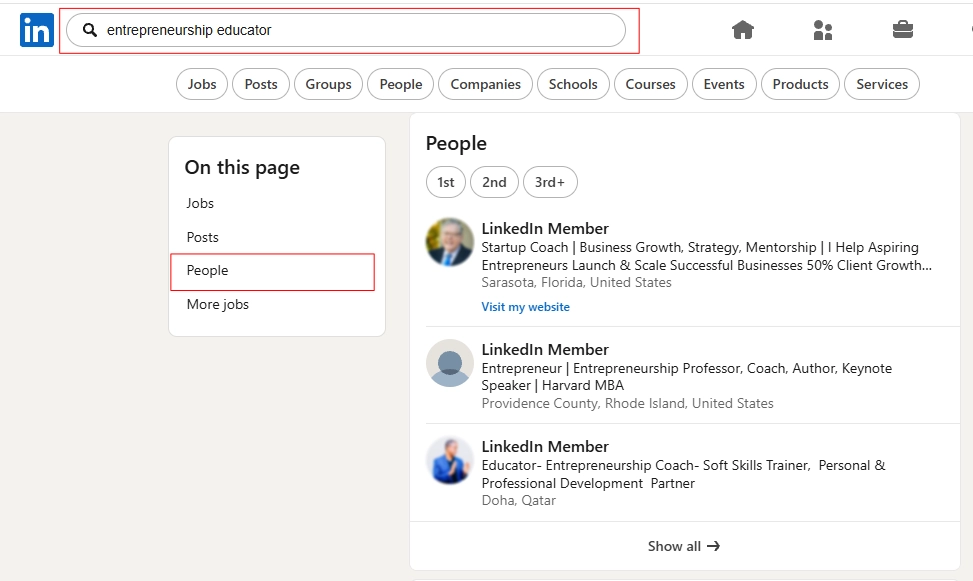
- Enter a relevant keyword or professional title into LinkedIn's search bar.
- Select the People filter to focus on individual profiles.
- Narrow your results using available filters, such as location, industry, or connections.
- Open promising profiles and review their activity, experience, and content.
- Save qualified candidates to an affiliate recruitment prospect list.
2. Discover creators through LinkedIn posts and newsletters
LinkedIn search isn't just useful for finding profiles. It can also help you discover people who actively create content about topics related to your business.
Search for relevant industry keywords and switch to the Posts filter.
For example, a company selling email marketing software might search for terms like:
- Email marketing strategy
- Newsletter growth
- Marketing automation
- Email deliverability
Look for professionals consistently sharing useful insights, tutorials, comparisons, or recommendations.
Pay attention to the conversations happening beneath their posts. Someone with a smaller but highly engaged professional audience may be a stronger affiliate candidate than someone with thousands of passive followers.
LinkedIn newsletters can also be a promising discovery channel. Professionals who publish newsletters related to your niche may already have an audience interested in educational content and product recommendations.
Review their publishing frequency, subject matter, and whether their content naturally aligns with your product.
3. Explore LinkedIn groups and professional communities
LinkedIn groups provide another way to discover professionals with shared interests or industry expertise.
Look for groups related to your business, products, or target customers.
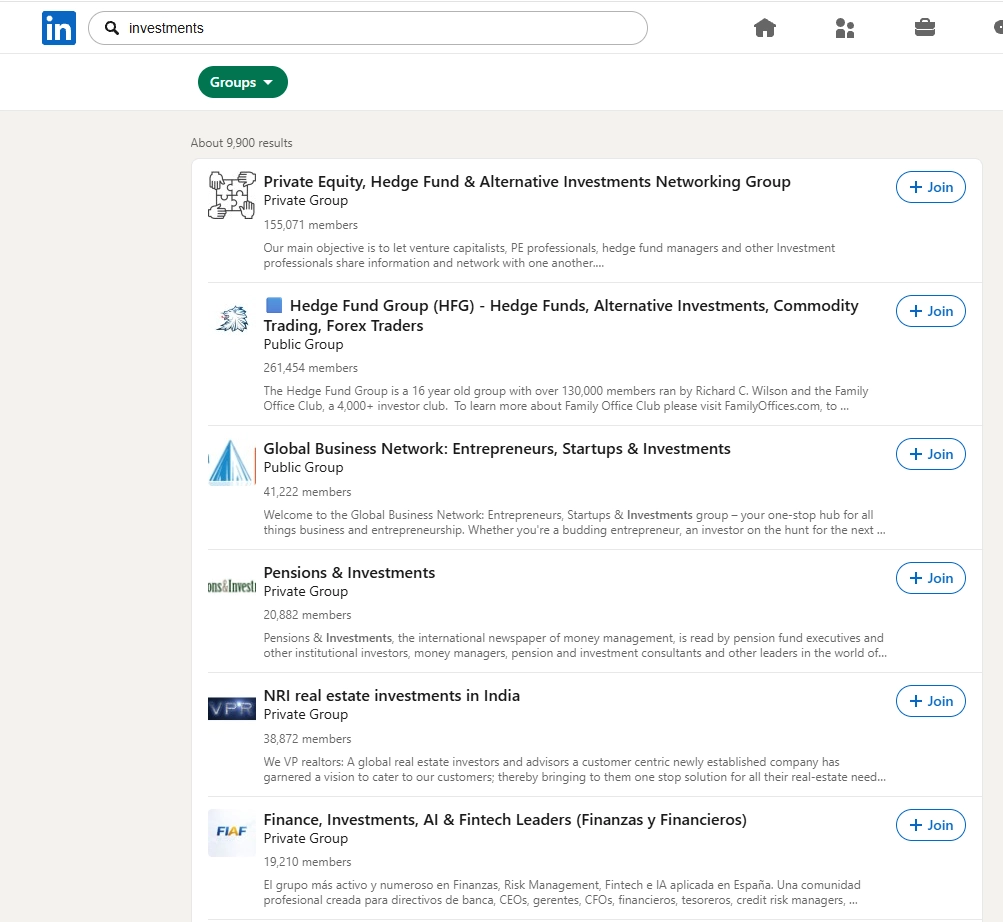
For example, a prop trading firm could explore communities focused on finance, investments, funds and stocks.
Rather than immediately promoting your affiliate program, use these communities to understand who contributes meaningful insights and participates in relevant discussions.
Active members who demonstrate expertise may be worth researching as potential affiliates.
Remember that being part of a group doesn't automatically mean someone has an audience or is interested in affiliate partnerships. Treat groups as a discovery tool, not a ready-made list of prospects.
4. Use LinkedIn Sales Navigator for more targeted searches
If you're planning to recruit affiliates regularly, LinkedIn Sales Navigator can help you narrow your search using more detailed professional criteria.
Depending on your subscription and available features, you can filter prospective partners using attributes such as:
- Industry and job title
- Geographic location
- Company size
- Professional function
- Group membership
- Recent LinkedIn activity
For instance, a B2B software company could look for independent consultants in a specific industry who have recently published content on LinkedIn.
Sales Navigator also allows users to save leads and organize prospect lists, making it easier to revisit promising candidates.
However, you don't need Sales Navigator to start recruiting affiliates on LinkedIn. Standard search, relevant content, and thoughtful networking can help you find potential partners without an additional subscription.
Identify and evaluate the right affiliate partners
Okay, you know how to find potential affiliates. Now the next challenge is determining whether they're the right fit for your program.
It's important to know that a large LinkedIn following doesn't automatically translate into successful affiliate referrals. For many businesses, audience relevance, credibility, and the ability to make authentic recommendations are far more important.
Before reaching out, evaluate prospective partners using the following criteria:
Look beyond follower counts
Let's say you're comparing two potential affiliates for an accounting software company:
One is a business influencer with 100,000 LinkedIn followers who publishes general entrepreneurship content.
The other is a bookkeeping consultant with 4,000 followers who regularly helps small business owners manage their finances.
Although the influencer has a much larger audience, the consultant may be a better fit because their expertise directly relates to the product and the needs of potential customers. The goal isn't necessarily to find the most popular people on LinkedIn. It's to find partners who can introduce your brand to the right audience.
Consider how they would promote your product
Not every LinkedIn affiliate needs to publish promotional posts. Some professionals may have other effective ways to recommend your business.
For example: a consultant might recommend your software to clients, a newsletter publisher might feature your product in a relevant edition, an agency owner could recommend your services to businesses they work with and an industry educator might demonstrate your product during a webinar.
Understanding a potential affiliate's promotional channels can help you determine whether the partnership makes sense.
It also allows you to personalize your outreach around how they actually work with their audience.
Reach out to potential affiliates on LinkedIn (With templates)
Once you've identified promising affiliate candidates, it's time to start a conversation. But there's an important difference between affiliate recruitment and sending unsolicited promotional messages to hundreds of strangers.
Effective LinkedIn affiliate outreach should feel like a relevant business opportunity, not a generic sales pitch.
Before contacting someone, take a few minutes to understand their work. Review their recent content, find a genuine connection to your brand, and consider why a partnership might benefit them and their audience.
Start by building a connection
If you aren't already connected, consider interacting with their content before reaching out. Leave a thoughtful comment, share a relevant insight, or engage in a discussion where you can contribute something meaningful.
When sending a connection request, keep your message short and relevant. You don't necessarily need to mention your affiliate program in your first interaction.
LinkedIn connection request template:
Hi [First Name], I came across your post about [topic] and really enjoyed your perspective on [specific detail]. I work in [industry] and would love to connect!
Introduce your affiliate partnership opportunity
Once you've established a connection, you can introduce your affiliate program.
Your message should explain why you think the person is a good fit, what your product offers, and how the partnership could benefit them.
Avoid making the message entirely about earning commissions. Explain why their audience might find your product valuable. Give potential partners enough information to understand the opportunity without overwhelming them with details.
Affiliate recruitment message template:
Hi [First Name],
I've been following your content about [topic], and I think your audience could really benefit from [Product Name].
We help [target audience] with [specific problem], and we're currently looking for partners who share our focus on [industry or topic].
We have an affiliate program that offers [commission or incentive] for successful referrals.
I think there could be a great fit between what you share and what we offer. Would you be interested in learning more?
Thanks!
[Your Name]
Follow up without being pushy
Not everyone will respond to your first message. Some people may be busy, while others may simply not be interested in affiliate partnerships.
If you haven't heard back, one polite follow-up after a reasonable interval can help bring the conversation back to their attention.
Affiliate recruitment follow-up template
Hi [First Name],
Just wanted to follow up on my earlier message about our affiliate program.
I think [Product Name] could be a useful resource for your audience, especially given your work around [specific topic].
Happy to share more details if you're interested. No worries if it's not the right fit!
Thanks,[Your Name]
If you don't receive a response, move on rather than sending repeated messages.
Make it easy for interested partners to join
Once a potential partner responds positively, give them the information they need to evaluate the opportunity.
This includes:
- What your company does and who your product is for
- Commission rates and payment terms
- How referrals are tracked
- Available promotional resources
- Any program eligibility requirements
- A link to your affiliate program's application page
A straightforward signup process helps turn interested prospects into actual affiliate partners.
Affiliate management software like LeadDyno can help you organize this process by providing affiliate registration pages, referral tracking, commission management, and partner dashboards.
Instead of manually tracking new affiliates and referrals through spreadsheets, you can manage your program in one place.
Remember to prioritize personalized outreach over mass messaging. LinkedIn restricts prohibited automated activity and excessive invitations, so avoid tools or tactics that violate its policies.
Attract affiliates to your program on LinkedIn
So far, we've focused on outbound affiliate recruitment: searching for potential partners, evaluating their fit, and contacting them directly.
But you don't always have to make the first move. With the right approach, LinkedIn can also become a channel for inbound affiliate recruitment, where interested professionals discover your brand and reach out about partnership opportunities.
Here are four ways to make your affiliate program more visible and attractive to potential partners:
1. Promote your affiliate program on your company page
Your LinkedIn company page is a natural place to introduce your affiliate program.
Create a post explaining who you're looking to partner with, what your product offers, and why someone might want to join.
Be specific about the type of partners you're looking for. A post targeting "anyone who wants to earn money" is less useful than one speaking directly to professionals who serve your ideal customers.
You can also share your affiliate program from relevant team members' profiles when the opportunity fits their professional networks.
2. Publish content that attracts potential affiliate partners
Your LinkedIn content shouldn't focus exclusively on recruiting affiliates.
Publishing useful content about your industry helps attract professionals who may eventually become valuable partners.
For example, a marketing software company could share practical guides, research, product tutorials, or insights about common marketing challenges.
Professionals who engage with this content may already have an interest in your product category.
Over time, these interactions can create opportunities to introduce your affiliate program to people who are familiar with your brand.
You can also occasionally publish content directly about your partner program, such as:
- Who your ideal affiliate partners are
- How your affiliate program works
- What resources you provide to affiliates
- Opportunities for consultants and educators to collaborate with your brand
The goal is to make your program discoverable without turning every LinkedIn post into a recruitment advertisement.
3. Highlight your existing affiliate partners
If you already work with affiliates, consider sharing their experiences.
With their permission, you could publish a short partner spotlight, an interview, or an example of how they use your product in their work.
This helps prospective affiliates understand what partnering with your brand might look like.
It also gives your existing partners additional visibility and recognition.
For example, a SaaS brand could feature a consultant who uses its product with clients, explaining how the partnership fits into their professional services.
Avoid sharing earnings or performance claims without appropriate context and supporting evidence.
4. Make your affiliate program easy to discover and join
Generating interest is only useful if potential partners can easily take the next step.
Make sure your company website has a dedicated affiliate program page that you can share through LinkedIn.
Your page should clearly explain:
- Who can join your program
- The benefits of becoming an affiliate
- Commission structures and payment terms
- How referrals work
- What promotional resources are available
- How to apply
Link to this page when posting about your program and consider including it in relevant areas of your company or team profiles. That way, whether someone discovers your program through a LinkedIn post or a direct conversation, they have a clear next step toward becoming an affiliate.
Invest in the affiliate onboarding experience, too. Getting someone to apply is only half the job. Professionals on LinkedIn put their name and reputation behind what they recommend, so they'll notice quickly if your program feels disorganized. A weak start also costs you partners. The average activation rate for new affiliates sits around 10%, while top-performing programs reach 45% or more. The difference comes down to how structured and supportive the onboarding is.
FAQ about LinkedIn Affiliate Marketing
Is LinkedIn good for B2B affiliate marketing?
LinkedIn can be an effective recruitment channel for B2B affiliate programs because it connects businesses with consultants, industry educators, agency owners, and professionals who reach relevant decision-makers. These partners may promote products through LinkedIn content, professional recommendations, newsletters, webinars, or client relationships.
Is LinkedIn ONLY good for B2B brands?
No, but it's strongest for B2B. LinkedIn can be an effective recruitment channel for B2B affiliate programs because it connects businesses with consultants, industry educators, agency owners, and professionals who reach relevant decision-makers. These partners may promote products through LinkedIn content, professional recommendations, newsletters, webinars, or client relationships.
Do you need LinkedIn Sales Navigator to recruit affiliates?
No. You can find potential affiliate partners using LinkedIn's standard search tools, industry content, and professional networking features. Sales Navigator offers additional search filters and prospect management capabilities that may be useful for businesses running larger or more targeted recruitment efforts.
Should you look at follower counts when choosing LinkedIn affiliates?
Not on their own. A large following tells you someone is visible, not that their audience would buy from you. Instead, look at who is in the audience, the quality of engagement, consistency and fit with their work.
There isn't a reliable benchmark for a minimum follower count, so use it as a rough filter at most.
Can you post affiliate links on LinkedIn?
Yes, in organic posts, articles, and newsletters. LinkedIn doesn't ban affiliate links, but its content guidance discourages posts that only try to sell without offering useful insight. Posts that lead with something helpful, like a tip, a comparison, or a client story, and then mention the product are a safer approach. Affiliates also might need to disclose that they earn a commission.
How do you track referrals from LinkedIn affiliates?
Give each affiliate a unique tracking link. When someone clicks it and later signs up or buys, the lead or sale is credited to that affiliate, so they get paid correctly and you can see who's driving results.
LeadDyno tracks clicks, leads, and purchases for each affiliate in real time. If a partner shares your link in several places, such as a LinkedIn post and a newsletter, you can also create separate campaign links to see which one performs better.



Start a Free Trial
30 days free · Full Access
Cancel anytime
You might also be interested in...

Get Started Today
Launch your affiliate program with confidence thanks to our 30-day free trial. Begin building a program that delivers results.

