
Affiliate Marketing on Instagram: How to Find and Recruit More Affiliates
See how LeadDyno can take your affiliate marketing strategy to the next level. Let’s set up a 1:1 demo to get your questions answered.
Instagram is often discussed as a place for influencer marketing, but it can also be a valuable channel for affiliate recruitment.
The platform gives something especially useful for affiliate programs: a way to evaluate potential partners before you ever contact them. You can see what they post about, how they communicate with their audience, what products they already recommend, and whether their followers are likely to care about your offer.
In this guide, we’ll walk through how to find affiliates on Instagram. You will learn who to look for, where to find them, how to check whether they are a good fit in a few minutes, how to reach out in a way that gets replies, and what to offer so they say yes.
Why Instagram Is a Good Place to Find Affiliates
Instagram is a place where people already talk about products, and where followers trust the people they follow. According to Pew, 50% of U.S. adults use Instagram, and that rises to 80% among adults ages 18 to 29. Your future affiliates are already there, and so are their audiences.
The trust part matters just as much. Sprout Social's 2025 State of Influencer Marketing report found that 86% of consumers made an influencer-inspired purchase in the past year, and 67% said they value honesty in brand and creator partnerships. In other words, people buy on a creator's recommendation, but only when it feels real.
There is also a practical reason to build a strong recruiting process. Instagram content fades quickly. Research by Scott Graffius, summarized by Martech Zone, puts the average half-life of an Instagram post at around 20 hours. That means one post from one affiliate will not carry your program. You want several affiliates posting regularly, and that starts with recruiting more of the right people.
Instagram gives you access to creators and audiences that already fit your niche and it’s super useful for finding affiliates in visually driven industries such as beauty, fashion, fitness, food, travel, home decor, and consumer products.
But it isn’t limited to those categories. Consultants, educators, SaaS creators, business coaches, developers, marketers, and niche experts also build audiences on Instagram. If the people they reach overlap with your target customers, they may be potential affiliates.
Another advantage is that you don’t necessarily have to start with creators who are actively looking for affiliate programs.Many potential affiliates are already recommending products organically.
Four Types of Instagram Affiliates
Before we jump into how to find affiliates on Instagram, it’s important to understand that there are different types of creators and influencers you can work with on the platform.
You can segment them by audience size like the infographic below, by niche, by engagement rate, etc.
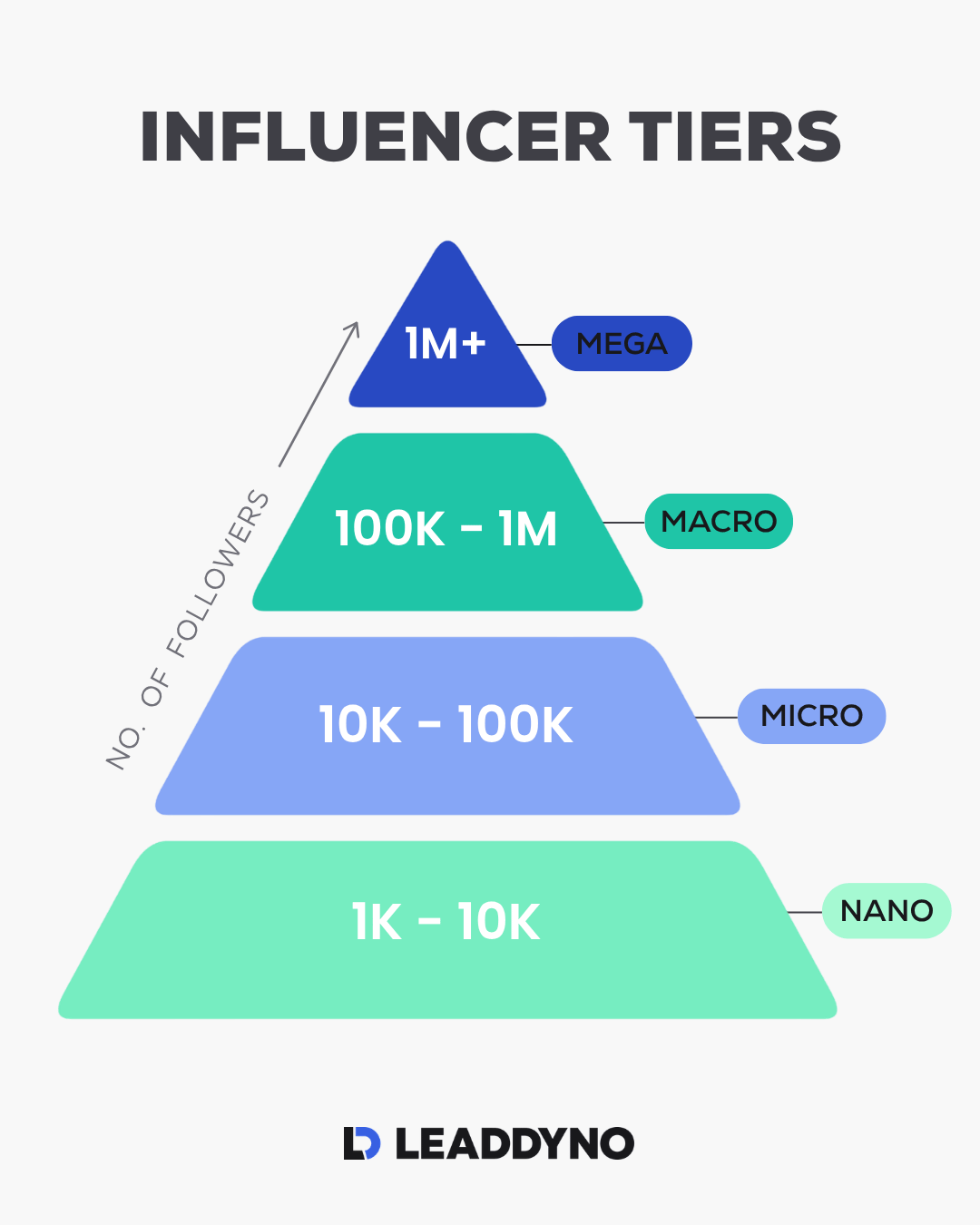
The four creator types by audience size, from nano to mega.
There is also a common misconception worth clearing up: Not every affiliate needs to be a well-known influencer, and smaller creator accounts often make better partners for a new program. They tend to have closer relationships with their followers, they are more likely to reply to your message, and they usually cost less to work with.
For this article, we will use audience size as a parameter.
For this article, we will use audience size to split creators into four types:
- Nano creators: roughly 1K to 10K followers.
- Micro creators: roughly 10K to 100K followers.
- Macro creators: roughly 100K to 1M followers.
- Mega creators: more than 1M followers.
Here is how the main groups compare, with engagement benchmarks from an analysis of more than 15,000 creator accounts by Nowadays Media.
Audience size is a simple way to sort creators, but it does not tell you how good a partner someone will be. For a new program, start with nano and micro creators, then add macro creators once you know your offer works.
How to Find Affiliates on Instagram
You do not need a special tool to start. These five methods work with an ordinary Instagram account, and you can use them together.
1. Start with your own customers and followers
This one is easy to overlook. Your best first affiliates are often people who already buy from you. Check who tags your brand, comments on your posts, or shares your products in their Stories. Those people already like what you sell, and their followers can tell.
Use your affiliate program's signup form to make it easy for them to say yes. With LeadDyno, you can customize the signup form and choose whether to approve new affiliates automatically or review each one by hand, so you stay in control of who represents your brand.
2. Search hashtags and keywords in your niche
Pick five to ten hashtags your ideal customer would follow. For example, if you sell skincare, that could be a mix of ingredient names, routine hashtags, and product-type tags. On Instagram, use the search bar to search for relevant hashtags and start from there.
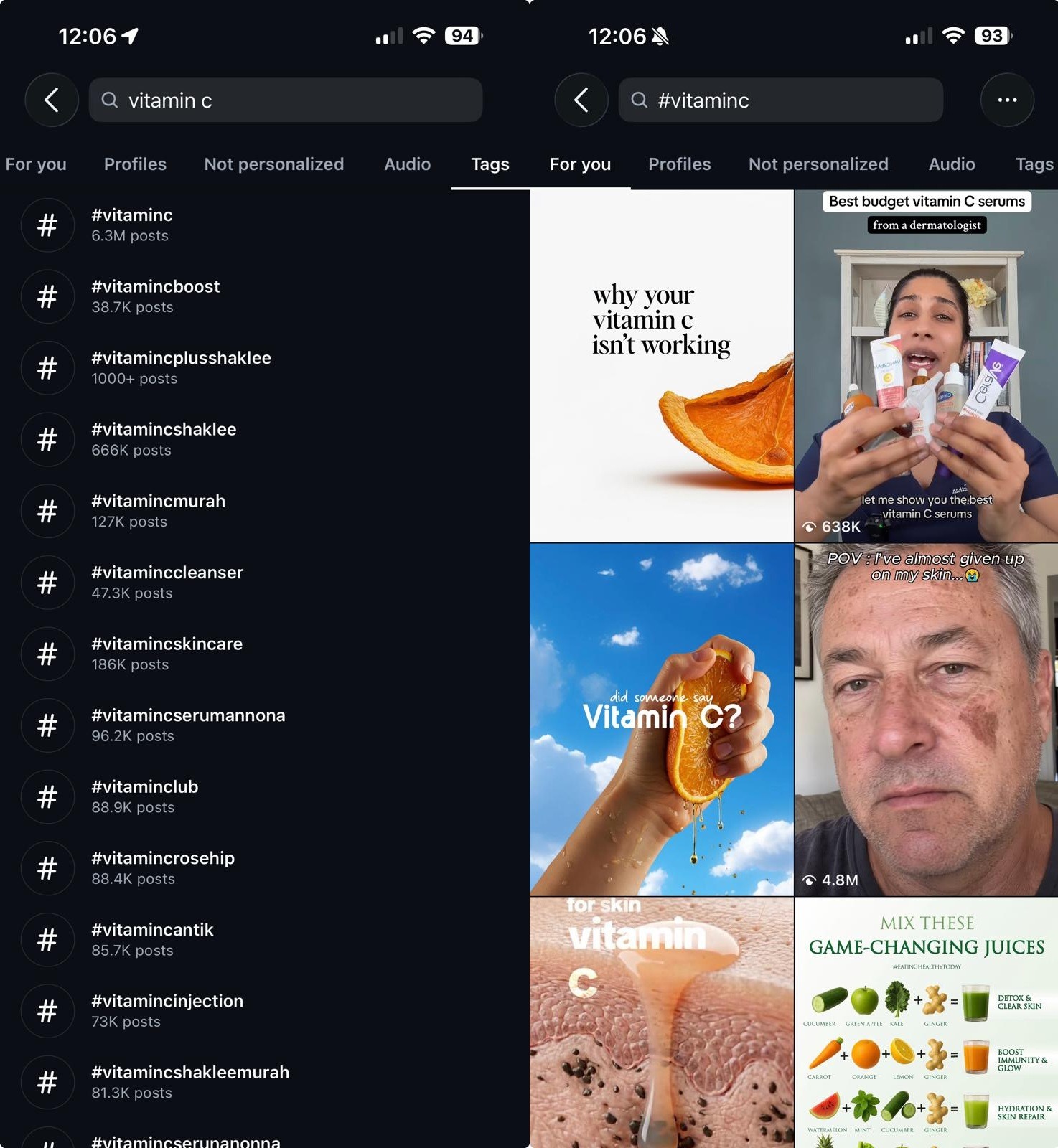
Check both the Top and Recent tabs, then open the profiles of people who post useful content, not just pretty photos.
Instagram's search bar also works with plain keywords, so try phrases like "night routine" or "budget meal prep" that match how your customers talk. Save promising profiles in a simple spreadsheet so you can vet them later.
You are looking for people who already create content for your potential customers.
3. Look at people already mentioning your brand
It is always worth checking the people already interacting with you.
Review:
- Tagged posts
- Story mentions
- Comments
- Followers
- User-generated content
- Customers posting about your product
Someone who already recommends your product organically is a particularly strong affiliate prospect.
They already know the product. They already know your brand.
And most importantly, they have already demonstrated that they are willing to talk about it. Your outreach becomes much more natural as a result.
4. Look at who follows and tags your competitors
Creators who already promote similar brands understand affiliate partnerships and are likely to be open to a new one. Check the tagged posts of competing brands and see who shows up. Our guide on how to find competitor affiliates walks through this approach in more detail.
Keep in mind that a creator who promotes ten similar brands may have a tired audience. Look for someone who mentions products with care, not someone who posts a new discount code every day.
5. Look at creators talking about complementary products
Your future affiliates do not need to already talk about your exact product category.
Look at adjacent categories too. Imagine you sell email marketing software.
Potential affiliates might create content around:
- Ecommerce
- Shopify
- Entrepreneurship
- Digital marketing
- Conversion optimization
- Content marketing
Think about the ecosystem around your customer rather than only your product.
A useful question is:
What else does my ideal customer follow, buy, learn about, or care about?
Then search for creators in those spaces.
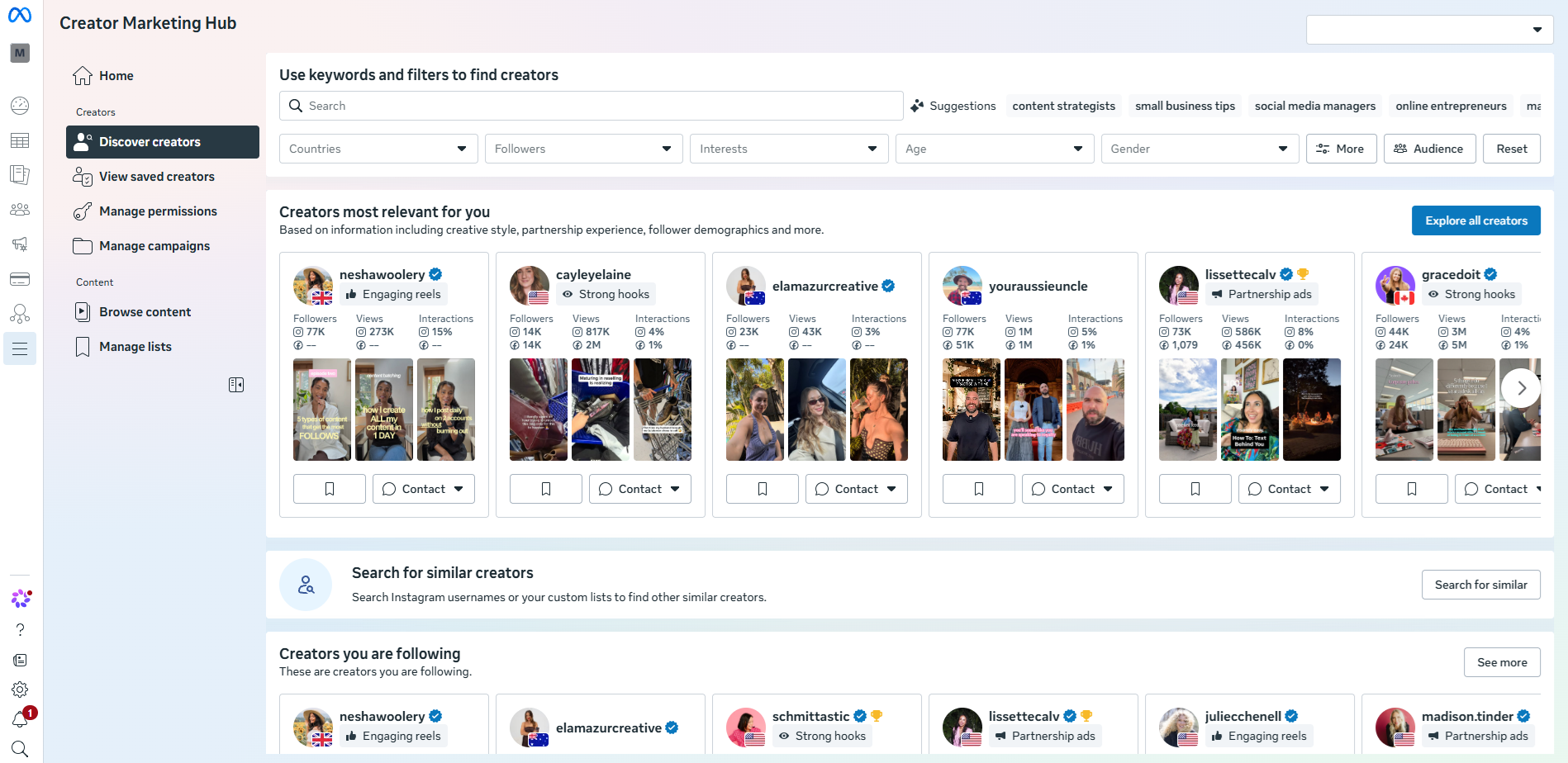
6. Try Instagram's Creator Marketplace
Meta offers a Creator Marketplace that lets brands find creators and partner with them on branded content and partnership ads. Availability and features can differ by country, so check whether it is open to your account. It is more of a paid partnership tool than an affiliate recruiting tool, but it can help you find creators who are open to working with brands.
7. Watch for inbound interest
Some of your future affiliates will find you. Add a short line to your bio like "Love our products? Join our affiliate program" with a link to your signup page. Pin a post or add a Story highlight explaining how the program works, so people who are curious can learn more without messaging you. And of course, make sure to link your affiliate program sign up page on our website.
If you want a wider view of recruiting beyond Instagram, our affiliate recruitment guide covers the full process.
How to Vet an Instagram Affiliate
Not every creator will be a good fit for your brand. A large following can be misleading, so do a quick check before you send a message.
Here is a checklist you can run in about five minutes per profile:
- Read the comments. Look for real questions and replies, not only emojis or one-word comments. Comments like "where did you buy this?" are a good sign.
- Compare likes to followers. A big account with very few likes may have bought followers or lost its audience.
- Check the content fit. Do they already talk about problems your product solves? A fit in topic and tone matters more than a fit in size.
- Look at past partnerships. A few thoughtful brand posts show they know how to promote without spamming. A feed full of ads suggests their audience may tune them out.
- Watch for disclosure. Do they label paid or affiliate posts? Creators who follow disclosure rules protect your brand too.
- Check for other places they publish. A creator with a blog, newsletter, or YouTube channel gives you more ways to reach buyers than Instagram alone.
Be careful about using a single rule to reject someone. A creator with a smaller audience but strong comments can outperform a larger account with a passive audience.
How to Reach Out to Instagram Creators (+Templates)
Once you have a list of creators who look like a good fit, the next step is to reach out.
You can send a direct message (DM) on Instagram, send an email, or use both.
A DM feels casual and is easy to answer from the app, while an email gives you more room to explain the offer and is easier for a creator to save and come back to. Many creators list a business email in their bio or link in bio, so check there first.
If you can, use both. A short DM followed a few days later by a slightly longer email gives you two chances to be noticed, and each message can mention the other.
Warm up before you send anything
The biggest mistake here is treating affiliate recruitment like mass email marketing.
Instagram sends messages from accounts a creator does not follow to a Message Requests folder, where they are easy to miss. That is one more reason to warm up first, so your name is familiar when your message arrives. Affiliate manager Matt McWilliams recommends a warm-up of roughly 10 to 12 days before sending a pitch.
If you have a smaller list and want to move faster, here is a shorter version you can follow:
- Days 1 to 2: Follow the creator and like a few of their recent posts.
- Days 3 to 4: Leave one specific comment on a post, such as what you liked about a tip or a product they showed.
- Days 5 to 6: Reply to one of their Stories with a real reaction or question.
- Day 7: Send your DM, your email, or both.
Have your signup page ready before you send anything too. With LeadDyno, you can customize your affiliate signup form and choose whether to approve new affiliates automatically or review each one yourself, so a creator who says yes can join right away.
What to Include in Your Outreach
Whether you use DM or email, keep your first message relatively short.
A good affiliate recruitment message should make four things clear:
- Why you chose them. Mention something specific about their content or audience.
- Who you are. Briefly introduce your company.
- What you're offering. Explain that you're inviting them to your affiliate program and, when relevant, mention the commission or key benefit.
- What happens next. Give them one simple next step.
Avoid sending your entire affiliate program description, several links, commission terms, marketing materials, and signup instructions in the first message.
Start the conversation first.
Once they’re interested, you can send them your affiliate signup page. With LeadDyno, for example, businesses can create an affiliate website where potential partners can learn about the program and sign up, making it easy to move someone from an Instagram conversation into your actual affiliate program.
Instagram Affiliate Outreach Templates
Here are a few starting points you can customize.
Cold outreach to a creator
Hey Sarah! I’ve been checking out your content about home espresso and really liked your recent grinder comparison. I work with [Brand], and we’re looking for a few affiliate partners in the coffee space. I think our products could be a really natural fit for your audience. Would you be interested in hearing more about the program?
The important part here is the opening. Mentioning a specific piece of content makes it clear that you actually looked at their account.
Outreach to an existing customer
Hi Lisa! We saw your recent post about [Product] — thanks so much for sharing it! Since you’re already using and recommending our products, I wanted to see if you’d be interested in joining our affiliate program and earning a commission when someone purchases through your recommendation. Happy to send over the details if you’re interested!
Existing customers can make particularly strong prospects because you don’t have to convince them that the product is worth recommending. They already know it.
Outreach to someone who has already mentioned your brand
Hey Jake! Thanks for mentioning us in your Story this week — we loved seeing [specific detail]. We actually have an affiliate program and thought it might be a great fit since you’re already sharing [Brand] with your audience. Would you like me to send you some more information?
More direct outreach to an experienced affiliate or creator
Hi Lucy! I’m [Name] from [Brand]. I’ve been following your content around [topic], especially your recent post about [specific topic]. We’re currently looking for a few affiliate partners in this space, and I think there could be a strong fit with your audience. Our affiliates earn [commission]. Would you be interested in taking a look?
For creators who already use affiliate links or regularly work with brands, being more direct about the opportunity can make sense.
Follow-up message
Hey Adam! Just following up in case my last message got buried. We’d still love to chat about having you join our affiliate program. Happy to send over the details if you’re interested!
One follow-up is usually enough. If they still don’t respond, move on rather than repeatedly messaging them.
Find the Right Affiliates, Then Make Them Easy to Manage
Finding affiliates on Instagram isn't about building the biggest possible list of influencers. Instead, it comes down to a few habits.
Find creators who already fit your niche, vet them quickly, reach out with a specific and short message, make the offer clear, and support them once they join. None of it requires a large budget, and you can start with a small group of nano and micro creators and your own customers.
Once those creators become affiliates, the next challenge is managing the program behind them.
LeadDyno helps businesses recruit and manage affiliates, provide trackable referral links, monitor affiliate-generated visitors and sales, manage commissions, and analyze performance from one place.
Ready to grow your affiliate program? Book a LeadDyno demo and see how you can manage your affiliates from recruitment through conversion.
.webp)

.svg)
Start a Free Trial
30 days free · Full Access
Cancel anytime
You might also be interested in...
Get Started Today
Launch your affiliate program with confidence thanks to our 30-day free trial. Begin building a program that delivers results.

