
How To Sell More Online Courses Using Affiliate Marketing
See how LeadDyno can take your affiliate marketing strategy to the next level. Let’s set up a 1:1 demo to get your questions answered.
If you’re looking to create an effective affiliate program to boost sales for your online courses, there is a system and strategy, along with affiliate tracking software, that need to be put in place before you hit the ground running.
By the end of this article, you’ll have a clear path to execution for developing an affiliate marketing program that helps you grow your online course business. Let’s dive in!
How effective is affiliate marketing for online courses?
Before we get into the tactical steps, we need to understand why affiliate marketing is a powerful channel for online courses and how it can outperform other online marketing methods, for example, Meta paid media for Instagram ads.
Performance-based cost structure
The primary economic advantage of affiliate marketing is its performance-based nature, where your brand only pays a commission when an affiliate successfully generates a sale or desired action.
That way, once you’ve set up the infrastructure, you can add new affiliates to expand your reach without a linear increase in your marketing budget or staff headcount. Forecasting site visits, leads, and sales becomes much easier than forecasting cost per click (CPC) or cost per 1,000 impressions.
Get extended reach through trusted voices
Your affiliates already have relationships built on trust, and their recommendations and insights are of value to their followers. Think of it this way: when a niche YouTuber or industry blogger recommends your course, their audience treats it as a real testimonial and recommendation they can support.
If you sell high-ticket online courses, affiliates further support the buying process by providing social proof that helps convert.
Scalability without proportional cost
If you were to compare affiliate marketing to building an internal marketing team, you can easily scale your course affiliate program, unlike internal resourcing, for instance, adding more staff or contractors. Once you establish the infrastructure for an affiliate program, you can add new affiliates to scale your sales reach.
Brand credibility lift
When authority figures support your brand beyond what your internal marketing has developed, your course becomes that much more credible amongst your competitors. This credibility is built directly through affiliate promotions and support.
For example, if a YouTube productivity expert promotes your time-management course, you’ll gain immediate credibility among those viewers who may still be in the product discovery phase.
This external validation supports your brand positioning and reduces the friction typically associated with selling digital products to cold audiences.
Long-tail content amplification
An often-overlooked advanced affiliate strategy is to use your new affiliates to support long-tail content creation and discovery. Your affiliates can produce tutorials and detailed reviews, which include blogs, videos, and social posts, that can help support your long-tail SEO strategy for your course.
For example, if you sell a healthcare training course, this could be blogs and content created on:
- “How to make more money as a healthcare expert with an online course.”
- "Best online courses for nurses looking to move into consulting"
- "Step-by-step: How I used an online certification to get a pay raise in healthcare."
Recommended Resource: E-commerce Affiliate Marketing Guide: Setup, Ideas, and More
How can you build out your affiliate program for your online course?
Getting the structure right from the beginning prevents administrative headaches down the line. First, you must determine how you’ll compensate affiliates, then how you’ll train them, and finally, what technology you’ll use to track their performance.
Step 1: Set commission structures
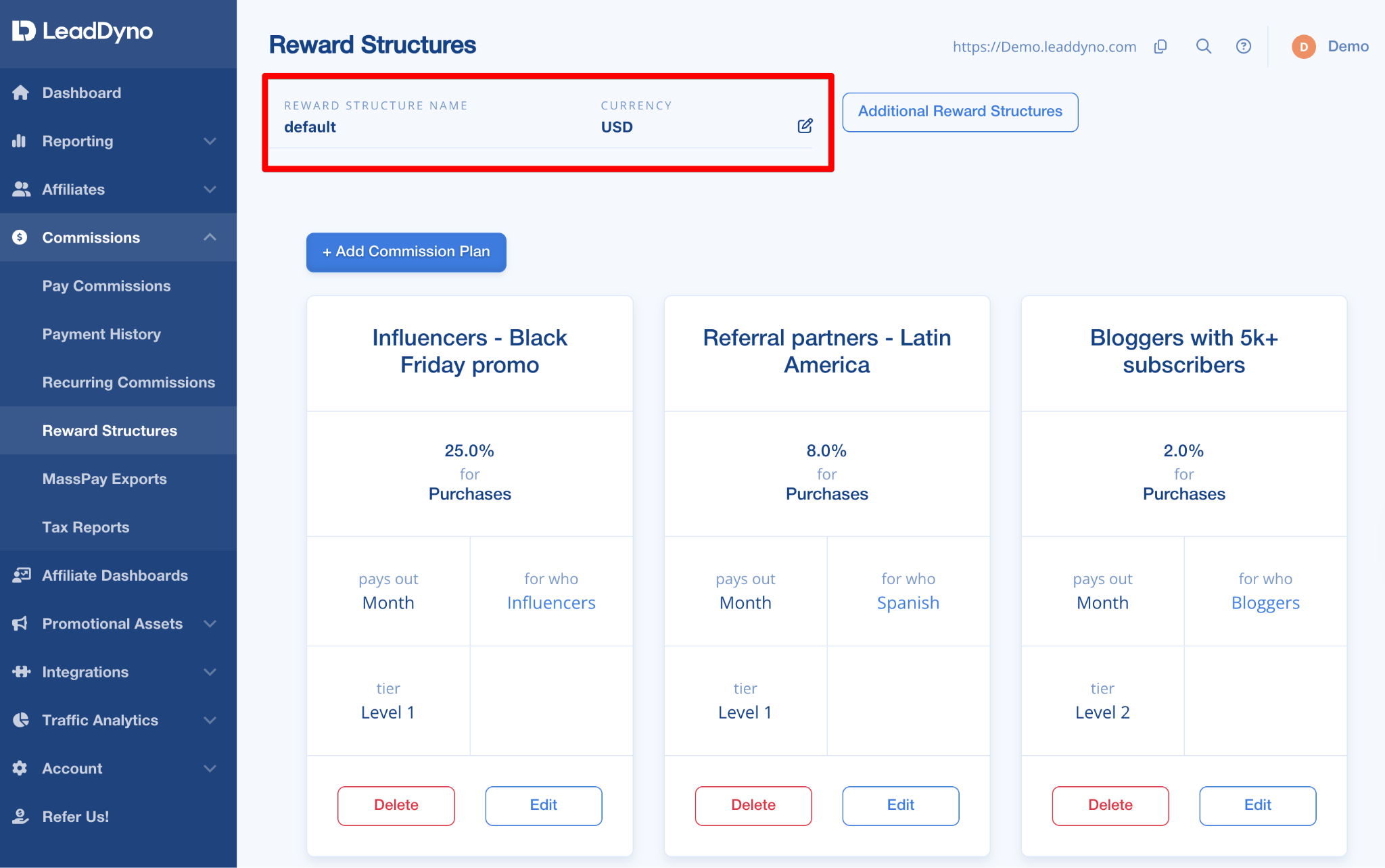
First, you’ll need to set a commission structure. As a standard for courses and digital products, expect to pay a range between 20% and 50% for the first sale. The reason for that is that digital products typically have a high profit margin, and thus, affiliates expect high payouts for their efforts.
Set a base commission
In order to set your base commission, we recommend analyzing a price point and operating margin that leads to sustainable profitability over the long term (don’t forget about course updates that could eat into future margins). The higher the rates offered, the easier it will be to attract new affiliates out of the gate.
Offer tiered programs
If you’re looking to uplevel your commission structure to really entice long-term affiliate relationships, we recommend implementing a tiered commission structure as an additional incentive.
For instance, an affiliate might earn a 30% commission initially, but if they exceed 50 sales in a month, their rate increases to 40%. Or, if your course includes a monthly community subscription or recurring coaching fees, paying a recurring commission tier to help affiliates find people who will stay through the entire course and potentially buy further courses.
Step 2: Build affiliate onboarding materials
With your commission structure in place, the next step is making sure your affiliates have what they need to actually sell.
The truth is, your affiliates require resources to sell your courses. We recommended setting up a structured onboarding process so every new affiliate understands the product, rules, and can get started promoting immediately with their unique link.
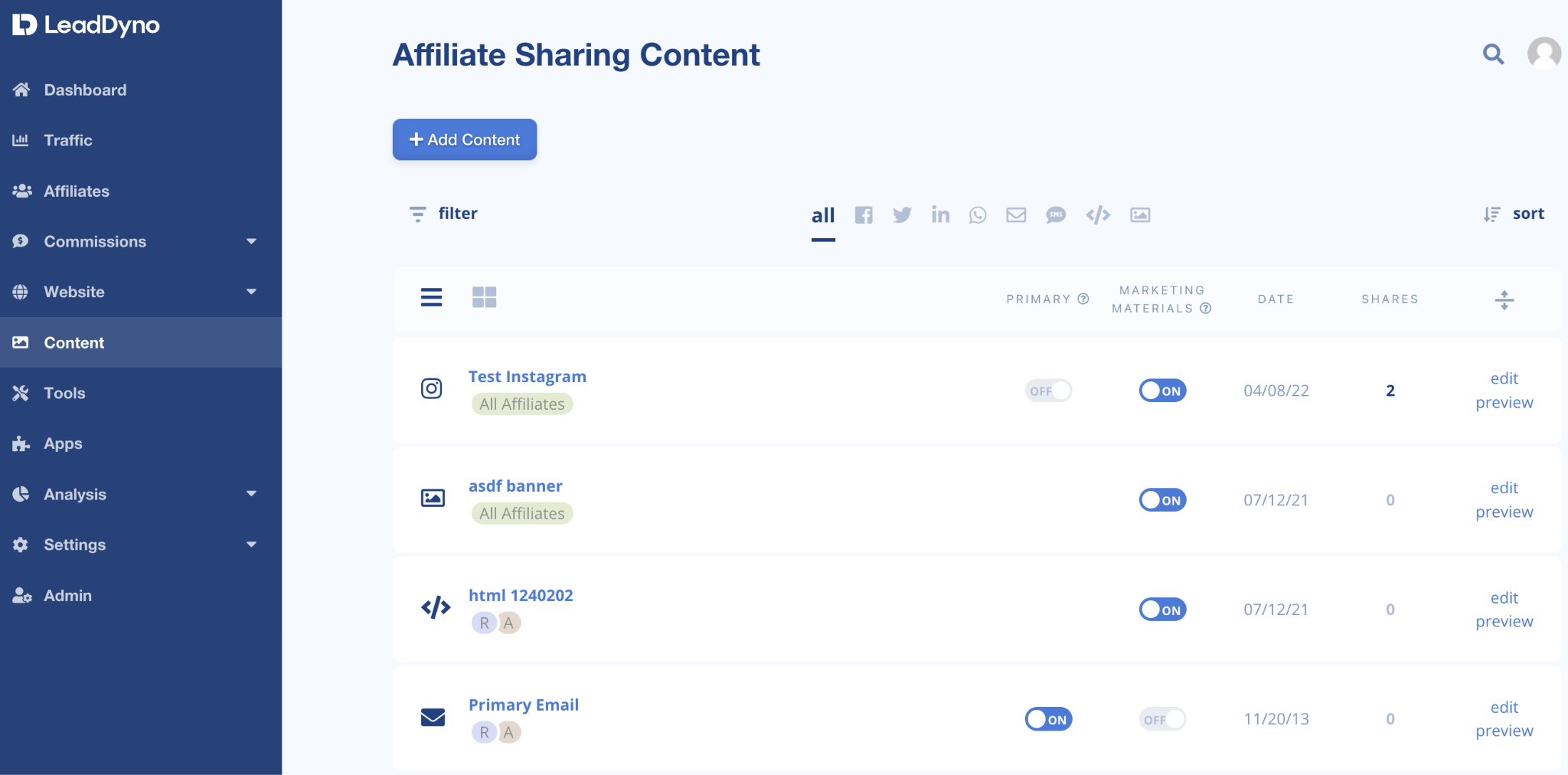
The best part is that this can all be facilitated with LeadDyno affiliate management software. You can easily set up an affiliate resource hub that can provide:
- Copy files: Pre-written emails and social media posts that affiliates can adapt for their audience.
- Brand assets: Approved high-resolution logos, banners, and course preview images that ensure brand consistency.
- Course preview access: Let affiliates experience the product firsthand so they can speak about it authentically. This is a must for higher-ticket courses.
Step 3: Set up your tracking infrastructure
Your commission structure and onboarding materials won’t matter if you can’t accurately track which affiliates are driving course sales.
And, managing links, tracking conversions, and issuing payouts manually quickly becomes unsustainable, which is where proper affiliate tracking and management software comes into play.
LeadDyno provides a comprehensive platform for affiliate program setup and management, eliminating the administrative complexities of running an affiliate network.
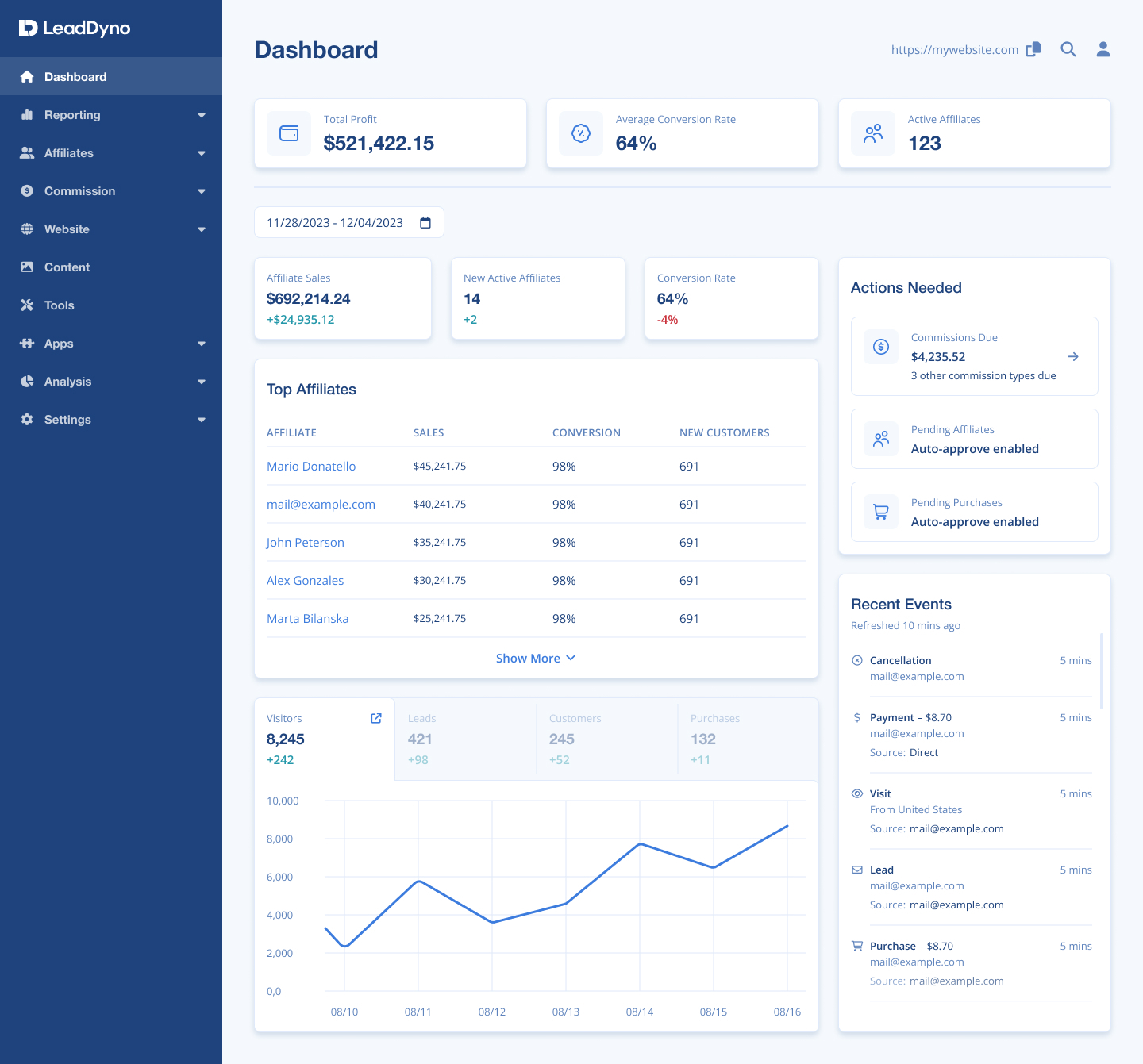
The platform features automated click tracking, individualized affiliate dashboards, and payout management integrations. You can use LeadDyno’s free trial to set up your program and test the infrastructure before committing to a paid subscription.
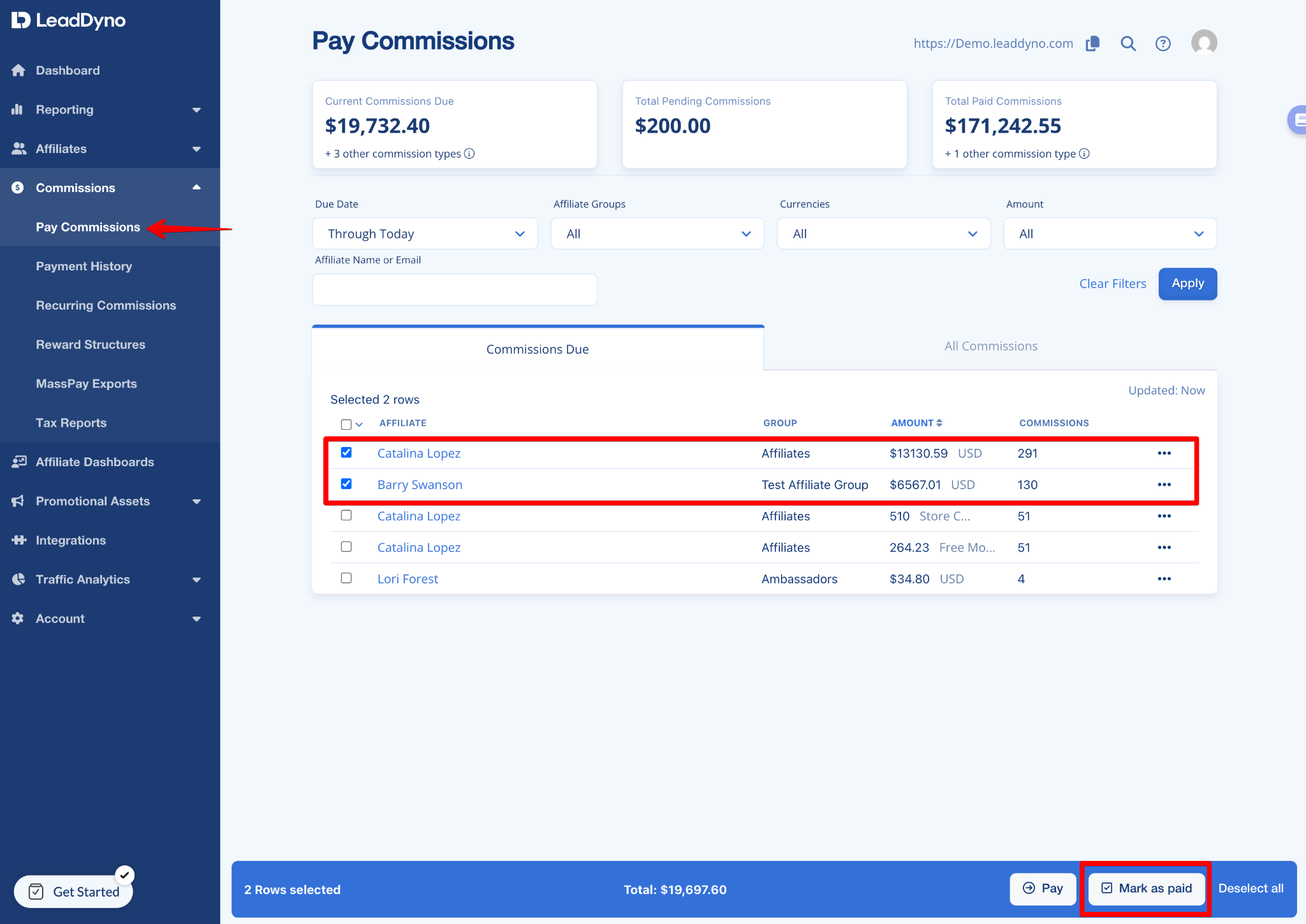
LeadDyno Affiliate Compensation
Finding affiliates to promote online courses
The success of your program depends entirely on the quality of your affiliates, and these types of digital creators typically perform the best for online course sales.
5 affiliate types that drive the most course sales
- Niche content creators: YouTubers, Instagram creators, and podcasters who already create content related to your course subject. These are your highest-conversion affiliate types.
- Bloggers and SEO publishers: Writers who produce detailed reviews and how-to articles. They capture search intent and drive long-term organic traffic.
- Email newsletter operators: Creators who manage curated newsletters in your industry can send highly engaged, pre-qualified traffic directly to your sales page.
- Complementary course creators: Educators who teach adjacent, non-competing topics can cross-refer their students to your program.
- Industry community leaders: Forum moderators and membership site owners with concentrated access to people actively looking to learn new skills.
Where to recruit affiliates
So, now that you have a list of potential affiliates you want to attract and can onboard them successfully, these outreach methods typically perform the best for online course affiliates.
Start with your existing students
Satisfied learners are your most authentic affiliates because they have firsthand experience with your product. Set up an automated email that invites students to join the affiliate program upon course completion.
Do direct outreach
To begin with direct outreach, find 10 to 20 creators in your industry (both macro and micro influencers), send a personalized email, and offer them complimentary access to your course. This targeted approach takes more effort, as you need to build outreach lists, follow up, and continue to offer value, but it tends to yield your highest-quality partners.
Use affiliate networks
You can also use platforms like ShareASale to connect with a large pool of active affiliates already looking for products to promote. Keep in mind that these programs can take a big chunk out of your margins, so we recommend building your own affiliate networks using the tactics above.
The important part is to consider a multi-channel approach to find a variety of affiliates that’ll begin promoting your course. Then, you’ll be able to gather data and take action on the segment that’s producing the most sales.
How to evaluate affiliate fit
Not every applicant will benefit your brand. To make sure you’re getting good leads and traffic from affiliates, you’ll want to evaluate potential affiliates based on audience alignment to ensure their followers match your target student profile.
- Audience alignment: Do their followers match your target student profile?
- Content quality and frequency: Is their content professional enough to reflect your brand? Make sure there is a brand-influencer fit.
- Engagement over reach: A micro-influencer with 2,000 highly engaged followers typically outperforms a generalist with 1,000,000 followers that don’t engage.
- Promotional track record: Have they successfully sold other educational products before in your space? Or how about adjacent products?
Recommended Resource: Affiliate Onboarding Guide: Sign-Up to First Payout Success
Other best practices for online course affiliate sales
While you should be well on your way to generating sales for your courses through affiliate marketing, here are some other tips for developing relationships and optimizing the technical pieces of your affiliate marketing funnel.
Keep affiliates engaged and motivated
Maintain a regular communication schedule with your affiliates. Why? Well, affiliate marketing follows the Pareto principle: the top 20% of your affiliates will likely drive 80% of your revenue. So, to support these big revenue drivers, we recommend a few tactics that’ll keep them engaged.
Maintain regular communication
Regular communication begins with being proactive, rather than relying on 1-1 chats that can clog up your calendar. The best way to do this is by sending a monthly update with course updates, new promotions, performance highlights, and upcoming course launches. This keeps your course top-of-mind and gives affiliates fresh angles to promote your brand.
Drive competition with incentives
Next, you can use performance-based leaderboards and bonuses to incentivize healthy competition among your top performers.
This is an extremely popular tactic for online course promotions, especially when promoting courses for big dates like New Year's Day or back-to-school.
Optimize landing pages for affiliate traffic
When an affiliate sends traffic to your site, you must ensure the landing page converts effectively.
To start, create affiliate-specific landing pages that match the messaging the affiliate uses in their promotions. We’ve also seen brands set up dedicated landing pages for each top partner, which can significantly increase conversion rates for affiliate-specific offers. Similarly, provide other testimonials, images, video, and copy that affiliates can use for their own custom landing pages.
As we mentioned previously, you’ll want to set your affiliates up for success with an affiliate dashboard that has marketing materials. These materials should include messaging that helps your affiliates drive urgency, like limited-time offers or exclusive discount codes.
If you’re not running any discounts at this time, include a free lesson or downloadable module as a lead magnet, which gives affiliates a low-friction offer to promote. This will help them drive email marketing sign-ups and eventual sales.
Track the right KPIs from day one
Data is your friend when it comes to affiliate marketing. You won’t be worrying about CPC optimization, but instead, sales optimization. Here’s how to put this into practice.
Conduct regular program audits to identify underperforming affiliates
Identify underperforming affiliates and decide whether to offer additional training, re-engage their interest, or remove them from the program. A smaller, high-performing roster is better than a large, inactive one. The KPI to optimize with this exercise is:
- “Sales per affiliate”
“Revenue per affiliate” - “Active to Inactive affiliate ratio.”
Optimize your attribution window (cookie duration)
Next, you’ll want to find an attribution window that is fair but does not take advantage of your other marketing efforts. If your course costs $1,000, buyers may take 45 days to decide. Set a 60-day cookie to ensure affiliates get credit for the sales they drive.
However, in this example, if you set the window to 90 days, and your other re-marketing efforts drive sales, you’ll want to consider adjusting.
Monitor for affiliate fraud
Finally, use software like LeadDyno to protect against the proliferation of affiliate fraud. LeadDyno includes built-in IP monitoring and fraud detection features to protect your margins.
Recommended Resource: 17 Essential Affiliate Marketing KPIs and Metrics
Stay compliant with FTC requirements
One area that’s easy to overlook but critical to get right: compliance. The Federal Trade Commission (FTC) requires all affiliates to clearly and conspicuously disclose their financial relationship with your brand when promoting your products.
A few course-types that require FTC compliance include:
- Make money online & business courses: Be careful of income claims.
- Investment courses: Affiliates should avoid speculative claims and returns.
- Health & fitness: Watch out for unsubstantiated claims and undisclosed relationships.
Any affiliate who receives a commission, free access, or any other benefit in exchange for promoting a course must clearly disclose that relationship.
Next steps for implementing your affiliate strategy
As you can see, affiliate marketing is a very powerful marketing channel for course creators and brands that sell courses.
The additional good news is that you don't have to manage any of it manually. LeadDyno makes it easy to launch, manage, and scale your course affiliate program in one place. Track commissions, automate payouts, and empower your affiliates with real-time marketing and performance monitoring.
Start your free trial with LeadDyno today and turn your affiliates into your most powerful marketing channel.
.webp)

.svg)
Start a Free Trial
30 days free · Full Access
Cancel anytime
You might also be interested in...

Get Started Today
Launch your affiliate program with confidence thanks to our 30-day free trial. Begin building a program that delivers results.

